“Malls Make a Comeback: Gen Z Revitalizes Retail”
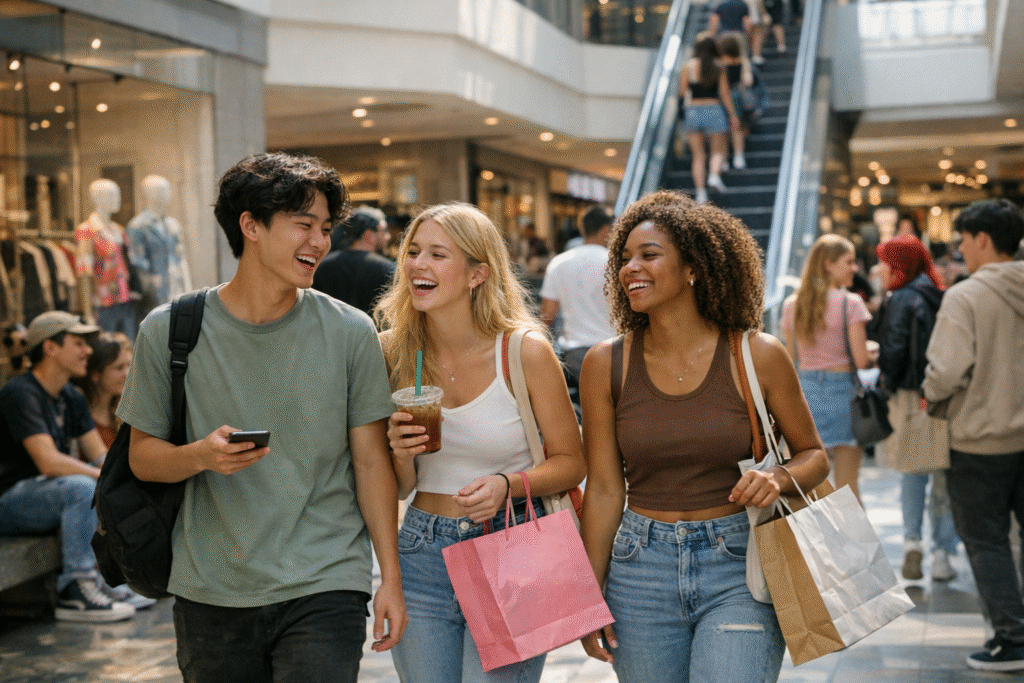
In an evolving retail landscape characterized by the rising dominance of e-commerce, a curious shift is taking place—Generation Z is rediscovering the shopping mall. According to a recent Wall Street Journal article titled “Gen Z Spends More Time in Malls, While Older Generations Shop Online,” the conventional retail hub, once thought to be declining, is witnessing a resurgence as a favored destination for younger consumers.
This trend is largely fueled by Gen Z’s inclination toward experiences that transcend mere shopping. For them, the mall represents a cultural and social nexus, a place not only to purchase goods but also to interact and engage in real-world activities. Unlike their millennial predecessors who favor the convenience of digital transactions, members of Gen Z are showing a preference for in-person experiences, thereby breathing new life into brick-and-mortar establishments.
Retailers are keenly observing this shift, identifying it as an opportunity to blend commerce with experience. Many are innovating their approaches to capture the attention of this demographic. Stores within malls are increasingly focusing on creating interactive and immersive experiences that captivate younger audiences and promote brand loyalty. For instance, some retailers are incorporating live music events, art exhibits, and cutting-edge technologies like virtual reality, transforming traditional shopping spaces into vibrant communal hubs.
The reinvigoration of malls is not just a byproduct of Gen Z’s preferences; it is also indicative of this generation’s broader socio-cultural values. With a strong desire for authenticity and connection, members of Gen Z often favor brands that deliver meaningful and personalized interactions. Consequently, malls are redefining themselves to offer more than just retail, but holistic environments where socialization and commerce coalesce.
However, this renaissance is not uniform across all regions. The success of malls in attracting Gen Z consumers often depends on their ability to adapt swiftly to new trends and demands. Well-located malls that remain agile and innovative are witnessing increased foot traffic, while those unable to evolve continue to face the prospect of closure.
Financially, this shift presents both challenges and opportunities. Investors and mall operators are recognizing the need to re-evaluate their strategies, examining new business models that may include diverse ventures like food halls, entertainment centers, and even mixed-use developments integrating residential and commercial spaces.
In a period marked by rapid technological advancement, the revival of shopping malls as bustling community centers reflects the enduring appeal of physical spaces where individuals can come together, interact, and find fulfillment not only in consuming products but in the shared experience of being. As Gen Z continues to shape the future of retail, their preferences for dynamic and lively environments may very well redefine the commercial spaces of tomorrow.