Navy Tests New Carrier-Linked Destroyer Deployment Plan
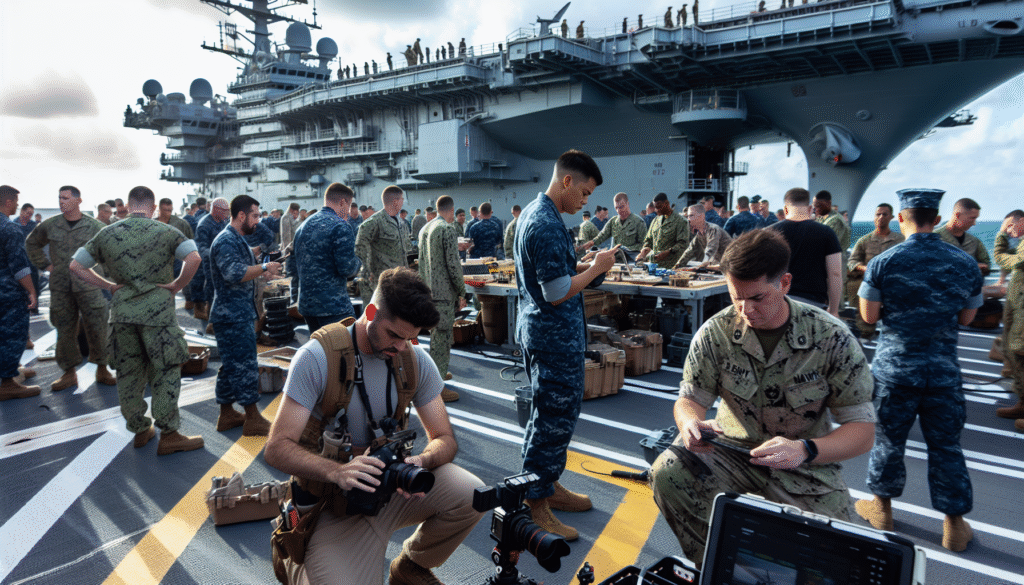
In a strategic shift aimed at enhancing naval integration and operational flexibility, the U.S. Navy will pilot a novel deployment concept during the upcoming Western Pacific voyage of the USS Theodore Roosevelt (CVN-71) carrier strike group. As reported in the February 2026 article, “Navy to experiment with ‘tailored force pairing’ with Theodore Roosevelt deployment: SWO boss,” published by Breaking Defense, the initiative seeks to pair destroyers more consistently with assigned aircraft carriers over extended periods, potentially transforming how surface forces are projected in key theaters.
Commander of Naval Surface Forces Vice Adm. Brendan McLane detailed the approach during a recent Surface Navy Association conference, characterizing the pilot as an “operational concept experiment.” The tailored force pairing model diverges from current deployment practices, where surface combatants often switch between task forces and missions. Under the new concept, destroyers will train with and deploy alongside a designated carrier, aiming to build enduring unit cohesion and superior warfighting synergy.
According to McLane, the USS Theodore Roosevelt group will incorporate a consistent destroyer element drawn from Destroyer Squadron 23 for its upcoming deployment. The aim is to ensure the destroyers and air wing personnel “train the way they fight” by remaining tactically aligned from pre-deployment exercises through execution on station in the Western Pacific.
This marks one of the Navy’s most significant attempts in recent years to rebalance its deployment practices amid a rapidly evolving Indo-Pacific security environment. With the People’s Republic of China expanding its maritime capabilities and regional footprint, U.S. commanders are exploring new command-and-control structures to enhance warfighting readiness and speed of response across domains.
The tailored pairing approach is inspired in part by lessons from past conflict simulations and fleet exercises, in which consistent unit integration allowed for quicker adaptation during dynamic operations. Navy leaders believe that fostering more durable relationships between surface warfare units and air wings will reduce operational friction and logistical lag during real-world contingencies.
Rear Adm. Robert Westendorff, the Navy’s Director of Surface Warfare (N96), supports the initiative and noted that iterative force design efforts like these are essential in meeting the Navy’s Distributed Maritime Operations (DMO) objectives. The DMO construct aims to counter near-peer threats by creating multiple, networked nodes of combat power that can rapidly concentrate or disperse as needed.
While the results of the pilot will be closely studied by fleet planners and strategists, there is also cautious optimism within the Navy that the experiment could yield data to justify broader reforms in global force management. The existing “Optimized Fleet Response Plan,” which governs deployment cycles, may need to be revisited if tailored force pairing proves more effective at sustaining high-end readiness.
If successful, the Theodore Roosevelt deployment could provide a model for future strike groups operating in contested environments, especially in the Indo-Pacific, where agility, familiarity, and rapid decision-making can be decisive. As the Navy continues to prepare for potential near-peer maritime competition, innovations like tailored force pairing may help shape the next generation of naval warfare.