Air Force Advances AI Autonomy in Combat Drone Tests
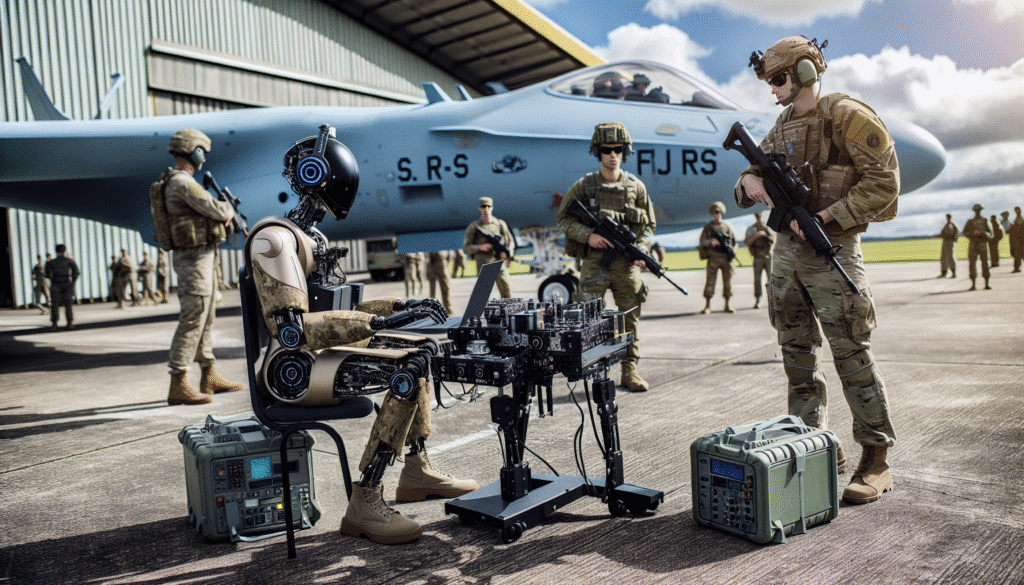
The U.S. Air Force is progressing in its efforts to integrate artificial intelligence and autonomous systems into future combat operations, with key initiatives centered around its Collaborative Combat Aircraft (CCA) program. As reported in the article “Air Force testing ‘mission autonomy’ package on CCA drone prototypes” by DefenseScoop, service officials have begun testing a sophisticated autonomy architecture aimed at enabling uncrewed aircraft to support and supplement human pilots in operational environments.
The testing of what the Air Force refers to as a “mission autonomy” package marks a crucial step in validating how these systems might function in real-world scenarios. The system uses advanced algorithms and onboard computation to allow drones to interpret strategic intent and carry out complex tasks with minimal direct input from human operators. According to Air Force officials, this capability is seen as essential for enabling drones to respond intelligently to fluid and unpredictable battlefield conditions.
The CCA program is a cornerstone of the Air Force’s broader vision for Next-Generation Air Dominance (NGAD), a family of systems expected to include both piloted sixth-generation fighters and autonomous platforms operating in tandem. With potential missions ranging from surveillance and electronic warfare to strike operations, CCAs are intended to enhance the effectiveness and survivability of manned aircraft by acting as force multipliers.
Air Force Secretary Frank Kendall, who has championed the autonomy push, previously emphasized the importance of fielding advanced autonomous capabilities as part of maintaining air superiority in contested environments. The current phase of testing is being conducted in collaboration with the Air Force Research Laboratory (AFRL), which has been working to mature mission autonomy technology over several years. Testing involves integrating the autonomy package with existing drone prototypes to assess performance under mission-relevant conditions.
According to the DefenseScoop article, the precise number and type of autonomous aircraft under current testing remain undisclosed, although the service has multiple contracts in place with leading defense contractors for different platforms. Boeing, Lockheed Martin, and other firms are known to be actively developing prototype CCAs for potential acquisition. These companies have generally been tight-lipped about the technical specifications of their autonomous platforms, but industry insiders suggest capabilities such as secure communications, target detection, and dynamic rerouting are non-negotiable elements of the mission autonomy suite.
Maj. Gen. R. Scott Jobe, director of plans, programs, and requirements for Air Combat Command, noted that one of the key goals is to ensure the software-driven autonomy functions reliably across multiple aircraft types, offering a common architecture that can be adapted for varied uses. He stated that initial feedback from the recent evaluations indicates promising levels of system responsiveness and mission interpretation, two critical benchmarks for field deployment.
As the program advances, operational testing and user feedback will play a central role in refining the autonomous decision-making algorithms and determining the appropriate balance between human oversight and machine independence. While some aspects of the technology remain in early development, Air Force officials have reaffirmed their commitment to operationalizing CCA systems within the current decade.
The development of autonomous airpower is gaining urgency as potential adversaries, most notably China, continue to invest heavily in uncrewed systems and AI-enhanced warfare capabilities. Pentagon leadership has repeatedly pointed to the necessity of adapting to a technology-driven battlespace in which decision speed and system resilience will be paramount. The Air Force sees the CCA initiative not merely as a method of augmenting current forces but as a fundamental shift in how air operations will be conducted in the future.
Should testing continue to yield positive results, the Air Force could move closer to initial operational capability for CCA platforms in the next few years, potentially reshaping the tactical and strategic airpower calculus for decades to come.