Turkey and Saudi Arabia Near KAAN Fighter Jet Deal
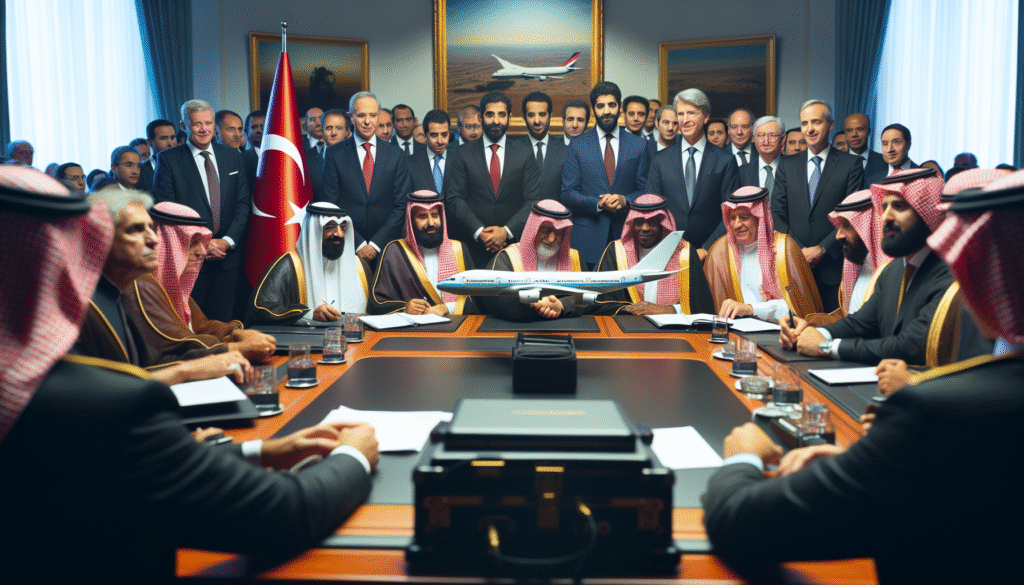
In a move that could significantly reshape regional defense collaboration, Turkish Aerospace Industries (TAI) is nearing the conclusion of talks with Saudi Arabia over potential participation in Ankara’s ambitious next-generation fighter jet program, known as KAAN. According to a report titled “Exec: Turkish Aerospace In ‘Final Stages’ Of Talks Over Saudis In KAAN Fighter Program” published by Breaking Defense, TAI is in advanced discussions that could lead to Saudi investment and involvement in what is set to become Turkey’s flagship military aviation project.
The KAAN fighter—Turkey’s answer to a domestically-produced fifth-generation combat aircraft—has become a focal point of national pride and regional strategic planning. Spearheaded by TAI, the program aims to position Turkey as a key player in the global defense aviation market, offering an alternative to Western-made platforms such as the U.S.-designed F-35. In this context, Saudi Arabia’s potential participation could bring not only financial muscle to the project but also deepen bilateral defense ties at a time of shifting geopolitical alignments in the Middle East.
Speaking to Breaking Defense, a senior TAI executive described the partnership talks with Riyadh as being in the “final stages,” an indication that months of negotiations may soon bear fruit. While formal agreements have not yet been publicly finalized, sources familiar with the discussions suggest the outlines of a deal are in place, potentially involving both financial commitments and technology-sharing arrangements.
For its part, Saudi Arabia has been actively seeking to diversify its defense capabilities and reduce reliance on foreign suppliers. Under the umbrella of its Vision 2030 initiative, the Kingdom has prioritized domestic defense production and sought strategic partnerships that align with that goal. Participation in the KAAN program would offer Riyadh a rare opportunity to be involved in the development cycle of a cutting-edge fighter aircraft.
Turkey, likewise, stands to gain both economically and diplomatically. A partnership with Saudi Arabia could inject vital funding into the KAAN platform, currently under development with the aim of achieving operational capability within the next decade. Furthermore, any resulting co-production or joint development initiatives could boost regional defense cooperation, though such collaborations remain sensitive given the complex web of alliances and rivalries in the Middle East.
While the exact terms of the potential Saudi participation have yet to be publicized, the model could follow a pattern seen in other multinational defense projects, in which financial investment is coupled with limited technology transfer and regional production nodes. Such an arrangement would be consistent with Ankara’s ongoing efforts to attract partners to share the developmental burden of the KAAN program, which demands substantial resources and extended timelines.
If concluded, the partnership would mark a strategic pivot for both countries, signaling an increased willingness to collaborate on critical defense technologies. It would also underscore a larger trend of emerging powers investing in indigenous capabilities and regional partnerships, as global defense dynamics evolve and traditional procurement models face challenge from delays, cost overruns, and tightening export restrictions.
Breaking Defense’s report marks one of the clearest indications to date that Turkish-Saudi defense cooperation may be entering a new, more technologically sophisticated phase. As both nations navigate global shifts in power and influence, the KAAN fighter project may not only redefine their military capacities but also their roles as defense exporters and regional security stakeholders.