War Powers Strained as Iran Tensions Rise
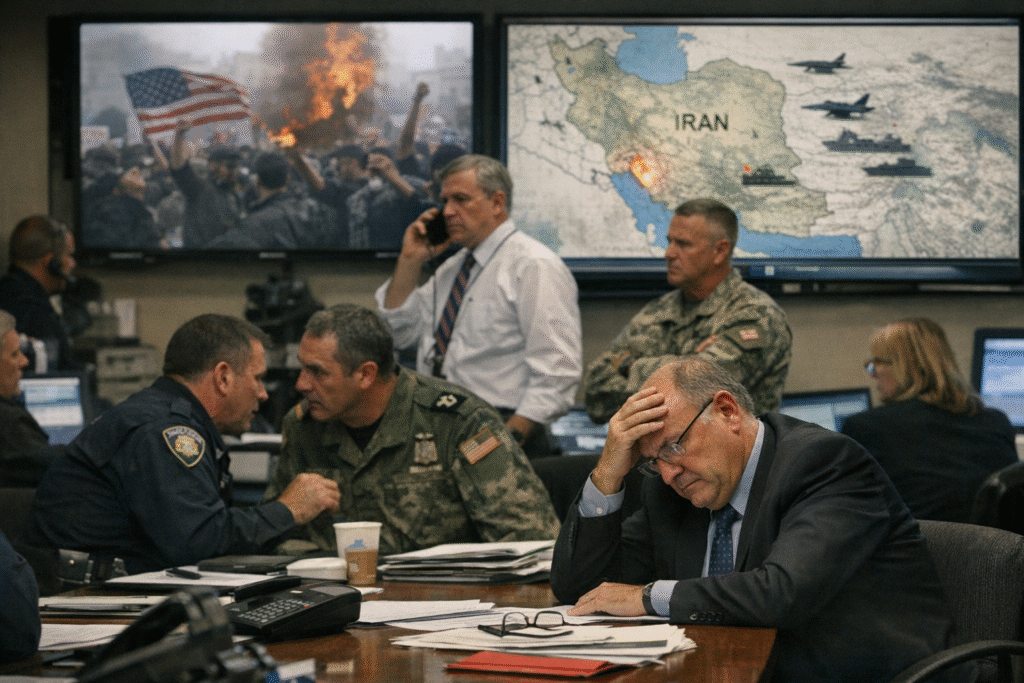
A recent commentary titled “The War Powers Clock in the Iran” published on the Substack newsletter platform examines the growing tension between executive military action and congressional authority as U.S. involvement in Middle Eastern security risks deepening escalation with Iran.
The article argues that the United States may be approaching a constitutional inflection point, where the legal limits imposed by the War Powers Resolution are increasingly tested by real-time developments. The author outlines how presidential administrations have, over decades, expanded their ability to conduct military operations without formal declarations of war, relying instead on broad authorizations or claims of inherent executive authority.
Central to the analysis is the concept of a “war powers clock,” referring to the statutory timeline established by the War Powers Resolution of 1973. Under the law, a president must notify Congress within 48 hours of introducing U.S. forces into hostilities and is generally required to withdraw those forces within 60 days unless Congress provides authorization. The article contends that in practice, this clock has often been sidestepped or rendered ineffective through legal interpretation and political inertia.
The current concern, according to the piece, lies in the possibility that escalating tensions with Iran—whether through direct strikes, proxy conflicts, or defensive engagements—could trigger sustained military involvement without clear congressional approval. The article emphasizes that modern conflicts, particularly those involving non-state actors or indirect confrontations, blur the thresholds that would traditionally prompt formal war declarations.
It also points to precedent from recent administrations, noting that both Republican and Democratic presidents have engaged in military actions under existing authorizations that were originally intended for different conflicts. This pattern, the author suggests, has contributed to a gradual erosion of congressional war-making authority, leaving lawmakers reactive rather than directive in matters of armed conflict.
The Substack piece further raises concerns about political dysfunction in Congress, arguing that polarization and legislative gridlock make it less likely that lawmakers will assert their constitutional role in a timely or unified manner. As a result, the institutional balance envisioned by the framers of the Constitution may be shifting increasingly toward the executive branch.
While the article does not predict immediate large-scale war, it warns that incremental military steps—especially those framed as defensive or limited—can accumulate into a broader conflict without a clear moment of authorization. The author frames this as not only a strategic risk but also a constitutional one, questioning whether existing legal frameworks are sufficient to constrain modern military engagement.
Ultimately, the piece calls attention to the gap between law and practice in U.S. war powers, suggesting that the “clock” designed to ensure accountability may be running in form but not in substance.