U.S. Forces Down Iranian Drones Over Strait of Hormuz as Regional Tensions Escalate
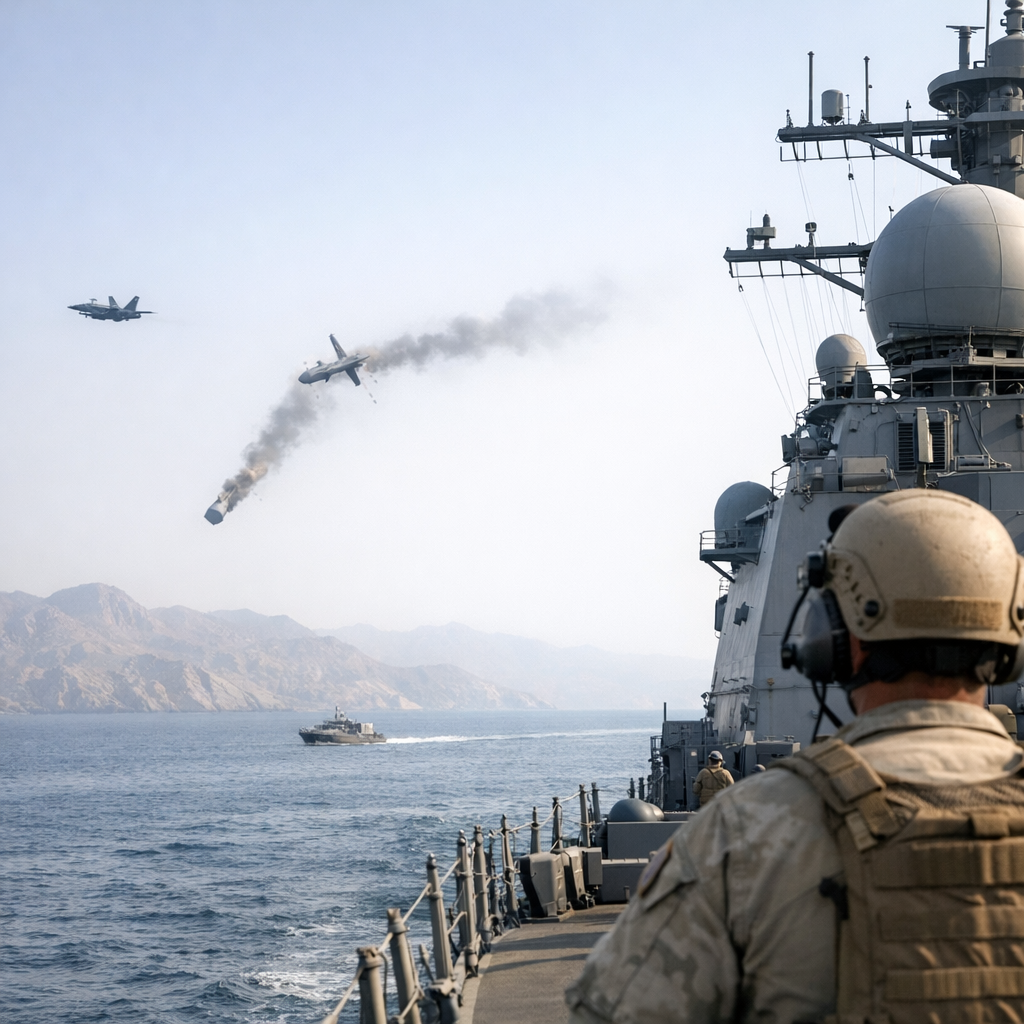
U.S. military forces intercepted and destroyed two Iranian attack drones over the strategic Strait of Hormuz, according to a report published by i24NEWS in its article “US forces shot down two Iranian attack drones threatening Hormuz traffic.” The incident marks a renewed flare-up in tensions across one of the world’s most critical maritime corridors, through which a significant portion of global oil supply passes.
According to U.S. defense officials cited in the report, the drones were assessed to pose an immediate threat to both commercial shipping and U.S. naval assets operating in the area. The drones were neutralized before they could reach their intended targets, underscoring Washington’s continued commitment to protecting freedom of navigation in international waters, a principle outlined by the U.S. Freedom of Navigation Program.
The Strait of Hormuz has long been a focal point of geopolitical friction, particularly between Iran and Western powers. In recent years, the narrow waterway has seen multiple confrontations involving vessel seizures, drone surveillance, and missile threats, as documented by outlets such as Reuters Middle East coverage. The latest incident reflects ongoing concerns about the potential for escalation in a region that remains vital to global energy security.
U.S. Central Command has not indicated whether the drones were launched directly by Iranian military forces or by affiliated groups, though officials emphasized that the threat profile and operational patterns are consistent with prior incidents linked to Tehran. Iran has not formally commented on the event as of the time of reporting, though its regional activities have been tracked by institutions such as the Center for Strategic and International Studies (CSIS).
Regional analysts warn that even limited engagements of this kind carry broader implications. Any disruption in the Strait of Hormuz can quickly reverberate through global markets, particularly in the energy sector, where price volatility is closely tied to perceived risks in supply routes.
The interception also highlights the increasing role of unmanned systems in regional conflict dynamics. Drones have become a central tool for both surveillance and offensive operations, allowing state and non-state actors to project power with reduced risk to personnel while complicating defensive responses.
U.S. officials reiterated that their presence in the region is defensive in nature and aimed at safeguarding international maritime traffic. However, the incident is likely to further strain relations between Washington and Tehran, which have remained tense amid ongoing disputes over Iran’s nuclear program and regional influence.
As tensions persist, the possibility of miscalculation remains a key concern for policymakers and military planners alike, particularly in a region where even isolated confrontations can escalate rapidly into broader conflict.