Beijing Dismisses Trump’s Battleship Revival as Obsolete, While Pentagon and Congress Remain Divided
China’s military analysts call Trump’s proposed battleship reactivation an easy target, as U.S. officials split on the concept’s strategic merit.

President Donald Trump’s proposal to reactivate retired U.S. Navy battleships has drawn a sharp rebuke from Chinese military commentators, who argue the large, slow warships would be highly vulnerable to modern anti-ship missiles — a critique that lands as American defense officials and congressional voices remain visibly split on the idea’s merits. The debate, first detailed by Military Times, underscores the tension between symbolic naval ambition and the hard operational calculus of twenty-first-century sea combat. For context on how U.S. strategic competition with Beijing is shaping defense policy across domains, see GDD’s earlier coverage of low-cost strike weapons and the gap analysis surrounding a potential Taiwan contingency.
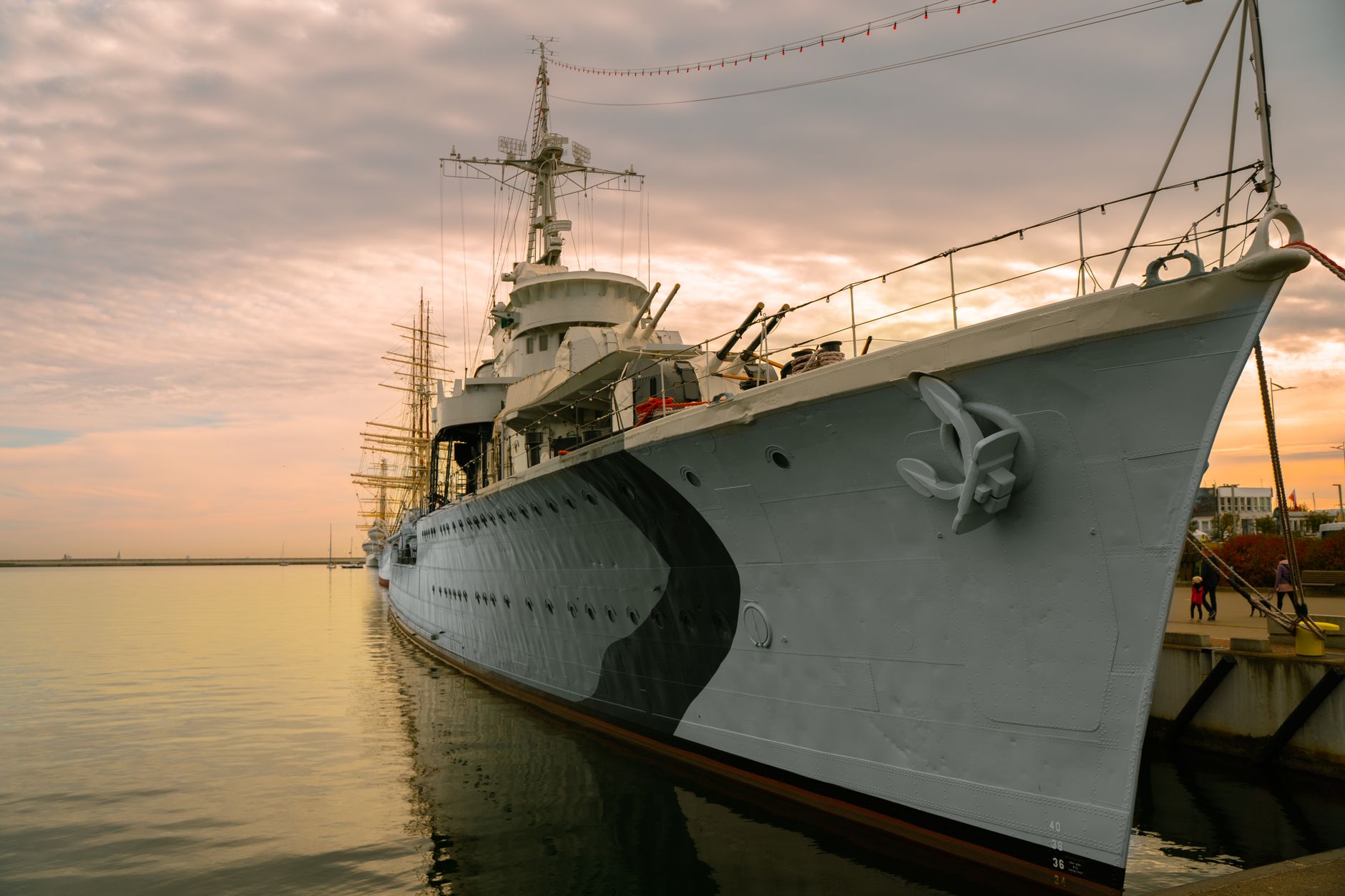
Chinese state-affiliated analysts and military commentators characterized the battleship concept as strategically retrograde, contending that a vessel of that size and speed profile would present an easier targeting solution for precision anti-ship munitions — the class of weapons China has invested in heavily over the past two decades. The criticism reflects Beijing’s broader confidence in its long-range strike capabilities and its interest in framing any U.S. naval buildup as misaligned with modern warfare realities.
Divided Reception Inside the Pentagon and on Capitol Hill
Within the United States, the reception has been far from uniform. Military Times reported that some defense officials and lawmakers have expressed skepticism about the operational and industrial feasibility of returning battleships to active service, citing the cost of modernization, the scarcity of crews trained on the platforms, and the challenge of integrating decades-old hull designs into a network-centric fleet architecture. The Navy has not operated an active battleship since the USS Missouri and USS Wisconsin were decommissioned in the early 1990s.
Supporters of the concept have pointed to the ships’ heavy armor and large displacement as attributes that could absorb punishment modern surface combatants cannot, and have suggested that updated weapons fits — including long-range missiles — could make the hulls relevant again. However, officials have not confirmed any formal program of record, acquisition funding, or a timeline for any reactivation effort, leaving the proposal at the level of a presidential directive rather than a budgeted Navy initiative.

Strategic Signals and the Modernization Backdrop
The battleship debate is unfolding against a broader U.S.-China competition in which both sides are scrutinizing the other’s naval posture closely. Beijing has continued to expand its surface combatant fleet at a pace that has drawn sustained attention from U.S. Pacific commanders, while Washington has struggled to sustain shipbuilding output from a strained domestic industrial base. A proposal to reactivate existing hulls, whatever its operational merit, carries an implicit message about American willingness to field mass and firepower rapidly — even if adversaries publicly dismiss the platforms as antiquated.
The broader U.S.-China strategic dialogue has grown more complex in recent months. Washington has been pressing Beijing on risk-reduction mechanisms in emerging technology domains, including efforts to establish an emergency communications channel covering artificial intelligence — a channel GDD has covered in depth regarding the AI risk hotline discussions following the Trump-Xi summit. That parallel track illustrates how military signaling and diplomatic engagement are running simultaneously, with each side calibrating both competitive and communicative postures. Whether the battleship proposal ultimately advances through the Pentagon’s programming process or fades as a rhetorical gesture, Beijing’s public response suggests it is watching — and narrating — every move.