Rutte Highlights NATO Role at Armenia Summit
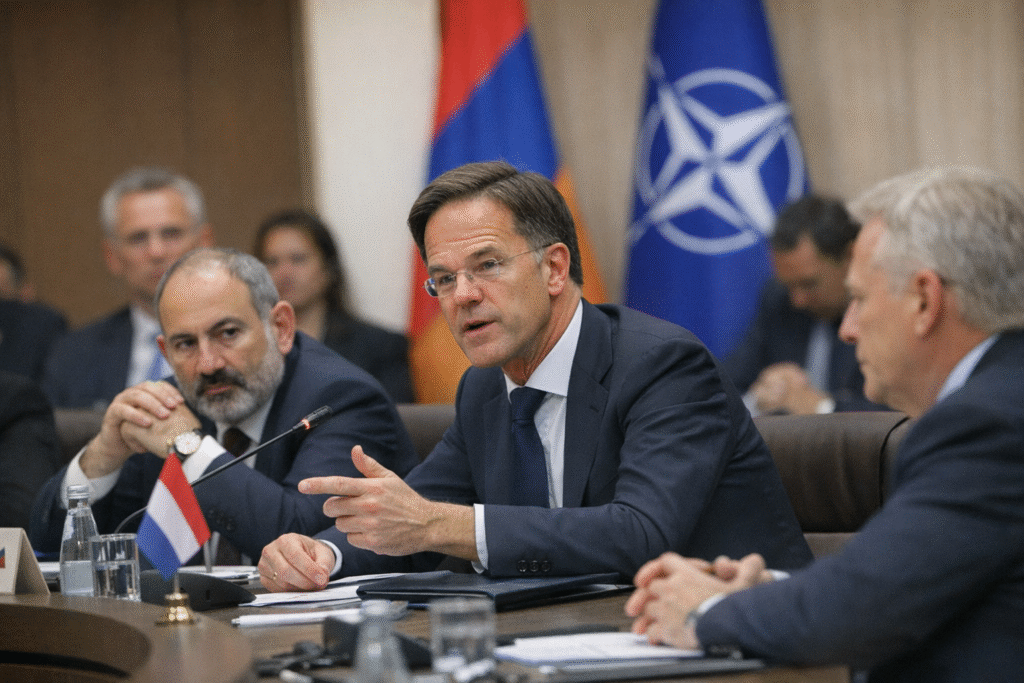
NATO Secretary General Mark Rutte used a high-level European gathering in Armenia to reinforce the alliance’s focus on stability, cooperation, and security across the broader European continent, according to a report published by NATO.
The article, titled “NATO Secretary General attends the European Political Community Summit in Armenia” on NATO’s official website, outlines Rutte’s participation in the European Political Community (EPC) summit, a forum that brings together leaders from across Europe to discuss shared challenges ranging from security and resilience to economic cooperation.
Speaking at the summit, Rutte emphasized the need for continued unity among European nations in the face of ongoing geopolitical tensions. While NATO remains primarily a military alliance, his remarks underscored the importance of political dialogue alongside defense commitments, particularly as Europe navigates the long-term implications of Russia’s war in Ukraine and broader regional instability.
The EPC, which includes both EU and non-EU countries, has emerged as a complementary platform to existing transatlantic and European institutions. Rutte’s presence highlighted NATO’s interest in engaging beyond its formal membership, strengthening partnerships with countries that play key roles in regional security dynamics but are not part of the alliance.
Discussions at the summit reportedly focused on resilience against hybrid threats, including cyber attacks, disinformation campaigns and energy insecurity—areas that have increasingly blurred the line between civilian and military domains. Rutte reiterated NATO’s efforts to adapt to these evolving challenges, stressing that collective security now extends beyond traditional battlefield considerations.
Armenia’s role as host added a layer of geopolitical significance. Situated in the South Caucasus, the country occupies a strategically sensitive position between Europe, Russia, and the Middle East. The summit provided an opportunity for European leaders to engage directly on regional tensions, including ongoing complexities involving Armenia and neighboring Azerbaijan. While NATO is not directly involved in mediating those disputes, Rutte’s engagement signaled the alliance’s broader interest in regional stability.
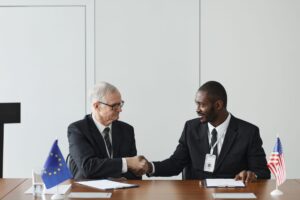
According to the NATO report, the Secretary General also held bilateral meetings on the margins of the summit, reinforcing partnerships and discussing avenues for increased cooperation. These engagements are part of a wider NATO strategy to deepen ties with partner countries and enhance political dialogue across Europe.
Rutte’s participation comes at a time when NATO is seeking to balance immediate security concerns with longer-term strategic planning. The alliance has placed renewed emphasis on deterrence and defense, while also expanding its engagement with partners beyond its traditional geographic scope.
The EPC summit in Armenia thus served as both a diplomatic forum and a symbol of evolving European security architecture—one in which NATO continues to play a central, but increasingly interconnected, role.