Quad Nations Deploy AI to Unmask Ships Running Dark in the Pacific
The U.S. Navy and Quad partners are using Vantor’s AI to identify and track dark-fleet vessels evading detection in the Pacific.

The U.S. Navy and its Quad partners — Australia, India, and Japan — are deploying artificial intelligence developed by maritime analytics firm Vantor to build behavioral and signal-based profiles of vessels that deliberately conceal their identities and locations in the Pacific, according to DefenseScoop reporting. The initiative represents a significant multilateral push to close surveillance gaps that dark-fleet operators — including those linked to sanctions evasion and state-directed gray-zone operations — have long exploited across one of the world’s most strategically contested waterways. The effort connects directly to broader allied concerns about U.S. Navy fleet capacity and presence across the Indo-Pacific.
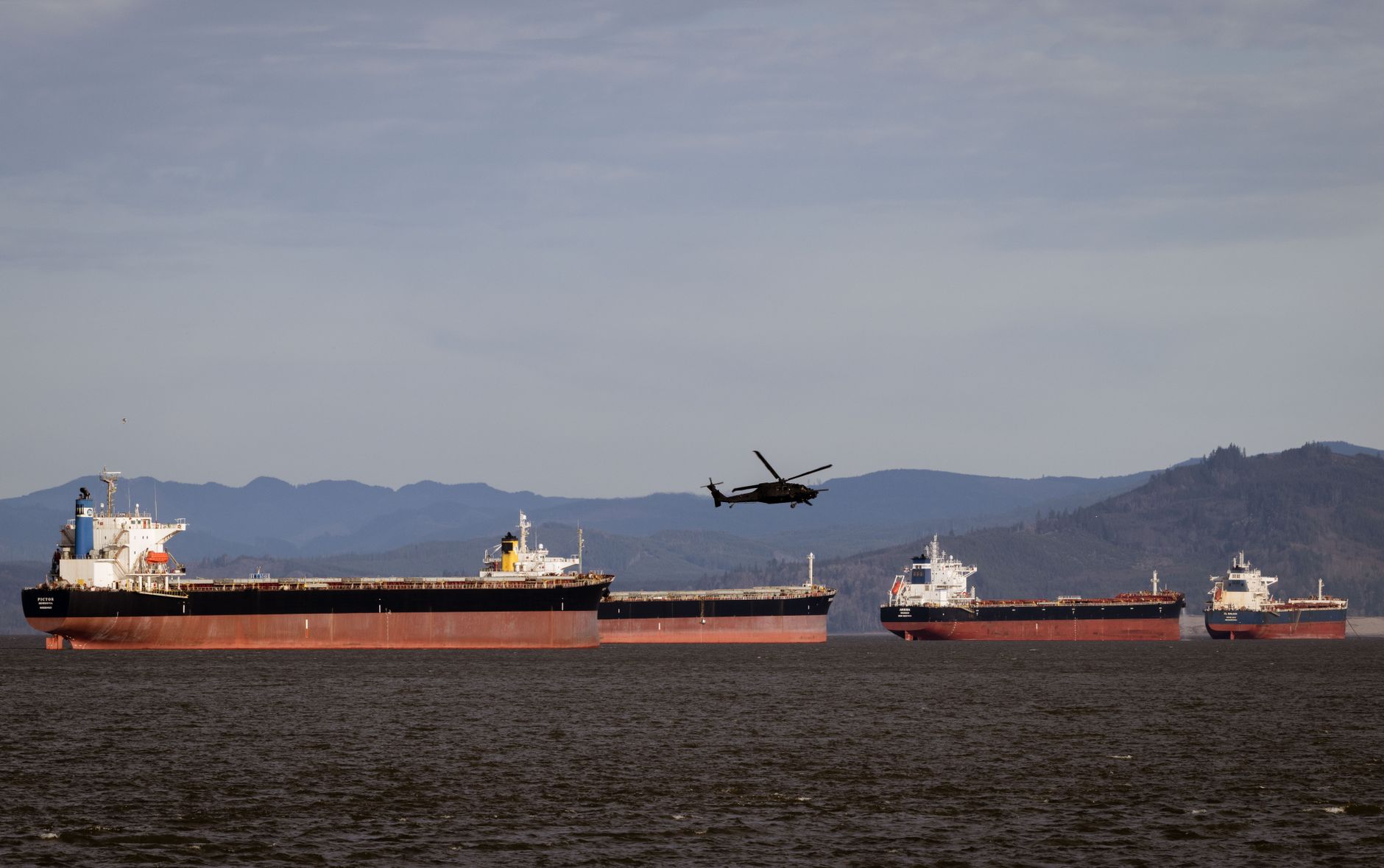
The core capability Vantor is providing is what officials and the company describe as “fingerprinting” — a technique that fuses multiple passive data streams, including vessel movement patterns, radio-frequency emissions, and historical behavioral signatures, to construct persistent identity profiles for ships that have switched off or spoofed their Automatic Identification System transponders. AIS manipulation is the primary tool dark-fleet vessels use to disappear from conventional maritime domain awareness systems, and fingerprinting is designed to make that concealment significantly harder to sustain over time.
Multilateral Architecture and Operational Scope
The Quad framework provides the initiative with overlapping sensor coverage and data-sharing arrangements that no single nation’s maritime surveillance architecture could replicate alone. Australia, India, and Japan each contribute regional monitoring infrastructure and access to littoral zones where U.S. systems have limited persistent presence. Officials have not publicly confirmed the specific data-sharing protocols governing how Vantor’s derived intelligence products are distributed among the four partners, nor have they detailed which Pacific sub-regions are prioritized under the current program scope.
Vantor’s system is designed to operate across unclassified and classified data environments, according to the DefenseScoop report, giving allied analysts the ability to work from a common operating picture without requiring each partner to meet the same classification infrastructure standards. That interoperability consideration is particularly relevant for India, whose military data-sharing integration with the other three Quad members remains less mature than the Australia-U.S.-Japan trilateral arrangements that have developed over decades of alliance cooperation.

Strategic Pressure on Gray-Zone Maritime Operations
The dark-fleet problem has grown substantially in strategic salience over the past several years. Fleets of vessels linked to Russia and Iran have used identity-masking techniques to move sanctioned commodities — particularly oil — in ways that frustrate conventional interdiction and monitoring. In the Pacific context, the concern extends to ships supporting North Korean cargo transfers and, more broadly, to Chinese maritime militia vessels whose ambiguous legal status complicates both identification and response under international law.
By creating persistent behavioral fingerprints rather than relying on real-time transponder data, the Vantor system aims to allow analysts to re-identify a vessel even after it has gone dark, changed its reported name, or reflagged — all standard tradecraft for operators seeking to obscure supply chains or military-adjacent logistics. Whether the fingerprinting data can be acted upon quickly enough to support operational responses, as opposed to longer-term pattern analysis, is a question officials have not publicly addressed. The program nonetheless signals that the Quad is moving toward a more proactive and technically sophisticated posture on maritime domain awareness, treating the Pacific’s shadow shipping networks as a shared intelligence problem rather than a bilateral one.