How the Israel Air Force Rebuilt a Written-Off F-15 Into a Flying Jet
An IAF maintenance unit resurrected a structurally condemned F-15 using salvaged parts, revealing rare depot-level engineering depth.
A specialized Israel Air Force maintenance unit has accomplished what Boeing’s engineers and standard military logistics doctrine would have deemed impossible: returning a structurally condemned F-15 to airworthy status by fabricating and grafting in components from other damaged airframes. The feat, first detailed in a Defense News report, offers a rare public window into one of the most capable organic depot-maintenance operations in any air force of comparable size. For context on how defense budgets shape sustainment priorities, see GDD’s earlier coverage of elevated defense spending and its downstream tradeoffs.
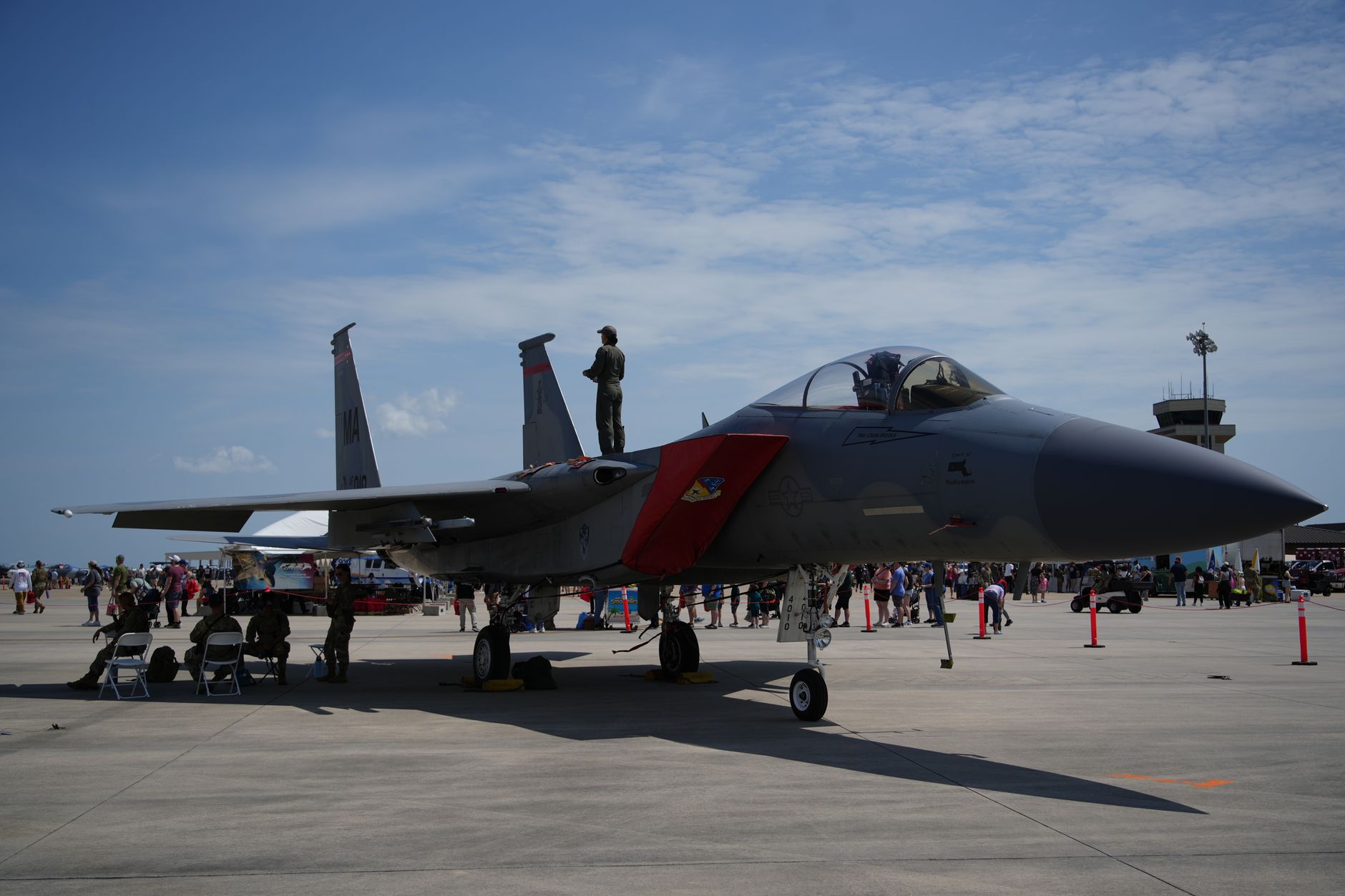
The aircraft in question had been assessed as beyond economical repair — a determination that in most air forces would end the jet’s service life and send it to a boneyard or parts pool. Instead, the IAF’s 850th Technical Wing undertook a painstaking reconstruction effort, sourcing structural sections, systems components, and assemblies from other F-15s that had themselves sustained damage. The result was a composite airframe that met airworthiness standards and returned to operational use.
The Unit Behind the Reconstruction
The 850th Technical Wing operates as the IAF’s primary heavy-maintenance and overhaul organization, handling work that peer air forces typically contract out to original equipment manufacturers or large defense primes. According to the Defense News account, the wing’s engineers possess both the authority and the organic technical knowledge to make structural determinations and execute repairs that go well beyond scheduled depot-level maintenance cycles.
That institutional capability is not incidental. The IAF has deliberately cultivated in-house engineering depth on the F-15 — known in Israeli service as the Ra’am and Baz in its various variants — over decades of continuous operation. The ability to assess, certify, and reconstruct major structural assemblies without routing work to Boeing or a contracted depot gives the IAF a sustainment flexibility that translates directly into operational availability, particularly in a threat environment where attrition-replacement timelines cannot be guaranteed.
Operational and Industrial Significance
The broader implication of the rebuild is what it reveals about fleet management philosophy. Rather than treating a heavily damaged airframe as a total loss — a calculation driven by replacement cost versus repair cost, as most Western air forces would approach it — the IAF’s maintenance establishment treated the jet as a structural donor-recipient problem to be engineered around. Each salvageable component from multiple damaged jets was evaluated, catalogued, and matched against the primary airframe’s rebuild requirements.
The practical outcome is a reduction in the number of airframes lost to attrition damage short of catastrophic destruction, and a corresponding improvement in sustained fleet size. For a relatively small air force operating a finite number of high-performance platforms, recovering even a single F-15 that would otherwise be written off represents a meaningful addition to order-of-battle. The approach also accumulates structural and systems knowledge within the wing that cannot be purchased from a contractor at short notice. Israel Aerospace Industries, a separate entity from the IAF’s organic maintenance arm, has separately signaled strong defense demand, as GDD has reported on the IAI backlog and potential public listing. The 850th Wing’s work, however, represents government-organic capability — a different and complementary layer of the country’s defense-industrial depth.
Officials have not publicly disclosed the total number of airframes that have undergone similar reconstruction efforts, nor the full cost accounting of the rebuild compared with a notional replacement. What the case does confirm is that the IAF has institutionalized an approach to aircraft sustainment that maximizes operational output from a fixed and aging fleet — a model with relevance to any air force confronting high platform costs and constrained procurement budgets.