Iran Conflict Reshapes the Global Arms Market as Farnborough Closes Its Doors
The Iran conflict is accelerating defense deals and shifting buyer priorities, as Farnborough 2026 wraps with major procurement signals.

The 2026 Farnborough Airshow has drawn to a close, and the defense corridors were as consequential as the flight lines. According to Breaking Defense, the ongoing conflict with Iran has emerged as an accelerant for international arms sales, with buyers arriving at the show with a sharper sense of urgency and, in several cases, expanded procurement budgets. The war’s ripple effects on supplier capacity, lead times, and customer priorities defined much of the behind-the-scenes dealmaking at this year’s event.
For context on how sustained regional mobilization strains defense economies, GDD has tracked how repeated Iran mobilizations have quietly eroded Israel’s defense budget over the past year — a pressure that now appears to be driving allies and partners toward earlier procurement commitments rather than extended evaluation cycles.
Iran War Accelerates Procurement Timelines
The conflict’s most direct effect on the arms market, as reported by Breaking Defense, is the compression of decision cycles. Nations that had been deliberating over fighter aircraft, missile defense systems, and precision munitions have moved procurement conversations into more advanced stages. Vendors at Farnborough reported that the war has validated threat assessments that customers had previously treated as long-range planning scenarios, making capability gaps feel immediate rather than theoretical.
Supplier constraints are also shaping the dynamic. With Western defense manufacturers already stretched by demand generated by the Ukraine conflict and broader NATO rearmament commitments, buyers are contending with the reality that placing orders later may mean waiting longer. That calculus has pushed some nations to accelerate contract finalization even when full funding has not yet been secured, according to the Breaking Defense report. Officials have not confirmed specific contract values or named all parties involved in these accelerated discussions.
Farnborough Takeaways: Key Platforms and Industrial Signals
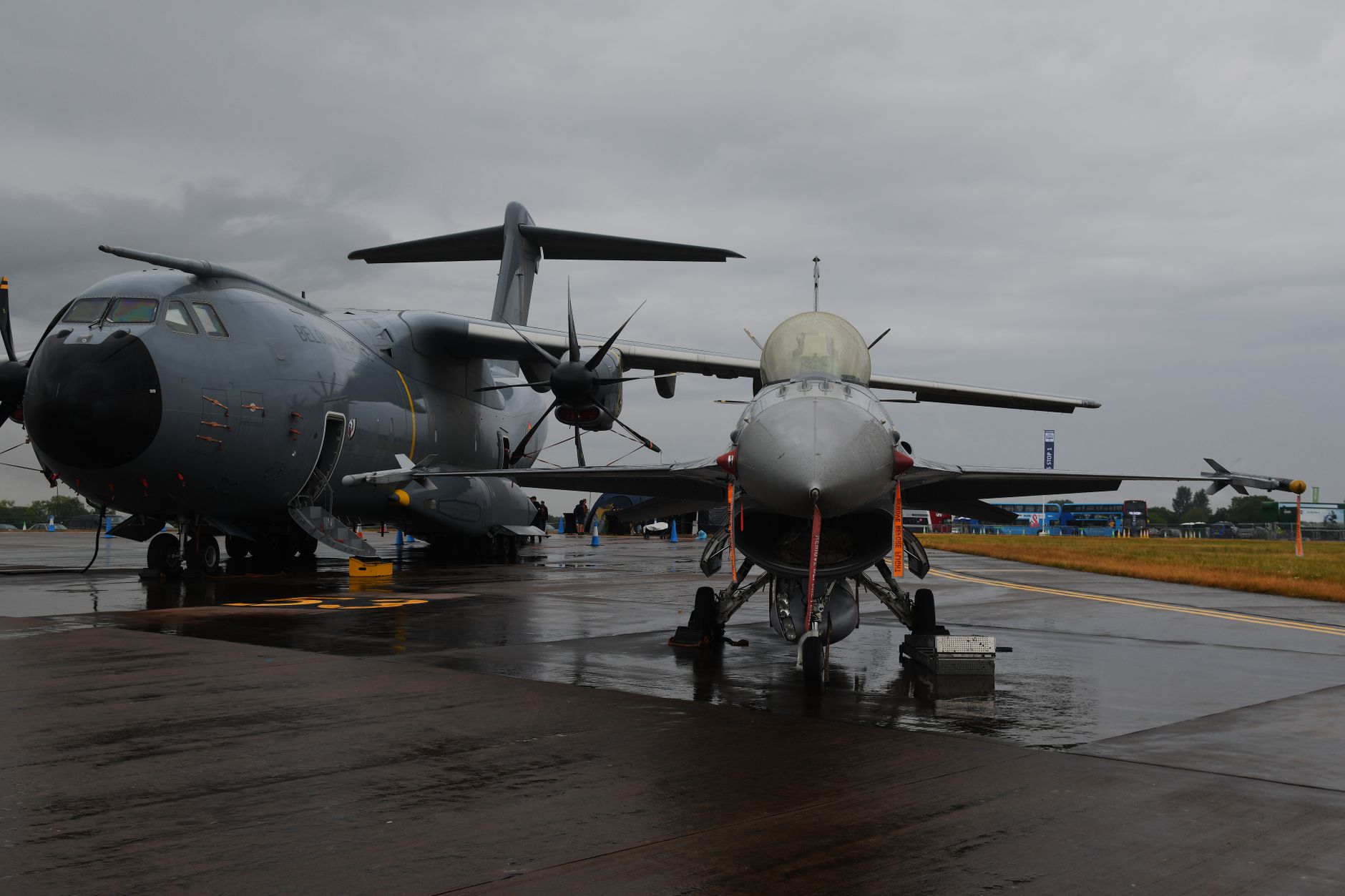
Beyond the Iran-driven urgency, Farnborough 2026 offered its own set of industrial signals. The show served as a visible gauge of where defense manufacturers stand on production ramp-up efforts and next-generation platform maturity. Breaking Defense noted that the event reflected a defense industry still grappling with workforce constraints and supply chain fragility, even as order books grow. The gap between demand signals and delivery capacity was a recurring theme among exhibitors and government delegations alike.

The airshow also underscored ongoing competition among suppliers for influence in emerging markets, particularly in regions where the Iran conflict has elevated threat perceptions. Several nations are reassessing platform mix decisions — particularly regarding air defense and long-range strike — in light of operational lessons being drawn from the current fighting. Breaking Defense reported that these reassessments are translating into new conversations at the show, though officials have not confirmed which specific nations or programs are involved in the most advanced discussions.
For defense manufacturers, Farnborough 2026 reinforced that the post-2022 environment of sustained high demand shows no signs of easing. The industrial challenge ahead is not generating interest — it is fulfilling commitments. Whether the sector can close the gap between procurement ambition and production reality will shape alliance readiness for years to come. GDD has previously reported on how drone missile startups are adapting to sustain output under exactly those kinds of industrial pressures.