Two Fighter Programs, One Continent: How Europe Is Reshaping Its Combat Air Architecture
GCAP and FCAS are advancing on parallel tracks. Here is what the two programs mean for NATO airpower.

Europe’s next generation of combat aircraft is taking shape across two distinct multinational programs, and the choices made in the coming years will determine how the continent projects airpower well into the middle of the century. As Breaking Defense outlined in a recent overview, the Global Combat Air Programme and the Future Combat Air System are both moving forward, but on separate industrial and political tracks that reflect the underlying tensions within European defense cooperation.
The parallel development carries consequences that extend beyond the drawing board. With European defense budgets expanding in response to the security environment on the continent’s eastern flank, questions about industrial consolidation, interoperability, and transatlantic alignment are central to how both programs are evaluated. The stakes are not unlike those surrounding European airspace security more broadly, where gaps in capability and coordination have become increasingly difficult to ignore.
GCAP and FCAS: Separate Paths to Sixth-Generation Flight
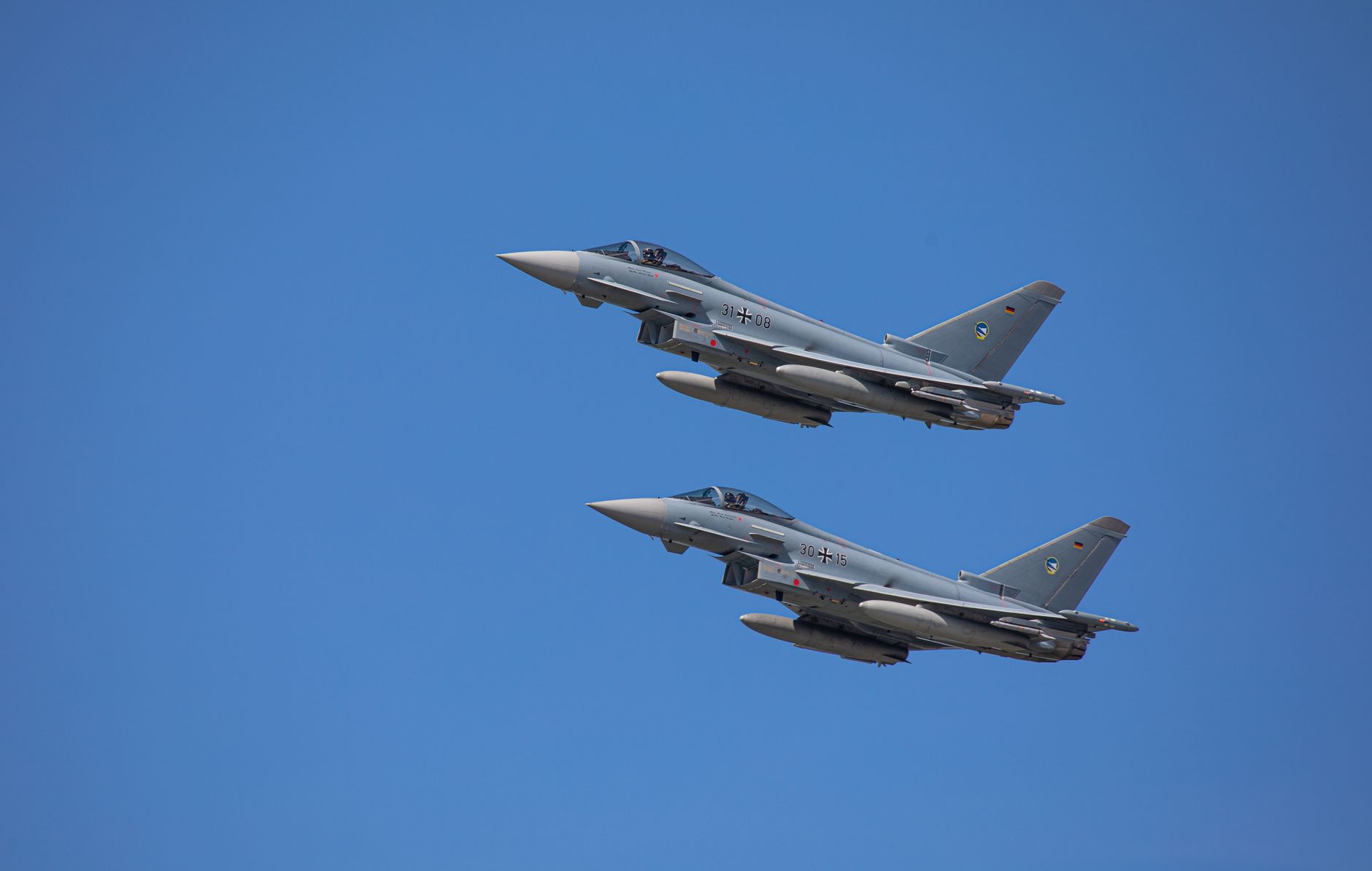
GCAP, the program linking the United Kingdom, Italy, and Japan, is pursuing a sixth-generation crewed combat aircraft intended to replace the Eurofighter Typhoon and Japan’s Mitsubishi F-2. The program has moved through early design phases and is targeting an in-service date around 2035, according to the Breaking Defense overview. Its architecture emphasizes integration with uncrewed systems and advanced sensor fusion, consistent with the broader shift in combat air doctrine toward human-machine teaming.
FCAS, the Franco-German-Spanish program, is pursuing a comparable vision under the banner of the Next Generation Fighter as the crewed centerpiece, paired with a network of Remote Carrier uncrewed platforms and a cloud-based combat management layer. The program has faced well-documented friction between the lead industrial partners — primarily Airbus and Dassault — over workshare and intellectual property arrangements, though both governments have continued to reaffirm their commitment to the effort. Officials have not confirmed a revised milestone schedule following earlier delays in the demonstration phase.
Industrial and Strategic Implications for NATO Allies
The existence of two separate European sixth-generation efforts raises practical questions about interoperability and resource efficiency at a moment when NATO members are under pressure to modernize faster. Neither program is designed primarily around NATO standardization requirements, and the prospect of two distinct combat air ecosystems operating within the alliance’s integrated air defense structure adds a layer of coordination complexity that planners will have to account for.
On the industrial side, the programs represent substantial long-term commitments for their respective defense sectors. Both are expected to anchor domestic aerospace supply chains for decades, making the workshare negotiations as much an economic question as a technical one. That dynamic — where sovereign industrial interests shape procurement decisions as much as operational requirements do — is not unique to Europe. It echoes patterns visible across allied defense programs, including those analyzed in the context of Japan’s defense buildup, where Tokyo’s participation in GCAP sits alongside its broader military expansion effort. Whether the two European programs eventually converge, coordinate, or compete for export customers and allied partnerships remains an open question that the next several years of program milestones will begin to answer.