Ukraine’s Autonomous Gun Turrets Intercept Russian Lancet Drones in Confirmed Combat Debut
Ukraine’s robotic gun turrets have recorded their first confirmed drone kills, targeting Russia’s fast-moving Lancet loitering munitions.
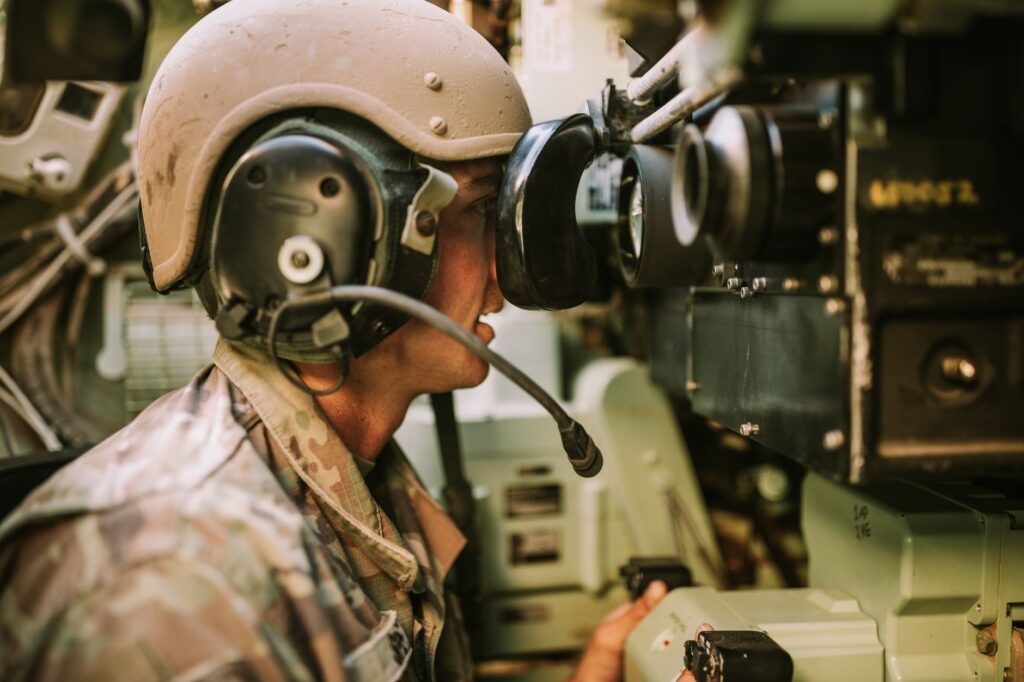
Ukraine’s remotely operated gun turrets have achieved their first confirmed combat kills against Russian attack drones, marking a significant milestone in the country’s effort to automate frontline air defense. According to a Business Insider report, the systems successfully engaged Lancet loitering munitions — among the fastest and most tactically disruptive drones Russia has deployed in the war. The development signals that Ukraine’s push toward autonomous and semi-autonomous defensive systems is beginning to produce tangible battlefield results, not just laboratory demonstrations. For readers tracking broader unmanned-systems competition, GDD’s earlier coverage of autonomous platforms at international defense exhibitions provides useful context on how rapidly this technology is maturing across multiple militaries.
Lancets as the Target: Why the Matchup Matters
The Lancet has proven to be one of Russia’s most effective precision strike tools throughout the conflict, capable of striking armored vehicles, artillery systems, and logistics nodes with a degree of accuracy that earlier Russian munitions could not achieve. Its speed and relatively small radar cross-section have made it a difficult target for conventional gun-based defenses, which typically require a human operator in the engagement loop. The fact that Ukraine’s robotic turrets were able to detect, track, and engage Lancets in an operational environment — rather than a controlled test — carries meaningful weight.
Business Insider’s reporting does not specify the exact intercept count or the precise locations where the kills were recorded, and Ukrainian officials have not publicly disclosed those operational details. What the report makes clear is that the engagements represent a first for this class of system in Ukrainian service, establishing a proof of concept that commanders will likely seek to replicate and scale. The Lancet’s role as a tank- and artillery-hunter has made suppressing it a priority for Ukrainian defensive planners throughout the war.
Robotic Turrets on the Frontline: System and Doctrine
Ukraine has been developing and fielding robotic gun turret systems as part of a broader strategy to reduce human exposure on contested front lines while maintaining continuous defensive coverage. The turrets integrate sensors, targeting software, and automatic cannons into a platform that can operate with minimal or no human presence at the point of fire. Business Insider’s report describes the systems as capable of engaging targets moving at the speeds characteristic of Lancet-type drones, though the publication does not detail the specific caliber, sensor suite, or the Ukrainian developer behind the hardware involved in these engagements.
The operational logic behind these systems is straightforward: drone attacks are volumetrically demanding, and fielding enough trained human gun crews to respond to every threat is neither sustainable nor survivable in high-tempo environments. Robotic turrets offer a persistent, low-fatigue alternative that can be positioned in areas too exposed for conventional crews. Ukraine’s confirmation that the turrets are now scoring kills — rather than simply deterring or displacing threats — shifts the conversation from potential to demonstrated capability. How quickly Ukraine can manufacture and deploy additional units will likely determine whether this becomes a scalable component of its layered air defense architecture or remains a niche capability. The broader race to field strike defense systems continues to accelerate on both sides of the conflict, with each confirmed first representing pressure on the opposing side to adapt.