Navy Clears Blackbeard Hypersonic Weapon for F/A-18 Super Hornet Integration Tests
The Blackbeard hypersonic missile has been photographed carried aloft by an F/A-18 Super Hornet for the first time, marking a key integration milestone.

The U.S. Navy has publicly confirmed that its Blackbeard hypersonic missile demonstrator has flown aboard an F/A-18 Super Hornet for the first time, marking a significant integration milestone for a program that has operated largely outside public view. The development signals that the Navy is actively moving Blackbeard toward operational compatibility with carrier-based strike aircraft — a capability with direct implications for long-range strike in contested environments. The program sits within a broader push across the U.S. military to field air-launched hypersonic weapons, a competition where both China and Russia have already fielded or declared operational systems, a dynamic examined in depth alongside US-China security negotiations that have dominated the bilateral agenda.
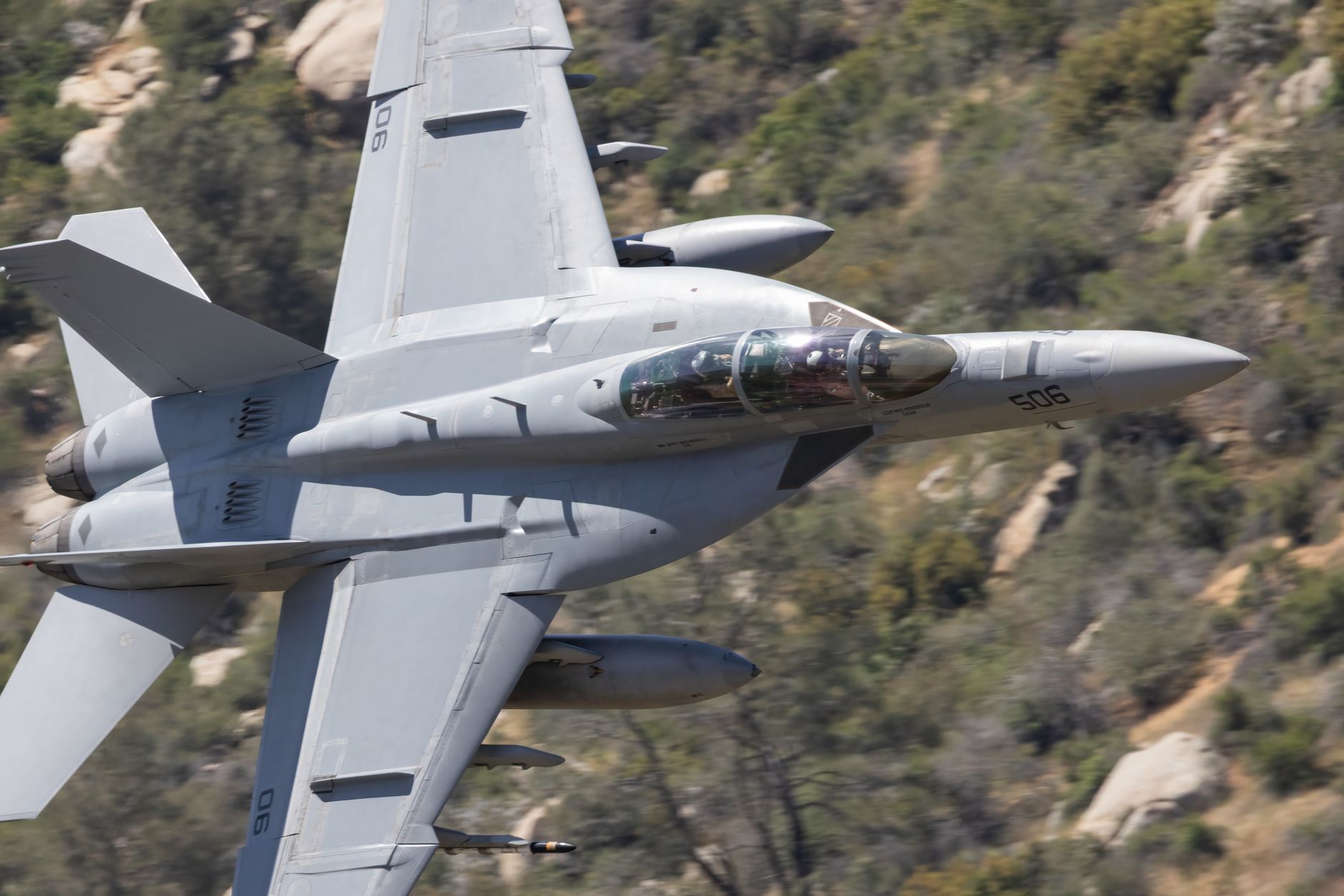
Naval Air Systems Command confirmed the flight in an official announcement posted to its verified account, showing imagery of the Super Hornet carrying the Blackbeard round during an airborne captive-carry test.
What Blackbeard Is and Why It Matters for Carrier Aviation
Blackbeard is described by the Navy as a hypersonic missile demonstrator, though program officials have disclosed limited technical specifics publicly. According to War Zone’s reporting, the weapon is associated with efforts to develop an air-launched hypersonic strike capability suitable for tactical naval aircraft. The Super Hornet’s role as the Navy’s primary carrier-based strike platform makes it a logical integration host — if Blackbeard or a derivative reaches production, it would give carrier air wings a significantly extended reach and time-on-target advantage against hardened or time-sensitive targets.
Hypersonic weapons, broadly defined as systems capable of sustained flight above Mach 5, present particular challenges for adversary integrated air defense systems because of the combination of speed, maneuverability, and reduced response time they impose. Fitting such a weapon onto a twin-engine tactical jet — with the size, weight, and drag constraints that entails — is a more demanding engineering problem than integrating a hypersonic system onto a larger bomber or surface launcher. The fact that Blackbeard has now flown on the Super Hornet, even in a captive configuration, suggests those compatibility challenges are being resolved.

Program Trajectory and the Broader Hypersonic Competition
The Navy has not disclosed a projected timeline for Blackbeard to advance from captive-carry testing to free-flight or live-fire events, and officials have not confirmed specific range, speed, or payload figures for the system. What the NAVAIR announcement does clarify is that the program is active, funded, and has reached a stage where airborne integration testing with an operational platform is underway. That progression — from ground tests to airborne captive carry — is a concrete and meaningful step in any weapon’s development cycle.
The broader context is one of accelerating competition. The U.S. military has faced persistent criticism for lagging behind peer competitors in fielding operational air-launched hypersonic weapons. Programs like the Air Force’s AGM-183A Air-launched Rapid Response Weapon encountered developmental setbacks, raising pressure on the services to demonstrate credible alternatives. Blackbeard’s integration onto the Super Hornet does not resolve that gap immediately, but it represents a live program advancing through a rigorous test sequence at a time when the strategic premium on hypersonic strike is rising. Progress in this domain also intersects with the broader technology competition being tracked across Indo-Pacific aviation developments, where regional air forces are simultaneously modernizing their own strike fleets. How quickly Blackbeard moves from demonstrator to deployable system will depend on test results that remain, for now, outside public view.