Taiwan’s Annual War Games Put the Island’s Survival Strategy on Full Display
Taiwan’s Han Kuang exercises rehearse every phase of a potential Chinese invasion, from urban tank warfare to civilian resilience.
Every year, Taiwan stages a military exercise that its own planners treat not as a readiness drill but as a rehearsal for national survival. The Han Kuang war games, detailed in a recent Business Insider report, run scenarios across every warfighting domain — land, sea, air, and cyber — stress-testing the island’s ability to absorb and repel a full-scale invasion by the People’s Liberation Army. The exercises have grown in scope and realism as cross-strait tensions have intensified, and what happens inside them offers one of the clearest windows into how Taipei intends to fight, and survive, the conflict that defense planners on both sides of the Pacific regard as the most consequential potential war of this century. For context on how democratic militaries are adapting to new surveillance and interdiction challenges in the Indo-Pacific, see GDD’s earlier coverage of Quad Nations’ AI deployment against gray-zone maritime activity.
Urban Terrain as a Strategic Asset
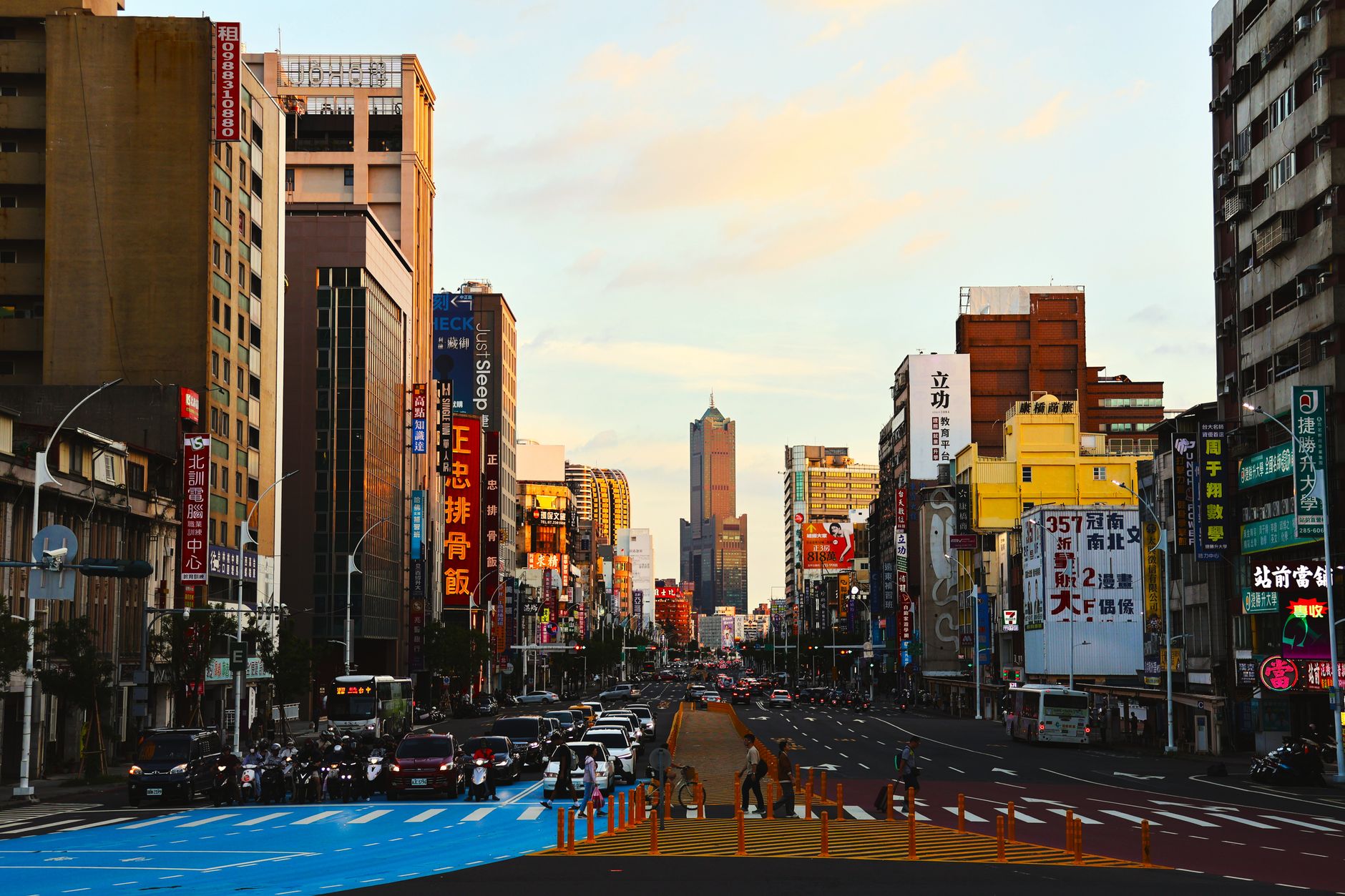
One of the more striking operational concepts to emerge from Han Kuang is Taiwan’s deliberate use of its dense urban environment as a force multiplier. Rather than massing armor on open ground where PLA fires would exact a severe toll, Taiwanese crews are training to disperse and conceal equipment inside the island’s cities. According to a separate Business Insider investigation into the exercises, M1A2T Abrams tank crews — operating the variant Taiwan procured from the United States — are practicing how to hide vehicles and conduct refueling operations within bustling urban sprawl, using the built environment to complicate PLA targeting and extend the operational life of each platform.
The logic mirrors lessons visible in other recent conflicts: armored vehicles in open terrain are increasingly vulnerable to aerial and drone observation, while cities fragment sensor coverage and force attackers into costly close-quarters engagements. Taiwan’s geography reinforces this calculus. The island’s western coastal plain, the most likely axis of any amphibious landing, is heavily urbanized, meaning a defending force that is comfortable operating in city streets holds a structural advantage that raw equipment comparisons do not capture. The challenges armored platforms face against drone-saturated battlefields have been documented extensively in Ukraine, where, as GDD reported, Abrams tanks were withdrawn from frontline service because drone exposure made the risk untenable.
Testing the Full Spectrum of Modern Warfare
Han Kuang is not limited to conventional ground combat. The Business Insider report describes exercises that span cyber operations, air defense coordination, naval interdiction, and civilian continuity of government — reflecting a Taiwanese military doctrine that treats resilience across all domains as essential to denying the PLA a rapid, decisive victory. The underlying strategic bet is that if Taiwan can survive the first days and weeks of an attack without catastrophic collapse, the political and logistical calculus for Beijing shifts dramatically, buying time for external intervention or diplomatic resolution.
Officials have not publicly confirmed every specific scenario or force composition used in the most recent iteration of the exercises, and certain operational details remain classified. What has emerged through reporting is a picture of an armed forces increasingly oriented around the concept of asymmetric resistance — making an invasion prohibitively costly rather than attempting to match the PLA symmetrically. The exercises also appear to include civilian components, testing emergency governance and critical infrastructure protection under simulated attack conditions. Taiwan’s planners appear to have absorbed the broader lesson that modern great-power conflict is not decided solely on the battlefield but also in the resilience of institutions and supply chains operating under sustained pressure.