Bluebottle USVs to Gain Persistent Sonar Capability Through Dual Array Partnership
Ocius Technology has selected ThayerMahan and Thales Australia to supply towed thin-line sonar arrays for its Bluebottle unmanned surface vessels.
Australian unmanned systems developer Ocius Technology has selected two sonar suppliers — U.S.-based ThayerMahan and Thales Australia — to provide towed thin-line arrays for fleets of its Bluebottle unmanned surface vessels (USVs), according to Naval News. The dual-supplier arrangement positions the Bluebottle as a persistent, low-signature platform capable of conducting anti-submarine warfare (ASW) and maritime surveillance missions without a crew aboard. The move marks a meaningful step in the maturation of Australia’s uncrewed maritime sector, where industry partnerships are increasingly driving sovereign capability alongside allied industrial cooperation.
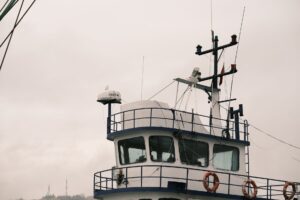
The Bluebottle is a wind- and solar-powered USV developed by Ocius that uses a patented “BlueDrive” propulsion system, enabling extended endurance at sea without reliance on fossil fuels. That energy profile makes it particularly well-suited to towing passive sonar arrays — a task that demands sustained, low-speed transits over long durations. Integrating thin-line arrays from two established sonar vendors introduces operational flexibility and, for procurement purposes, a degree of competitive redundancy. For navies considering Bluebottle deployments, the ability to draw from either a U.S. or Australian array supplier also carries supply-chain and industrial base implications worth noting, particularly as expeditionary watercraft programs increasingly blend allied development efforts across the Indo-Pacific.

Two Arrays, Two Supply Chains
ThayerMahan, headquartered in Groton, Connecticut, has established itself in the U.S. defense market through its focus on distributed maritime surveillance and ASW services, including towed array deployments aboard small autonomous platforms. Thales Australia brings a complementary industrial footprint and a record of sonar work within the Australian Defence Force’s own programs. By selecting both firms, Ocius avoids single-source dependency while giving prospective fleet operators — including the Royal Australian Navy and potentially partner navies — options aligned with their respective supply chains and security arrangements.
Naval News, which originally reported the selection, did not detail the specific array models or contract values involved. Ocius has not publicly confirmed which array variant each supplier will deliver or whether the two systems will operate across separate Bluebottle fleets or be interchangeable on individual hulls. Those specifications, if released, would significantly shape how operators plan mission sets and maintenance cycles. What is clear is that both partnerships are intended to support fleet-scale deployment rather than single-platform trials, signaling that Ocius views the Bluebottle’s commercial and defense pipeline as sufficiently mature to warrant committed industrial arrangements.
Strategic Context for Uncrewed ASW
The selection arrives as navies across the Indo-Pacific accelerate investment in uncrewed platforms to address submarine detection gaps across vast maritime expanses. The Bluebottle’s persistent-endurance model — remaining at sea for weeks or months at a time — is particularly relevant to area-denial and wide-area surveillance roles where crewed patrol assets would be prohibitively expensive to sustain. Pairing that endurance with operationally proven thin-line passive sonar arrays substantially raises the platform’s utility in contested or high-traffic maritime corridors.
Australia’s geographic position and its obligations under the AUKUS framework have intensified domestic interest in sovereign and allied uncrewed maritime capability. Ocius’s decision to anchor its sonar sourcing in both the U.S. and Australian industrial bases reflects that strategic logic — keeping critical sensor supply lines within the alliance perimeter. The broader trend toward autonomous ASW platforms is also drawing interest from the robotics supply chain debate in Washington, where policymakers are scrutinizing which components in uncrewed systems trace back to adversary manufacturers. For Ocius, dual-sourcing from ThayerMahan and Thales Australia appears designed, at least in part, to get ahead of those concerns before they become procurement obstacles.