Army Adopts Role-Based Fitness Standards to Better Align with Modern Combat Demands
In its July 14 episode, titled “New fitness standard takes hold across the Army,” Defense News Weekly, published by Defense News, reports on a significant shift in how the U.S. Army evaluates the physical readiness of its soldiers, reflecting broader changes in military priorities and operational demands.
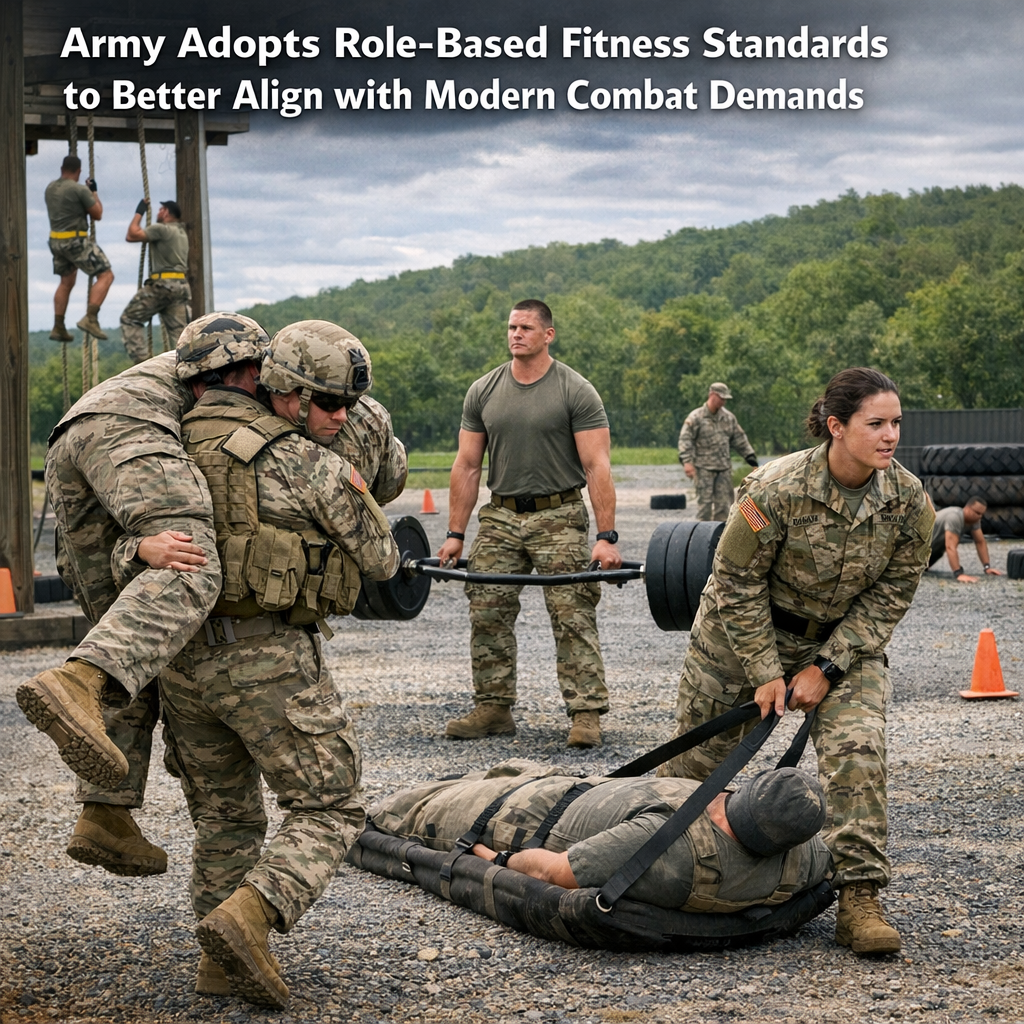
The new fitness standard, now being implemented across the force, represents a departure from legacy testing models that critics argued were overly rigid and insufficiently aligned with modern combat requirements. Army leaders have framed the update as an effort to better measure functional fitness—strength, endurance, and mobility under conditions that more closely resemble real-world military tasks—rather than relying solely on traditional metrics such as timed runs or repetitive calisthenics, as seen in the Army Combat Fitness Test (ACFT) framework.
According to the Defense News report, the updated system emphasizes role-specific expectations, recognizing that the physical demands placed on soldiers vary depending on their occupational specialties. Combat units, for instance, are expected to meet more stringent benchmarks tied to load-bearing, maneuverability, and sustained exertion, while other roles may be assessed with different but still rigorous criteria. This approach is intended to create a more equitable standard that maintains readiness without imposing a one-size-fits-all requirement, aligning with broader doctrinal guidance such as FM 7-22 Holistic Health and Fitness.
The rollout has been gradual, with Army officials acknowledging the complexity of implementing a new evaluation system across a globally deployed force. Training programs, scoring methodologies, and administrative processes have all required adjustment. Early feedback captured in the Defense News Weekly segment suggests a mixture of cautious optimism and concern among troops and commanders, particularly regarding consistency in scoring and the potential administrative burden on units. Related analysis from policymakers and researchers, including the Congressional Research Service, has highlighted similar implementation challenges.
The effort also intersects with broader personnel challenges facing the Army, including recruitment shortfalls and retention pressures. By modernizing fitness standards, leaders hope to reinforce the connection between physical readiness and mission effectiveness while avoiding policies that could unnecessarily exclude otherwise qualified candidates. Ongoing concerns about force strength and enlistment trends have been documented in reports such as the Government Accountability Office’s review of military recruiting challenges. The Defense News report notes that policymakers are attempting to strike a balance between maintaining high standards and ensuring they are achievable and relevant.
In addition to the fitness overhaul, the episode places the reform within a wider defense context, highlighting how evolving threats and operational environments are driving institutional change. As warfare becomes increasingly complex, with greater demands on mobility, endurance, and adaptability, the Army’s approach to physical fitness is being recalibrated to match those realities—an issue also explored in defense research such as RAND studies on military readiness and performance standards.
The transition remains ongoing, and its long-term impact on readiness, morale, and recruitment will likely take time to fully assess. However, as presented in Defense News Weekly, the new standard marks a notable shift in how the Army defines and measures the physical capabilities required of its soldiers, signaling a broader effort to align personnel policies with the demands of contemporary military operations.