Cramer Warns U.S. Red Tape Slows Infrastructure as China Advances Strategic Buildout
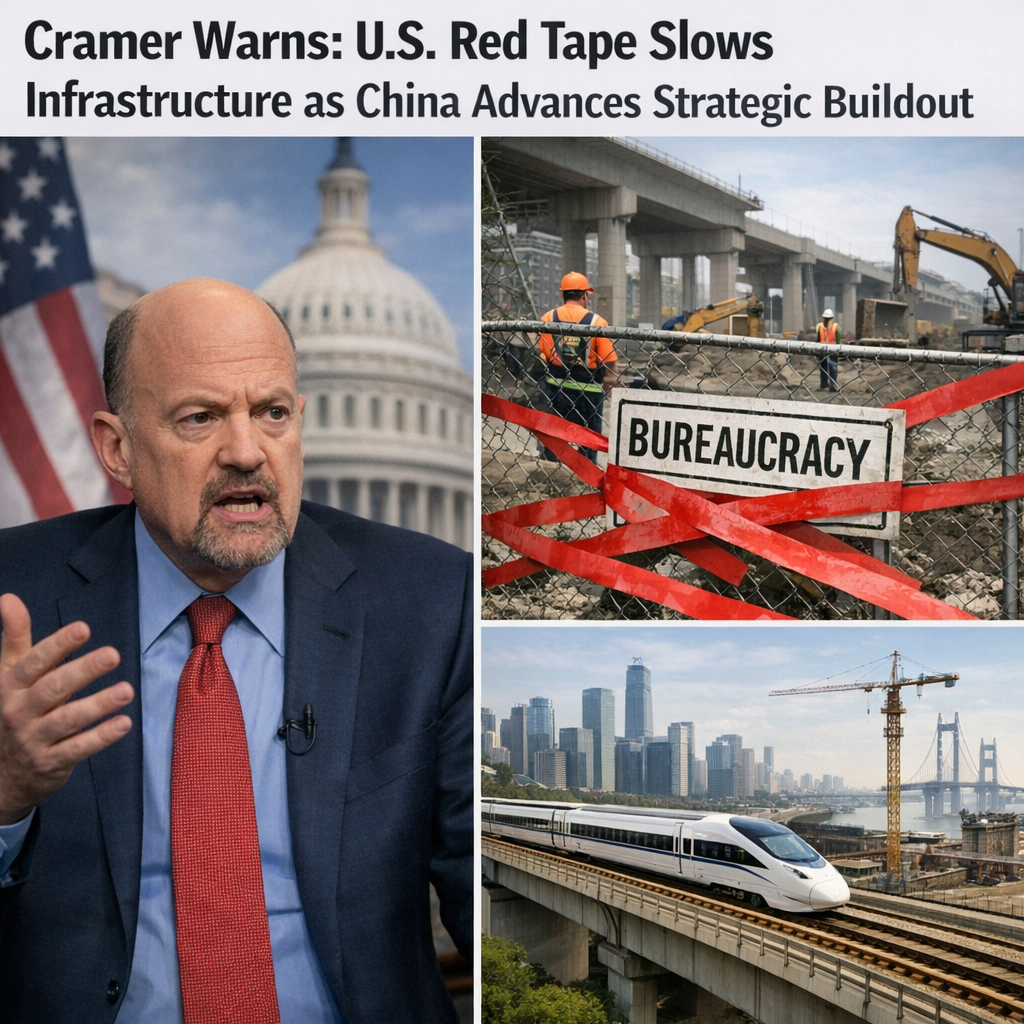
In a recent opinion piece published by Fox News titled “Sen. Kevin Cramer: China builds for war while America waits for permits,” Republican Senator Kevin Cramer of North Dakota argues that the United States is falling behind strategic competitors due to what he characterizes as burdensome regulatory processes and slow infrastructure development (original article).
Cramer’s commentary focuses on the contrast between the pace of U.S. permitting systems and what he describes as China’s rapid mobilization of industrial and defense capabilities. He contends that lengthy environmental reviews and complex approval requirements in the United States—many rooted in laws such as the National Environmental Policy Act (NEPA)—are hindering the construction of critical infrastructure, including energy projects and facilities tied to national security.
According to Cramer, these delays could have significant implications for the country’s ability to respond effectively to geopolitical challenges. He frames China as moving aggressively to strengthen its military and industrial base, a concern echoed in assessments like the U.S. Department of Defense’s China Military Power Report, while the United States, in his view, remains constrained by internal bureaucratic hurdles. The senator emphasizes that faster project approval timelines would better position the country to maintain economic competitiveness and military readiness.
The Fox News opinion piece situates this argument within a broader political debate over permitting reform, an issue that has drawn bipartisan attention in Congress. Analyses such as those from the Congressional Research Service note that lawmakers from both parties have expressed interest in streamlining the approval process for infrastructure, though they differ on how to balance efficiency with environmental and community protections.
Cramer advocates for policy changes that would shorten review timelines and reduce regulatory complexity, particularly for energy and mining projects. He suggests that such reforms are necessary not only for economic growth but also for national security, arguing that domestic production of key resources can reduce dependence on foreign supply chains—a concern also highlighted by organizations like the International Energy Agency regarding critical minerals.
Critics of sweeping permitting reforms, however, caution that accelerating approvals could weaken safeguards designed to protect ecosystems, public health, and local communities. Environmental groups and some policymakers maintain that existing review processes, while sometimes lengthy, are essential for ensuring responsible development.
The debate highlighted in Cramer’s article reflects a broader tension in U.S. policy between speed and oversight. As global competition intensifies, particularly with China, questions about how to modernize infrastructure and secure supply chains without undermining regulatory standards are likely to remain central in Washington, as discussed in policy forums such as those hosted by the Brookings Institution.
Cramer’s op-ed adds to a growing chorus of voices calling for change, framing the issue as one of urgency in an increasingly competitive international landscape. Whether Congress can reach consensus on significant permitting reform remains uncertain, but the discussion signals a continued focus on the intersection of economic policy, environmental regulation, and national security.