US–Iran Tensions Surge After Helicopter Downing Triggers Retaliatory Strikes Near Strait of Hormuz
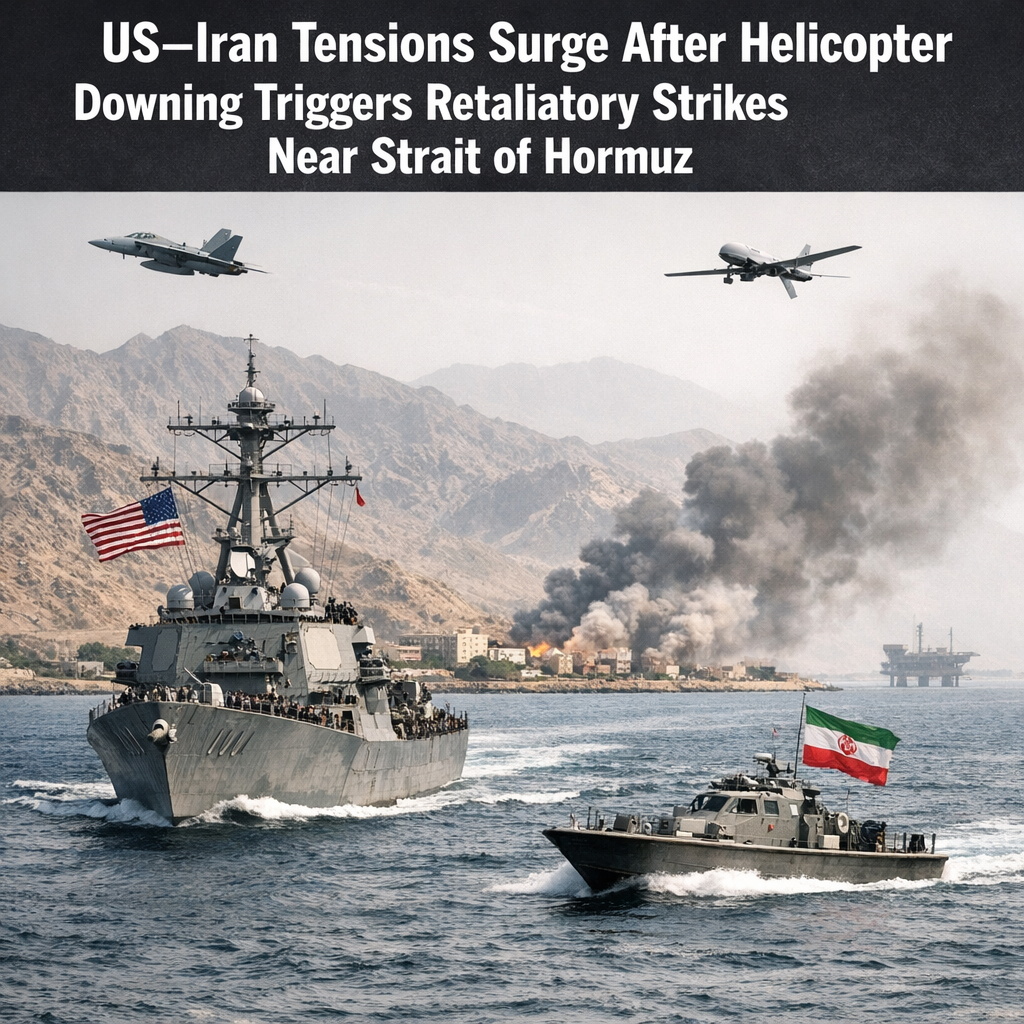
The report titled “US launches retaliatory strikes on Iran after Apache helicopter downed near Hormuz — live blog,” published by i24NEWS, outlines a sharp escalation in tensions between the United States and Iran following a military incident in the strategically vital Strait of Hormuz. According to the outlet’s live coverage, U.S. forces carried out retaliatory strikes after an American Apache helicopter was brought down in the region, a development that has heightened fears of broader confrontation.
The downing of the helicopter, reportedly operating near one of the world’s most critical maritime chokepoints, appears to have triggered a swift U.S. response aimed at deterring further attacks and signaling resolve. While details surrounding the initial incident remain limited and contested, the U.S. response underscores how quickly localized clashes in the Gulf can escalate into wider military action.
The Strait of Hormuz has long been a flashpoint due to its central role in global energy flows. Any disruption or perceived threat to navigation in the corridor carries significant economic and geopolitical implications. The latest developments, as described by i24NEWS, suggest a renewed period of volatility in a region already marked by overlapping conflicts and fragile deterrence dynamics.
U.S. officials have framed the strikes as defensive and proportionate, intended to protect personnel and maintain freedom of navigation. Iranian authorities, for their part, have historically rejected similar characterizations in past incidents, often portraying U.S. actions as escalatory. The absence of independently verified details in the immediate aftermath leaves room for competing narratives, a common feature in fast-moving military crises.
What distinguishes this episode is the apparent direct targeting of a U.S. aircraft, which raises the stakes beyond previous maritime harassment or proxy engagements. Analysts warn that such incidents carry a heightened risk of miscalculation, particularly in a congested operational environment where multiple actors operate in close proximity, as frequently reported by outlets like Reuters Middle East coverage.
The i24NEWS coverage reflects the fluid nature of the situation, with updates evolving as new information emerges. Diplomatic channels are likely to come under increased strain in the coming days, as regional and international actors assess how to contain the fallout. At the same time, markets and shipping stakeholders will be closely monitoring any signs of disruption in the Strait of Hormuz.
The incident adds to a broader pattern of intermittent confrontation between Washington and Tehran, where cycles of provocation and retaliation have repeatedly tested the limits of restraint, a dynamic often analyzed by organizations such as the International Crisis Group. Whether this latest exchange remains contained or develops into something more sustained will depend on decisions made in both capitals in the immediate future.