Senator Budd Pushes New Plan to Strengthen US Military Aviation Amid Budget Uncertainty
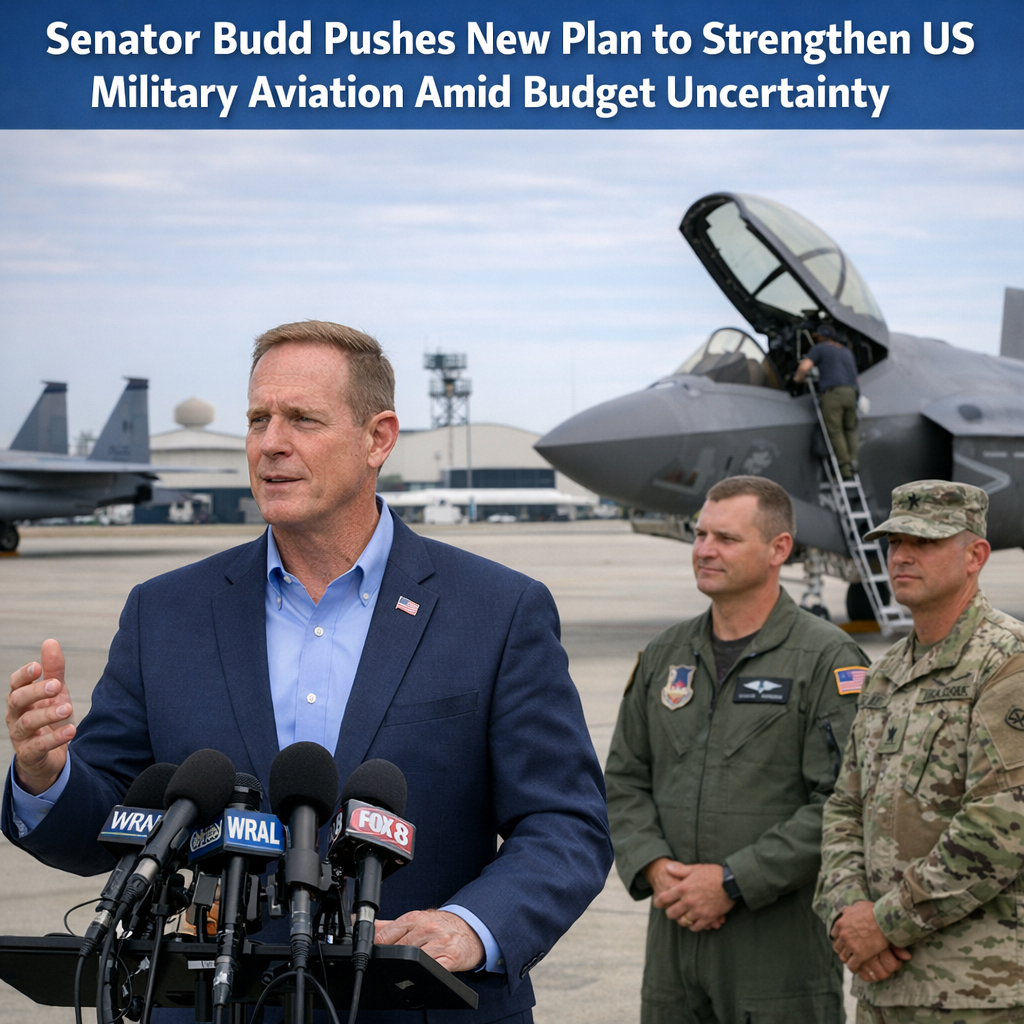
A new set of proposals from Sen. Ted Budd is drawing attention in Washington as policymakers grapple with how to sustain and expand U.S. military aviation capabilities during an election year marked by fiscal uncertainty and political gridlock. In an article published by Breaking Defense titled “How to boost defense aviation in an election year: Sen. Budd has a few ideas”, the North Carolina Republican outlines a mix of budgetary, industrial, and regulatory reforms aimed at stabilizing a sector he argues is critical to national security and economic competitiveness.
Budd’s approach centers on predictability in defense spending, particularly for aviation programs that often span decades and require consistent investment. According to the Breaking Defense report, he advocates for expanded use of multiyear procurement contracts, which allow the Pentagon to purchase aircraft and components in bulk over several years. Such arrangements, proponents say, reduce costs and provide manufacturers with the certainty needed to invest in workforce and production capacity. Critics, however, have long cautioned that these contracts can limit congressional oversight if program requirements change.
The senator also points to ongoing strain within the defense industrial base, especially among smaller suppliers that support aircraft production. Supply chain fragility, workforce shortages, and rising material costs have all contributed to delays in delivering key platforms. Budd’s proposals include targeted incentives to bolster these suppliers, along with efforts to streamline contracting processes that smaller firms often find prohibitive. The Breaking Defense article notes that these measures are framed not only as national security priorities but also as economic initiatives tied to domestic manufacturing.
Another element of Budd’s plan involves accelerating the acquisition process, which defense officials and lawmakers across both parties have criticized as too slow to keep pace with evolving threats. He has called for reducing bureaucratic hurdles and expanding authorities that allow the Pentagon to adopt new technologies more quickly. This includes broader use of rapid acquisition pathways and closer collaboration with private-sector innovators.
Export policy also features prominently in the senator’s proposals. Budd argues that easing certain restrictions on arms sales to allied nations could strengthen partnerships while supporting U.S. aerospace firms. Advocates of export reform contend that current rules can be overly restrictive, giving foreign competitors an advantage. At the same time, such changes often raise concerns about oversight and the potential proliferation of advanced military technologies under frameworks like the International Traffic in Arms Regulations (ITAR).
The timing of these recommendations is significant. Election-year dynamics often complicate defense budgeting, with continuing resolutions and delayed appropriations bills disrupting long-term planning. As Breaking Defense highlights in its coverage, Budd’s proposals are partly aimed at insulating critical aviation programs from these political cycles.
While it remains unclear how much legislative traction these ideas will gain in a divided Congress, the discussion reflects a broader consensus that U.S. airpower faces mounting challenges. Aging fleets, rising costs, and intensifying competition from near-peer adversaries have placed renewed urgency on reform efforts. Budd’s proposals add to a growing list of initiatives seeking to address those pressures, underscoring the central role of defense aviation in both strategic and industrial policy debates.