House Passes War Powers Resolution to Curb Unauthorized U.S. Military Action Against Iran Amid Rising Tensions
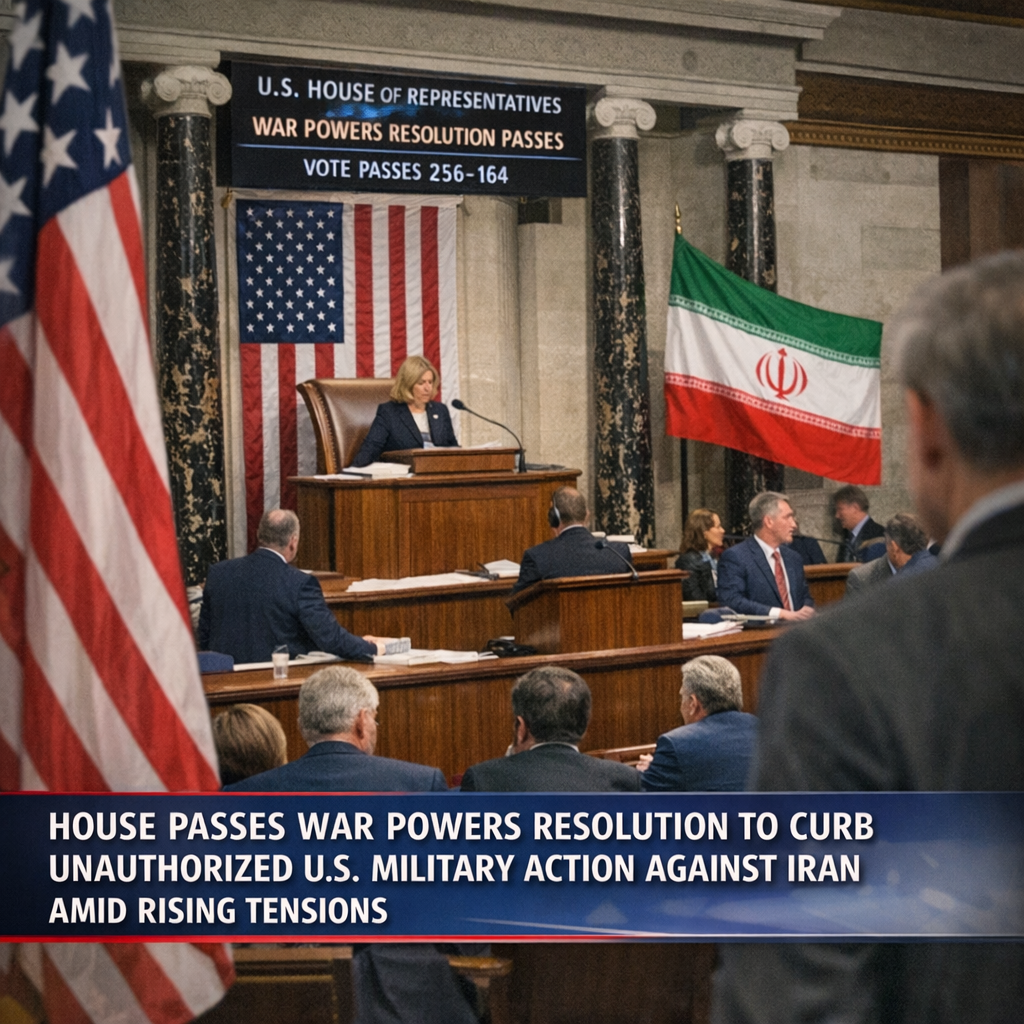
The U.S. House of Representatives has approved a war powers resolution aimed at halting unauthorized military actions against Iran, marking a renewed assertion of congressional authority over decisions of war and peace. The development, reported by i24NEWS in its article “US House approves War Powers resolution halting military actions against Iran – live blog,” comes amid heightened regional tensions and growing concern among lawmakers about the potential for escalation.
The resolution, which passed after contentious debate, seeks to restrict the executive branch from engaging in further military hostilities against Iran without explicit approval from Congress, as required under the War Powers Act of 1973. Supporters of the measure argued that it is a necessary corrective to what they view as an overextension of presidential war-making powers, particularly in a volatile Middle East security environment.
Lawmakers backing the resolution emphasized constitutional prerogatives, insisting that decisions to initiate or expand military conflict must rest with the legislative branch. They pointed to Congress’s authority under Article I of the U.S. Constitution, warning that unchecked executive action risks drawing the United States into a broader confrontation with Iran without sufficient public debate or strategic clarity.
Opponents, however, contended that the resolution could constrain the president’s ability to respond swiftly to emerging threats. Some critics argued that limiting operational flexibility may embolden adversaries or undermine deterrence at a time when U.S. forces and allies face ongoing risks in the region, as noted in analyses by the U.S. Department of Defense.
The vote reflects longstanding tensions in Washington over the balance of power between Congress and the White House in matters of national security. While the War Powers Act was designed to reassert congressional oversight following decades of conflict, successive administrations from both parties have often pushed its boundaries, as documented by the Congressional Research Service, citing the need for rapid response capabilities.
The resolution’s future remains uncertain, as it would require concurrence in the Senate and could face a presidential veto. Even if enacted, questions would persist about enforcement and the practical implications for ongoing military operations.
The i24NEWS report situates the House vote within a broader context of escalating rhetoric and military posturing involving Iran, underscoring fears among policymakers that miscalculation could lead to direct confrontation. Against this backdrop, the congressional move signals a clear effort by lawmakers to reassert control over U.S. engagement abroad, even as geopolitical pressures continue to mount.