Ben Sasse Links Senate Dysfunction to Cancer Research
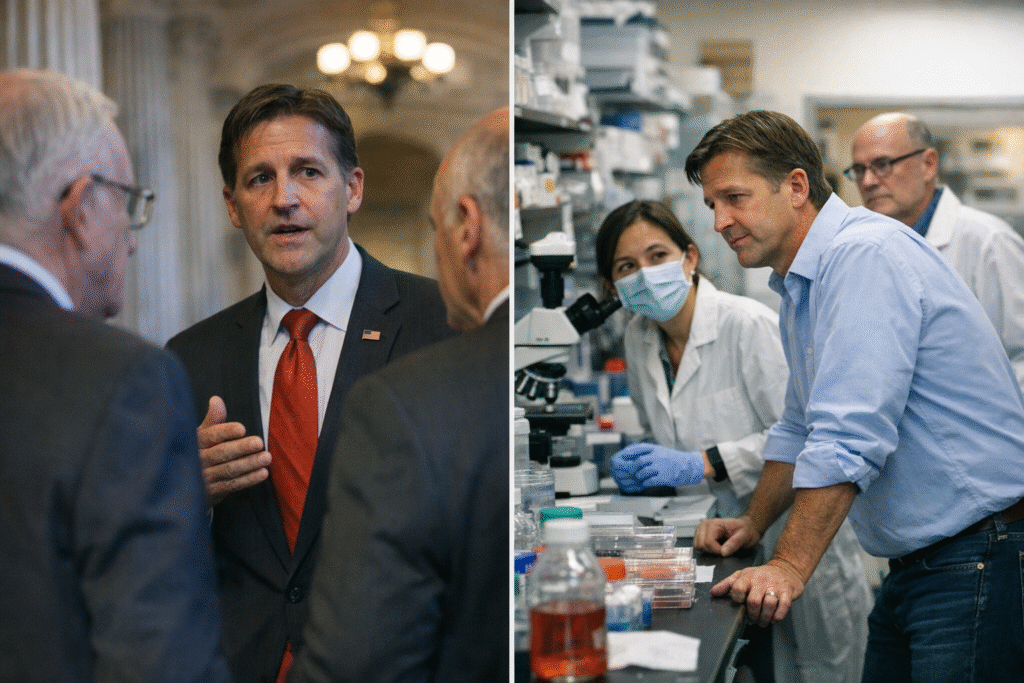
In a recent opinion video published by The Wall Street Journal titled “WSJ Opinion: Ben Sasse on Cancer Research and Why the Senate Is Broken,” former U.S. Senator Ben Sasse offers a sharp critique of institutional dysfunction in Washington while pairing it with a deeply personal reflection on cancer research and the stakes of public policy.
Sasse, who has frequently positioned himself as a critic of partisan gridlock, uses the discussion to link two themes that are often treated separately: the human urgency of medical innovation and the structural failures of the legislative branch. Drawing on his experiences in public office and his exposure to the healthcare system, he argues that the Senate has drifted away from its intended role as a deliberative body capable of addressing long-term national priorities, including biomedical research.
The video underscores Sasse’s concern that political incentives now reward short-term posturing rather than sustained policymaking. He contends that this shift has tangible consequences, particularly in areas like cancer research, where consistent funding, regulatory clarity, and bipartisan cooperation are essential for progress. According to Sasse, breakthroughs in treatment and prevention depend not only on scientific ingenuity but also on a functioning political system that can support research institutions over time.
Sasse also reflects on the broader cultural and institutional erosion he believes has taken place within Congress. He suggests that the Senate’s procedures and norms, once designed to encourage rigorous debate and compromise, have been weakened by an increasingly performative political environment. In his view, lawmakers are often more focused on media visibility than on the detailed, and often unglamorous, work required to advance complex legislation.
At the same time, the discussion returns repeatedly to the human dimension of cancer, emphasizing the gap between political dysfunction and the urgent needs of patients and families. Sasse points to the remarkable advances already achieved in oncology, attributing much of that progress to sustained investment in research and collaboration across sectors. However, he warns that without a more reliable and forward-looking legislative framework, future gains could be jeopardized.
The Wall Street Journal video presents Sasse’s argument as both a critique and a call to action. While he does not offer a comprehensive blueprint for reform, he stresses the importance of restoring institutional norms and prioritizing long-term challenges over partisan conflict. His remarks suggest that the stakes extend beyond political theory, touching directly on the country’s capacity to respond to some of its most pressing health crises.
By pairing an analysis of Senate dysfunction with a focus on cancer research, Sasse frames the issue in terms that are both structural and deeply personal. The result is a commentary that highlights how governance failures can ripple outward, affecting not just political outcomes but the pace of scientific progress and, ultimately, human lives.