US Navy Disables Iran Tanker in Gulf Standoff
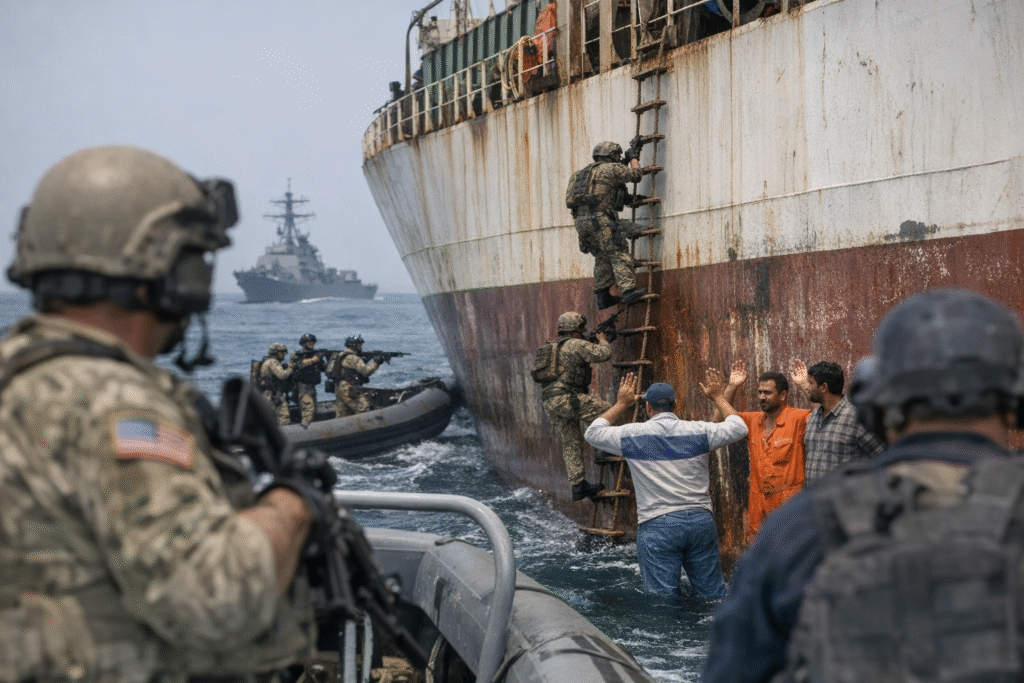
U.S. naval forces fired upon and disabled an Iran-flagged tanker in the Arabian Gulf after the vessel allegedly attempted to evade an established maritime blockade, according to U.S. defense officials. The incident, first reported by Military Times in its article “US forces fire at, disable Iran-flagged tanker trying to evade blockade,” marks a sharp escalation in tensions surrounding maritime enforcement operations in the region.
According to officials familiar with the engagement, the tanker ignored multiple warnings from U.S. and allied naval forces before attempting to breach a restricted zone tied to ongoing security operations. Only after repeated communications failed did U.S. forces resort to targeted fire intended to disable, rather than destroy, the vessel. The tanker was subsequently brought to a halt without reported fatalities, though details regarding injuries or damage remain limited.
Pentagon officials described the action as consistent with established rules of engagement governing maritime interdictions. They emphasized that the use of force was calibrated and necessary to prevent what they characterized as a deliberate attempt to undermine enforcement measures imposed amid heightened regional instability. The blockade itself is part of a broader effort to monitor and restrict the movement of vessels suspected of supporting illicit transport networks or violating international sanctions frameworks.
Iranian authorities have not publicly confirmed the full circumstances surrounding the tanker’s movements but have historically challenged the legality of such interdictions, particularly in contested or strategically sensitive waterways. Past incidents involving Iranian-flagged vessels have often triggered broader diplomatic disputes, raising concerns about escalation in one of the world’s most critical energy transit corridors.
Maritime analysts note that while disabling fire is considered a measured response compared to full engagement, it nonetheless carries significant risk. Encounters at sea can rapidly intensify, especially when communication breaks down or when state-linked vessels are involved. The Gulf region, in particular, remains vulnerable to miscalculation, given the heavy presence of military assets from multiple countries and the strategic importance of commercial shipping lanes.
U.S. officials have reiterated that freedom of navigation and adherence to international maritime law remain central to their operations. They maintain that enforcement measures are directed at specific violations rather than any one nation. However, the involvement of an Iran-flagged vessel is likely to draw scrutiny and could further complicate already strained relations between Washington and Tehran.
The Military Times report indicates that the disabled tanker is now under monitoring, and further actions may depend on the outcome of ongoing assessments and diplomatic exchanges. As of now, U.S. naval forces continue patrols in the area, signaling that enforcement efforts remain active and that similar confrontations cannot be ruled out.