Coast Guard Moves to Launch Elite Ops Command
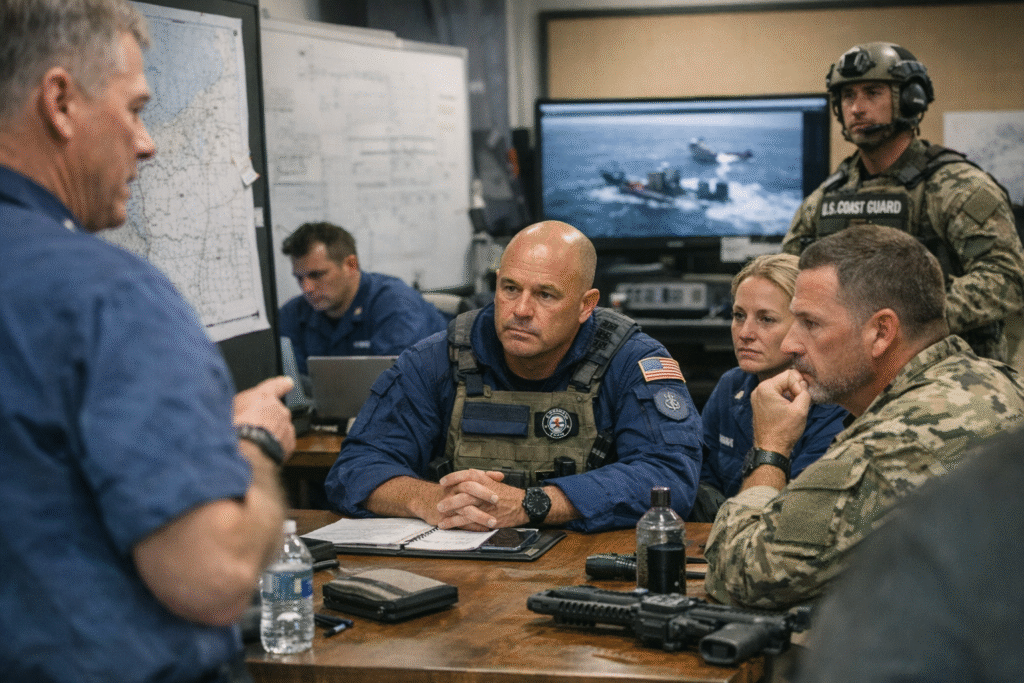
The U.S. Coast Guard is preparing to establish a new special operations–focused command, a move that signals a significant evolution in the service’s role within the broader national security framework. According to the article titled “Coast Guard to stand up special forces command,” published by Military Times, the initiative is intended to consolidate and elevate the Coast Guard’s specialized capabilities amid growing operational demands.
Officials indicated that the planned command will unify several existing elite units under a centralized structure, improving coordination, readiness, and strategic alignment. These units, which currently operate across a range of missions including counterterrorism, counter-narcotics, and maritime interdiction, have seen increased demand in recent years as global maritime threats have grown more complex.
The new command is expected to formalize the Coast Guard’s contributions to U.S. Special Operations Command–level activities, even though the service has historically operated outside that formal structure. By bringing these capabilities together, leadership aims to streamline training, enhance interoperability with other branches of the military, and provide a clearer operational framework for deployments.
As Military Times reports, Coast Guard officials view the change as part of a broader modernization effort. The service has faced mounting pressure to adapt to evolving challenges, including transnational criminal networks, irregular maritime threats, and strategic competition in contested regions. The formation of a specialized command is seen as a step toward ensuring that the Coast Guard remains agile and relevant in this changing environment.
While details about the command’s size, structure, and timeline remain limited, early indications suggest that it will draw from existing personnel and resources rather than relying on a substantial expansion of force. This approach reflects both budgetary constraints and a desire to build on proven capabilities rather than create entirely new units from scratch.
The initiative also underscores a subtle but important shift in how the Coast Guard positions itself within the U.S. defense and security ecosystem. Traditionally viewed as a law enforcement–focused maritime service with humanitarian responsibilities, the Coast Guard has increasingly taken on missions that overlap with national defense and special operations. The planned command appears designed to formalize that evolution.
As planning moves forward, the success of the effort will likely depend on how effectively the Coast Guard integrates these specialized units without diluting its broader mission set. Balancing its unique combination of military, law enforcement, and humanitarian responsibilities remains a central challenge even as it expands into more explicitly tactical roles.