Ukraine Considers Restarting Arms Exports
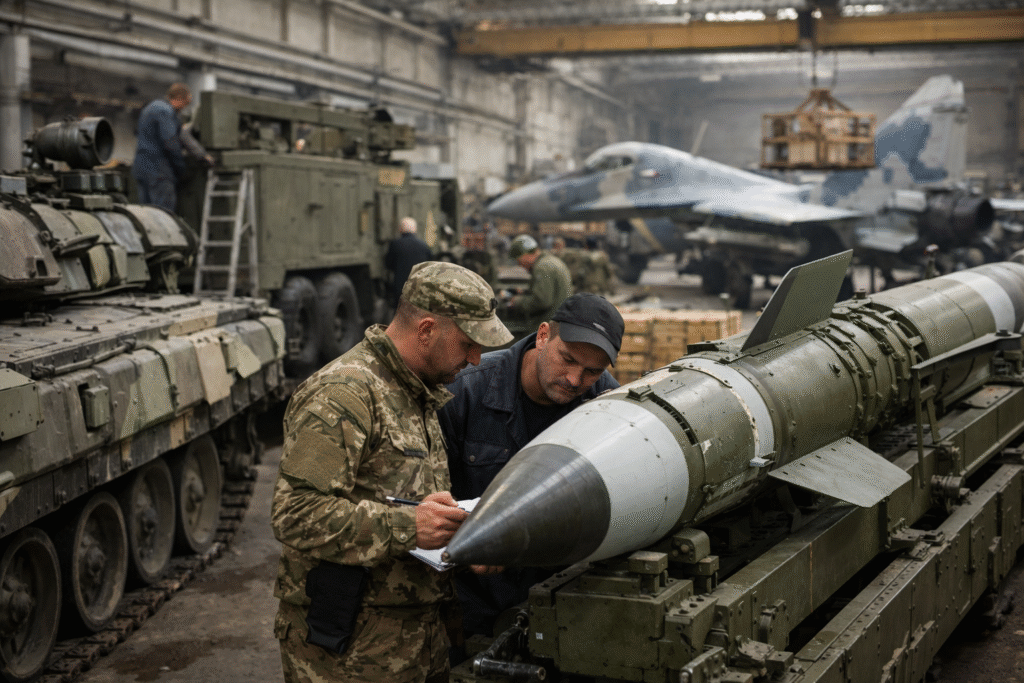
Ukraine is weighing whether to lift its wartime ban on arms exports as early as this year, a move that could reshape its defense industry and signal growing confidence in its domestic production capacity, according to reporting by Defense News in the article “Ukraine could lift arms exports ban this year as would-be buyers line up.”
Since Russia’s full-scale invasion in 2022, Kyiv has prohibited most weapons exports in order to prioritize its own military needs. That policy helped channel limited production toward frontline requirements but also constrained an industry that Ukrainian officials now say has expanded significantly under wartime pressure. With manufacturing output rising and international demand increasing, policymakers are revisiting whether a controlled reopening of exports could deliver economic and strategic benefits without undermining national defense.
Defense News reports that multiple prospective buyers have already expressed interest in Ukrainian-made equipment, particularly systems that have been tested and refined in combat against Russian forces. These include drones, artillery systems, and electronic warfare technologies that have gained global attention for their effectiveness on the battlefield. For some partners, Ukraine’s experience of sustained, high-intensity conflict has enhanced the credibility of its defense products.
Advocates within Ukraine argue that allowing limited exports could generate revenue to reinvest in production capacity, research, and troop support. Wartime spending has strained public finances, and officials see defense exports as a potential source of hard currency that could reduce reliance on external assistance. In addition, expanding international sales could help integrate Ukraine more deeply into global defense supply chains, strengthening long-term partnerships with Western governments and private firms.
At the same time, the proposal remains politically and militarily sensitive. Ukraine continues to face ongoing combat operations and must carefully balance any export activity against its immediate operational needs. Critics warn that even modest export commitments could create bottlenecks or divert resources if not tightly regulated. There are also concerns about ensuring transparency, preventing corruption, and aligning any export decisions with allied interests.
The government is reportedly considering mechanisms that would allow only surplus production or newly expanded capacity to be sold abroad. Officials have also discussed prioritizing exports to friendly or partner nations, particularly those supporting Ukraine’s defense effort. Such safeguards are intended to ensure that any policy shift reinforces rather than compromises national security.
International demand appears to be a key driver behind the renewed discussion. As described by Defense News, potential buyers are attracted not only by the performance of Ukrainian systems but also by the prospect of faster delivery compared with some established suppliers facing backlogs. Ukraine’s defense sector, having rapidly scaled under wartime conditions, may be well positioned to meet niche demands in a tight global market.
Whether Kyiv proceeds will depend on a complex calculus that includes battlefield dynamics, industrial output, and diplomatic considerations. The debate underscores how Ukraine’s defense industry has evolved during the war—from a system primarily dependent on imports to one increasingly capable of producing and potentially exporting sophisticated military equipment.
If implemented, a shift in export policy would mark a significant milestone, reflecting both the resilience of Ukraine’s industrial base and its ambition to emerge as a notable player in the global defense market even while the conflict continues.