Fed Holds Rates as Internal Divide Deepens
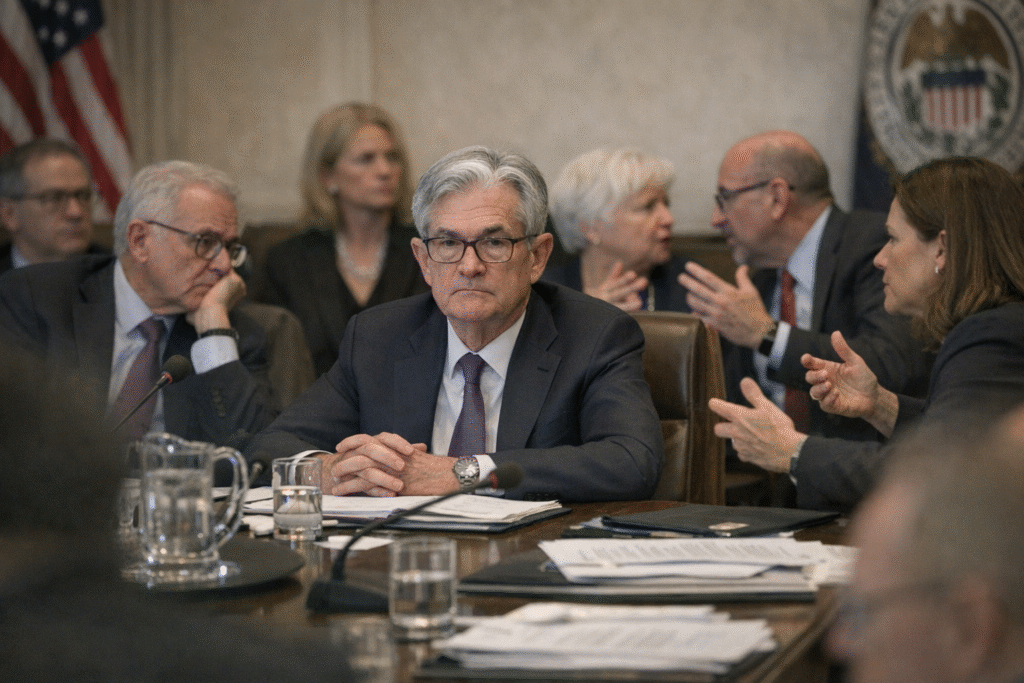
The Federal Reserve is entering what may prove to be a defining transition period, holding interest rates steady while policymakers remain divided over the path ahead, according to reporting by The Wall Street Journal in its article “Fed Closes Powell Era With Rates on Hold and Divide Over What Comes Next.”
After a prolonged campaign of aggressive rate increases aimed at curbing inflation, Fed officials have paused further adjustments, signaling both confidence in recent progress and caution about lingering risks. Inflation has cooled from its recent peaks, and the labor market, while still resilient, has shown signs of gradual softening. Yet beneath this moment of pause lies a growing اختلاف within the central bank about how monetary policy should evolve.
Some officials favor maintaining restrictive rates for an extended period, arguing that inflation pressures could reaccelerate if policy is loosened prematurely. Others see room to begin easing, pointing to moderating price growth and potential downside risks to employment and economic momentum. This divide reflects broader uncertainty about how the economy will respond after one of the most rapid tightening cycles in decades.
The current stance also carries institutional significance. As the era associated with Chair Jerome Powell approaches a potential turning point, the Fed faces not only economic ambiguity but also questions about its policy framework and communication strategy. The central bank must balance credibility on inflation with flexibility to respond to changing conditions, a task made more complex by external factors such as geopolitical tensions and uneven global growth.
Financial markets have responded cautiously, recalibrating expectations for future rate cuts while monitoring incoming data. Investors are particularly attuned to signals from Fed officials that might indicate whether the next move is more likely to be a reduction or a prolonged hold.
The Wall Street Journal’s reporting underscores that while the Fed has made measurable progress in stabilizing prices, its next steps remain uncertain. That uncertainty is now a central feature of the economic outlook, shaping decisions not only in Washington but across global financial systems.