Tapper Stefanik Clash Over Gaza Genocide Claims
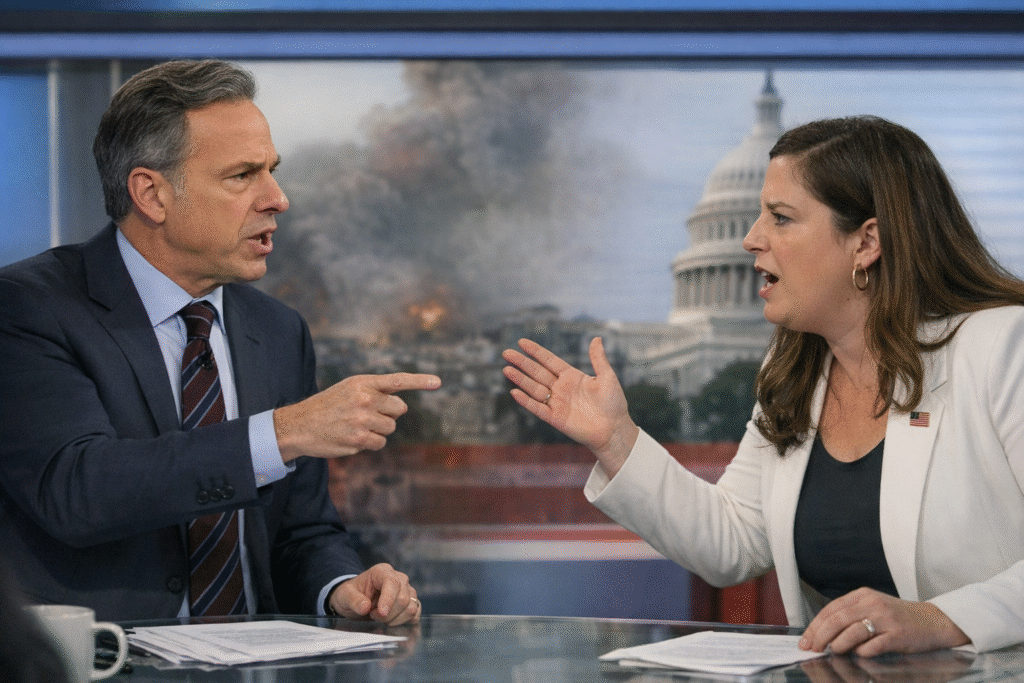
A recent exchange between CNN host Jake Tapper and Rep. Elise Stefanik has drawn attention to the increasingly confrontational tone of political discourse surrounding the Israel–Hamas war, particularly allegations of genocide and the responses they provoke.
In an article titled “Tapper Hurls Genocide Accusation, Stefanik Fires Off A Sharp Counterpunch,” the Daily Wire reported on a segment in which Tapper pressed Stefanik on U.S. support for Israel, framing questions around accusations that Israeli military actions in Gaza could constitute genocide. The framing reflects a broader debate that has intensified in international forums and among advocacy groups, with critics of Israel’s conduct using the term while Israeli officials and their allies reject it as both inaccurate and inflammatory.
According to the Daily Wire’s account, Stefanik forcefully rejected the characterization, arguing that applying the label of genocide to Israel’s actions distorts the reality of the conflict and undermines the gravity of the term. She emphasized Israel’s right to defend itself following Hamas’s October 7 attacks and contended that responsibility for civilian harm in Gaza lies primarily with Hamas, which she accused of embedding military operations within civilian areas.
The exchange illustrates a widening gap between political figures and media interlocutors over how to describe the humanitarian crisis in Gaza and the legal and moral frameworks used to assess it. While some journalists and international observers have increasingly raised questions about proportionality and civilian casualties, many U.S. lawmakers, particularly Republicans, have pushed back against language they view as echoing partisan or ideological narratives.
Stefanik’s response, as described by the Daily Wire, sought to reframe the discussion away from legal accusations and toward what she portrayed as the strategic and ethical challenges posed by Hamas. She also criticized what she suggested was a double standard in how Israel is treated compared to other nations engaged in armed conflict.
The segment underscores the broader politicization of the Israel–Hamas war within U.S. media and politics. As civilian casualties mount and humanitarian conditions deteriorate in Gaza, debates over terminology—particularly the use of words like “genocide”—have become a flashpoint, shaping public perception as much as policy arguments.
The confrontation between Tapper and Stefanik reflects not only differing interpretations of international law and wartime conduct but also the role of media in framing those debates. As coverage of the conflict continues, such exchanges are likely to remain a defining feature of the national conversation.