Gulf States Shift Arms Sourcing Beyond U.S.
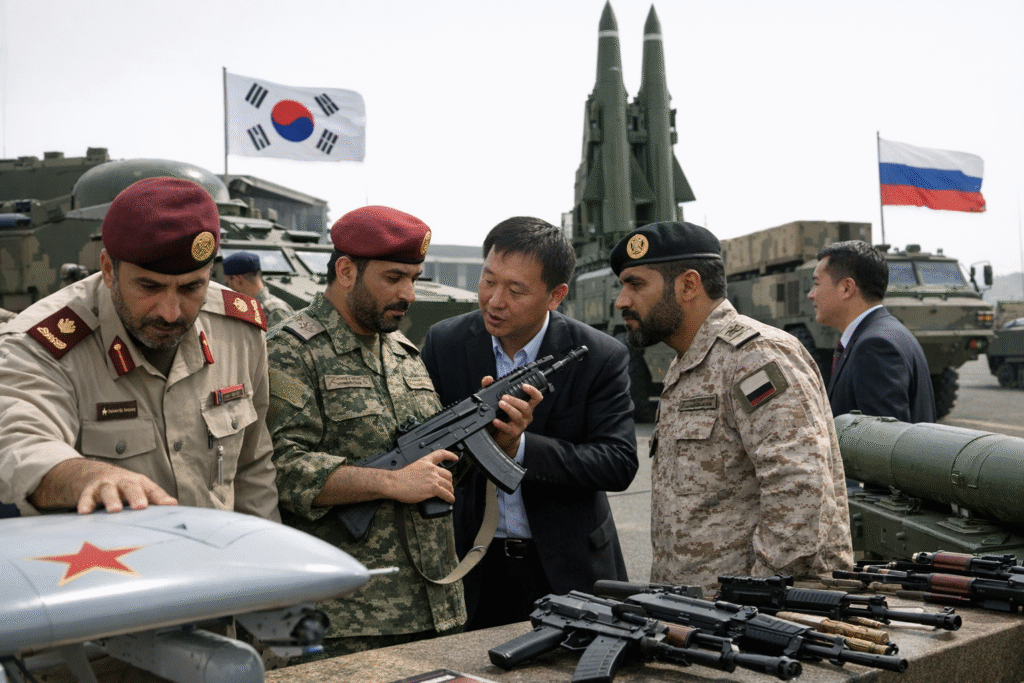
Gulf states are increasingly diversifying their sources of military supplies, signaling a shift in long-standing defense relationships with the United States, according to reporting by The Wall Street Journal in its article “Gulf Allies Turn Away From U.S. for Fresh Ammo.”
For decades, Washington has been the primary security partner and arms supplier to countries such as Saudi Arabia, the United Arab Emirates, and Qatar. However, mounting frustrations over supply delays, regulatory hurdles, and shifting U.S. foreign policy priorities are prompting these nations to explore alternative suppliers, including European and Asian defense manufacturers.
The Wall Street Journal reports that recent global conflicts, particularly the war in Ukraine, have strained Western defense production lines. This has slowed deliveries of key munitions and equipment to Gulf partners, who increasingly view timely access to military supplies as critical in a volatile regional environment. As a result, Gulf governments are seeking faster procurement channels and more predictable supply chains.
This shift reflects not only logistical concerns but also broader geopolitical recalibration. Gulf states have grown more assertive in pursuing independent foreign policies, balancing relationships with Washington alongside expanding ties with countries such as China and Russia. Defense procurement is emerging as a key area where this strategic diversification is most evident.
In addition to supply chain constraints, U.S. export controls and Congressional scrutiny over arms sales have contributed to uncertainty. Conditions tied to human rights concerns and regional conflicts, while longstanding, have become more prominent in recent years, complicating approvals and creating friction in bilateral defense cooperation.
European defense firms have sought to capitalize on this opening, offering shorter delivery timelines and, in some cases, fewer political conditions. Asian manufacturers, particularly in South Korea, have also expanded their presence in the global arms market, positioning themselves as reliable alternatives with competitive pricing and rapid production capabilities.
Despite this trend, the United States remains deeply embedded in the Gulf’s security architecture, with extensive military bases, joint exercises, and intelligence cooperation. Analysts note that while procurement patterns may evolve, Washington’s role as a strategic partner is unlikely to be replaced in the near term.
Still, as highlighted by The Wall Street Journal, the growing willingness of Gulf allies to look beyond the United States for “fresh ammo” underscores a gradual but meaningful shift. It reflects a more multipolar approach to security and a pragmatic response to changing global dynamics, where reliability, speed, and autonomy are increasingly valued alongside traditional alliances.