Trump Eyes Penalties for NATO Allies on Iran
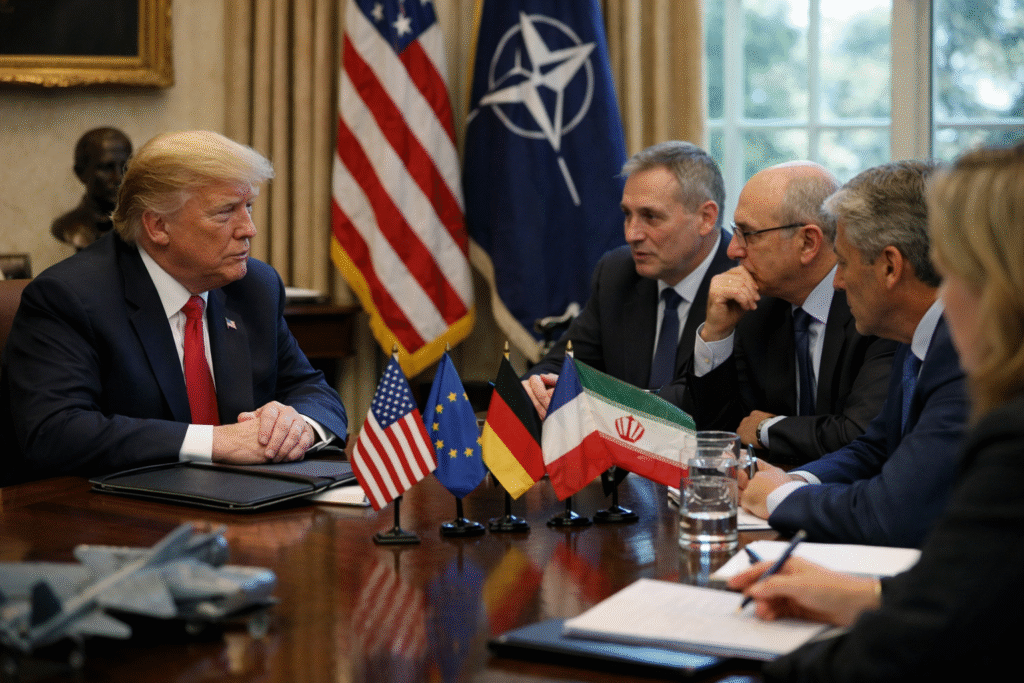
The Wall Street Journal report titled “Trump Weighs Punishing Certain NATO Countries Over Lack of Iran War Support” outlines emerging tensions between former President Donald Trump and several U.S. allies, highlighting the potential for a more transactional approach to alliance politics should he return to office.
According to the Wall Street Journal, Trump and his advisers have discussed possible measures to penalize NATO members that declined to support U.S. military action against Iran during his presidency. These discussions reflect a broader reassessment of alliance commitments, with an emphasis on reciprocity and burden-sharing rather than longstanding collective security norms.
The report indicates that Trump has expressed particular frustration with countries that benefit from NATO’s mutual defense guarantees but have been reluctant to back U.S.-led operations beyond the alliance’s core geographic scope. In the case of Iran, several European allies resisted participation in potential military escalation, favoring diplomatic approaches instead. That divergence, the Journal notes, continues to inform Trump’s view that some partners are free-riding on U.S. security guarantees.
Among the ideas reportedly under consideration are recalibrating U.S. defense commitments or leveraging economic and security tools to pressure allies deemed uncooperative. While specifics remain unclear, the mere discussion of such measures has raised concerns among foreign policy experts that alliance cohesion could be strained.
Critics argue that conditioning NATO commitments on support for out-of-area conflicts could undermine the alliance’s foundational principle of collective defense, enshrined in Article 5. They warn that introducing punitive mechanisms risks eroding trust and predictability, two pillars of transatlantic security cooperation.
Supporters of a tougher stance contend that the United States has long borne a disproportionate share of defense costs and operational burdens. From this perspective, applying pressure could incentivize allies to align more closely with U.S. strategic priorities or contribute more substantially to joint efforts.
The Wall Street Journal report situates these deliberations within a broader pattern of Trump’s skepticism toward multilateral institutions and his preference for bilateral leverage. During his presidency, he repeatedly criticized NATO members for insufficient defense spending and questioned the value of U.S. commitments absent greater contributions from allies.
European officials, according to the report, are watching these developments closely, wary of renewed uncertainty about U.S. policy. Many fear that overtly punitive measures could deepen divisions within NATO at a time when the alliance faces ongoing security challenges, including Russia’s war in Ukraine.
While no formal policy proposals have been adopted, the discussions described by the Wall Street Journal underscore the possibility of a significant shift in how the United States approaches its alliances, with implications that could extend well beyond NATO’s immediate strategic environment.