China Narrows Military AI Strategy Amid US Gap
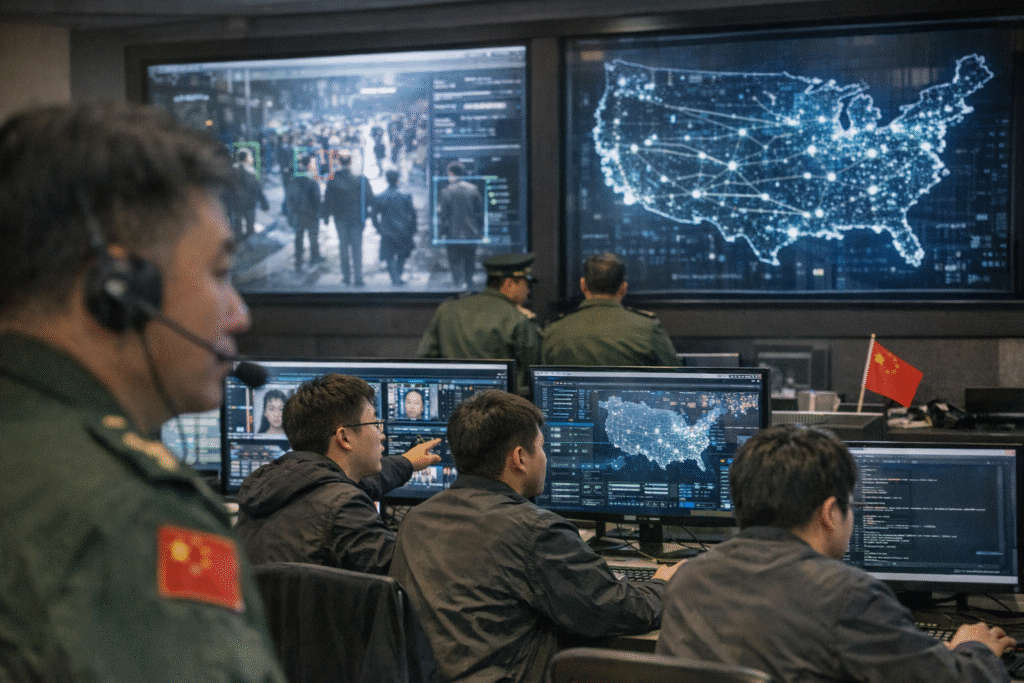
A recent report by Defense News, titled “Outpaced by the US, China’s military places selective bets on artificial intelligence,” examines how Beijing is recalibrating its military modernization strategy in the face of persistent technological gaps with Washington.
The article argues that while China continues to invest heavily in artificial intelligence, its approach is increasingly targeted rather than expansive. Instead of attempting to match the United States across the full spectrum of advanced military AI applications, Chinese defense planners appear to be concentrating resources on narrower domains where they believe gains are more achievable or strategically advantageous.
This shift reflects both ambition and constraint. The People’s Liberation Army (PLA) has long identified AI as a critical enabler of future warfare, particularly in areas such as intelligence analysis, autonomous systems, and decision support. However, according to Defense News, structural challenges—including uneven innovation ecosystems, reliance on civilian-sector developments, and ongoing difficulties in integrating complex technologies into operational doctrine—have limited China’s ability to translate broad investment into comprehensive military capability.
As a result, Chinese efforts are reportedly focusing on specific applications such as unmanned systems, surveillance, and data-driven command tools. These areas align with Beijing’s broader military priorities, including regional power projection and information dominance, while avoiding direct competition in more technologically demanding or resource-intensive AI fields where the United States maintains a clear lead.
The Defense News report also highlights how this selective strategy dovetails with China’s system of military-civil fusion, which seeks to leverage commercial innovation for defense purposes. Even so, the article suggests that coordination challenges and inefficiencies persist, complicating efforts to scale promising technologies into deployable systems.
At the same time, the United States continues to benefit from a more mature innovation environment, deeper integration between private technology firms and defense institutions, and longstanding operational experience with advanced digital systems. These advantages, the article notes, have allowed Washington to maintain momentum in areas such as autonomous warfare, algorithmic targeting, and networked battlefield management.
China’s more focused approach does not necessarily signal retreat but rather adaptation. By concentrating on attainable goals and asymmetric opportunities, Beijing may still be able to narrow certain gaps or create localized advantages. However, as Defense News makes clear, this strategy underscores a broader reality: despite rapid progress, China’s military AI ambitions remain shaped by the enduring challenge of catching up to a technologically entrenched rival.