Ozzy Osbourne Home Hits Cooling LA Luxury Market
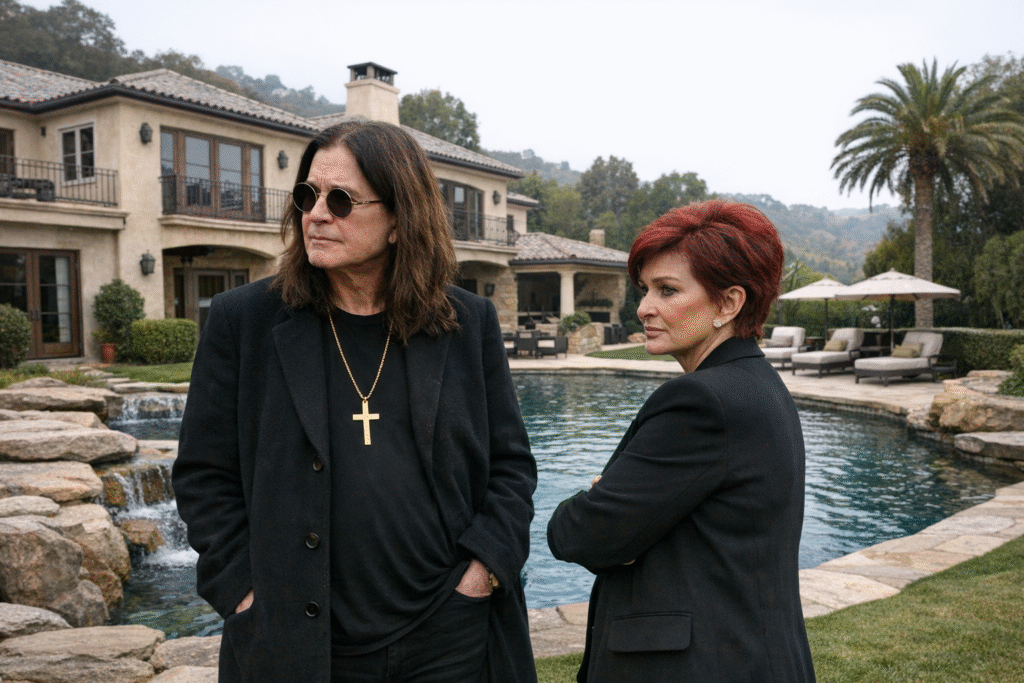
A Los Angeles property long associated with rock musician Ozzy Osbourne has entered the spotlight again, offering a window into the upper tier of the city’s luxury housing market. The Wall Street Journal’s article, “Ozzy Osbourne’s Los Angeles Home,” details both the listing and the broader dynamics shaping high-end real estate in Southern California, where celebrity ownership remains a powerful driver of interest and valuation.
The residence, tied to Osbourne and his family, reflects a style often favored among entertainment figures: expansive square footage, privacy-oriented design, and amenities tailored to both leisure and security. According to the Wall Street Journal, the home’s features place it firmly within a competitive bracket of Los Angeles luxury properties, where buyers increasingly expect resort-level comforts integrated into private living spaces.
While celebrity provenance can elevate a property’s profile, it does not guarantee a straightforward sale. The Journal notes that even homes linked to globally recognized figures like Osbourne must contend with a cooling at the very top of the market, where rising interest rates and economic uncertainty have tempered some buyer enthusiasm. As a result, sellers are often required to price more strategically and remain flexible on negotiations.
At the same time, properties associated with cultural icons retain a distinct appeal. For certain buyers, the connection to a figure like Osbourne—whose influence spans decades in music and popular culture—adds an intangible value that extends beyond architectural or locational merits. In Los Angeles, where branding and narrative are deeply intertwined with real estate, such associations can help differentiate a listing in an otherwise crowded field.
The Wall Street Journal’s reporting underscores that the Osbourne home embodies this dual reality: it is both a premium asset shaped by broader economic forces and a unique commodity enriched by its ownership history. Agents involved in similar transactions suggest that storytelling remains a critical component of marketing, particularly when targeting international or lifestyle-driven buyers who may be as interested in legacy as in square footage.
More broadly, the listing reflects ongoing shifts within Los Angeles’ luxury segment. Inventory at the upper end has increased, offering buyers more choices and negotiating power than in previous years. Yet demand has not disappeared; rather, it has become more selective. Homes that combine architectural distinction, modern amenities, and a compelling narrative—such as celebrity ownership—continue to command attention, even if transactions take longer to close.
In that context, the Osbourne property serves as a case study in how fame intersects with market realities. As highlighted in “Ozzy Osbourne’s Los Angeles Home” by The Wall Street Journal, the property’s journey illustrates both the enduring allure of celebrity real estate and the recalibrated expectations defining today’s high-end housing market.