Hegseth Signals Strait Shipping Risks Manageable
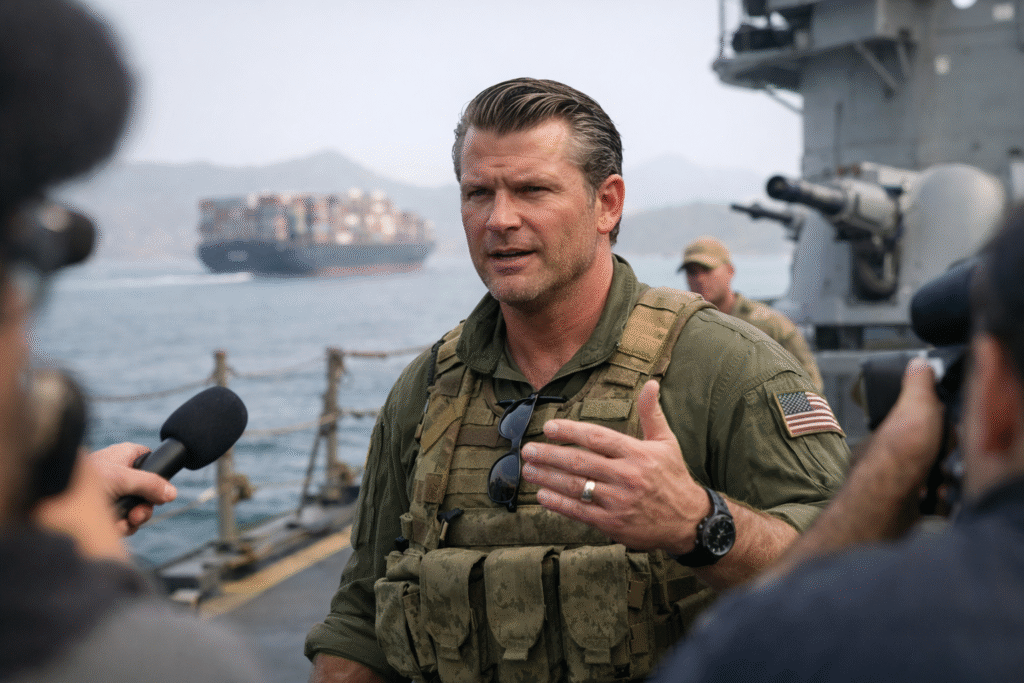
U.S. Defense Secretary Pete Hegseth has sought to reassure maritime and global markets that commercial shipping through the Strait of Hormuz remains viable despite simmering regional tensions, as merchant traffic shows signs of modest recovery.
According to reporting by USNI News in its article “Hegseth Downplays Risk of Sailing Through Strait of Hormuz as Merchant Traffic Sees Small Increase,” Hegseth characterized recent security concerns in the strategically vital waterway as manageable rather than prohibitive. The narrow passage, which handles a significant share of the world’s oil exports, has long been vulnerable to geopolitical flare-ups, particularly involving Iran and Western naval forces.
Speaking amid ongoing concerns over potential escalation, Hegseth emphasized that while risks persist, they are not outside the scope of what commercial operators and naval escorts routinely factor into their planning. His remarks appear aimed at countering perceptions that the Strait is approaching a crisis point that could disrupt global energy markets.
Recent data cited in the USNI News report indicates a slight uptick in merchant vessel traffic transiting the Strait, suggesting that shipping firms are cautiously resuming normal operations after a period of heightened hesitation. Analysts often interpret such movements as a practical barometer of perceived risk, with insurers, operators, and governments closely monitoring incident patterns and naval posture.
The U.S. Navy and allied maritime forces continue to maintain a visible presence in the region, a posture intended both to deter hostile actions and to reassure commercial shipping. Hegseth underscored that these operations remain routine, even as they adapt to evolving threat assessments that include the possibility of drone attacks, small-boat harassment, and other asymmetric tactics.
Despite the relatively measured tone from U.S. officials, the situation remains fluid. Shipping companies continue to weigh insurance costs, route adjustments, and potential delays, while regional actors calibrate their actions in a space where miscalculation could have global economic repercussions.
Hegseth’s comments reflect a broader effort by U.S. officials to balance acknowledgment of ongoing risks with a message of continuity. For now, the modest increase in traffic suggests that industry confidence, while fragile, has not been fundamentally shaken.