Is the World Splitting Into Spheres of Influence
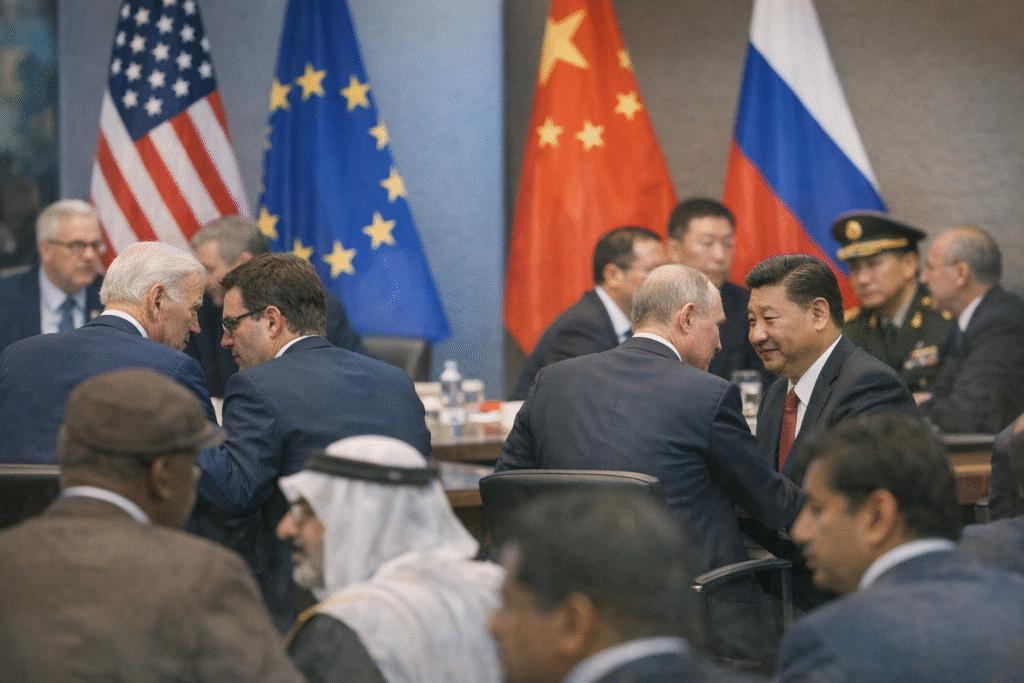
An emerging debate in foreign policy circles concerns whether the world is drifting toward a new era of great-power spheres of influence, a framework that could fundamentally reshape U.S. strategy abroad. A recent article published by The Daily Wire, titled “The Plan To Split The World Into Spheres — And What It Means For America,” argues that major powers are increasingly pursuing informal territorial and strategic blocs, raising questions about the durability of the post–Cold War international order.
The concept of dividing the world into spheres of influence is not new. Throughout the 19th and early 20th centuries, major powers routinely asserted dominance over regions deemed critical to their security or economic interests. The end of the Cold War, however, ushered in a period defined more by globalization and U.S.-led international institutions than by explicit territorial partitioning. The Daily Wire article suggests that this period may be ending, as rivals such as China and Russia advance claims—implicit or explicit—over their neighboring regions.
According to the article, Russia’s actions in Ukraine and its broader posture toward Eastern Europe are frequently framed as an effort to reestablish a buffer zone reminiscent of Soviet-era influence. Similarly, China’s increasing assertiveness in the South China Sea and toward Taiwan is presented as evidence of a long-term ambition to dominate East Asia. The piece contends that these moves reflect a strategic doctrine in which great powers seek to limit outside interference in regions they consider vital.
The implications for the United States, as outlined in The Daily Wire’s analysis, are significant. A shift toward spheres of influence could challenge longstanding American commitments to alliances and the principle of national sovereignty. If Washington tacitly accepts such divisions, it risks ceding influence in key regions; if it resists, it may face escalating confrontations with rival powers.
Critics of the spheres-of-influence framework argue that it oversimplifies complex international relationships and underestimates the agency of smaller nations, many of which resist domination by larger neighbors. They also warn that legitimizing such a system could destabilize existing norms, potentially encouraging territorial revisionism and undermining international law.
At the same time, some strategists contend that acknowledging spheres of influence may reflect geopolitical realities rather than ideological preferences. From this perspective, great-power competition is an enduring feature of international politics, and attempts to deny it can lead to overextension or miscalculation.
The debate highlighted in “The Plan To Split The World Into Spheres — And What It Means For America,” published by The Daily Wire, underscores a broader reassessment underway in U.S. foreign policy. As tensions between major powers intensify, policymakers face increasingly difficult choices about how to balance deterrence, diplomacy, and the defense of longstanding international norms in a shifting global landscape.