FPV Drones Poised to Reshape Arctic Warfare
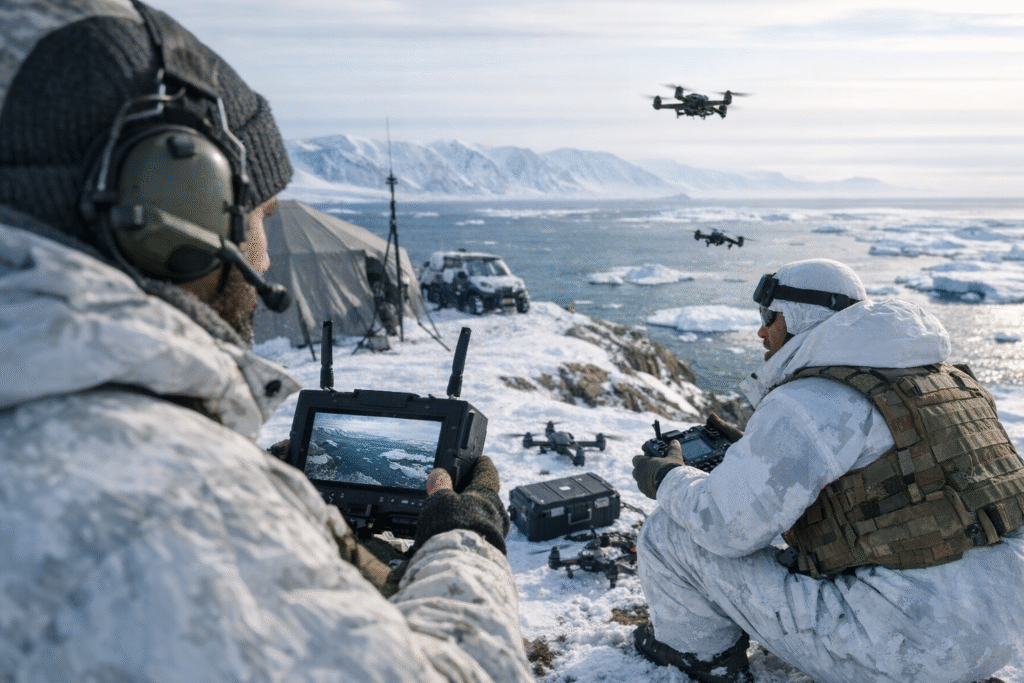
The rapid evolution of first-person-view drones on the battlefields of Ukraine is now prompting defense planners to consider how the same low-cost technology could reshape military operations in one of the world’s most unforgiving environments: the Arctic. As highlighted in the Defense News article “After Ukraine, FPV drones could take on Arctic warfare,” analysts and military developers are increasingly examining whether the small, agile systems that have transformed combat in Eastern Europe might soon play a role in northern defense strategy.
The war in Ukraine has demonstrated the effectiveness of FPV drones as inexpensive, adaptable weapons capable of striking tanks, trenches, and moving vehicles with precision. Often assembled from commercially available parts and piloted through immersive video feeds, these drones have provided Ukrainian forces with a flexible tool that can be deployed quickly and in large numbers. According to the Defense News report, the lessons learned from this conflict are now influencing military thinking well beyond Eastern Europe, including in countries with growing security concerns in Arctic regions.
Military planners see clear advantages in adapting the technology for northern operations. The Arctic’s vast distances, sparse infrastructure and harsh conditions make traditional reconnaissance and strike capabilities difficult and expensive to maintain. Small FPV drones, by contrast, are relatively cheap and portable. Units operating in remote areas could carry large numbers of them and deploy them rapidly for surveillance or direct attack, potentially offsetting the logistical disadvantages of operating in the extreme north.
Yet the transition from the temperate battlefields of Ukraine to the Arctic environment is far from straightforward. The Defense News article notes that freezing temperatures pose a major challenge for drone batteries and electronics, which can lose effectiveness rapidly in extreme cold. Navigation also becomes more complicated at high latitudes, where satellite signals behave differently and magnetic navigation systems can become unreliable. Communication links, already vulnerable to jamming in modern warfare, may be further complicated by the unique conditions of polar regions.
Researchers and defense companies are therefore exploring modifications that could make FPV drones viable in such environments. Efforts include improving battery insulation, developing cold-resistant components and designing specialized navigation systems that function reliably near the poles. Some proposals also involve integrating artificial intelligence to assist with target recognition or autonomous navigation when communication links degrade.
Interest in Arctic-ready drones reflects a broader shift in defense planning as geopolitical competition intensifies in the region. Melting sea ice is gradually opening new shipping routes and increasing access to natural resources, prompting Arctic and near-Arctic nations to strengthen their military presence. NATO members with northern territories, including Norway, Canada and the United States, have been investing in capabilities suited for cold-weather operations, while Russia continues to maintain a significant military footprint across its Arctic coastline.
In that context, lessons drawn from Ukraine may help shape the next generation of small, expendable battlefield systems designed for some of the planet’s harshest conditions. As Defense News reported in “After Ukraine, FPV drones could take on Arctic warfare,” the same improvisational innovations that made FPV drones so effective in Eastern Europe could ultimately influence how militaries operate in the far north. Whether the technology can be adapted to function reliably in subzero temperatures and extreme terrain will determine whether these inexpensive aerial weapons become a regular feature of Arctic conflict scenarios.