Ukraine Shares Battlefield Data to Train Military AI
Ukraine has begun opening access to portions of its battlefield data to allied nations in what officials describe as an unprecedented effort to accelerate the development of military artificial intelligence systems, according to a report by Defense News titled “Ukraine opens battlefield AI data to allies in world-first move.”
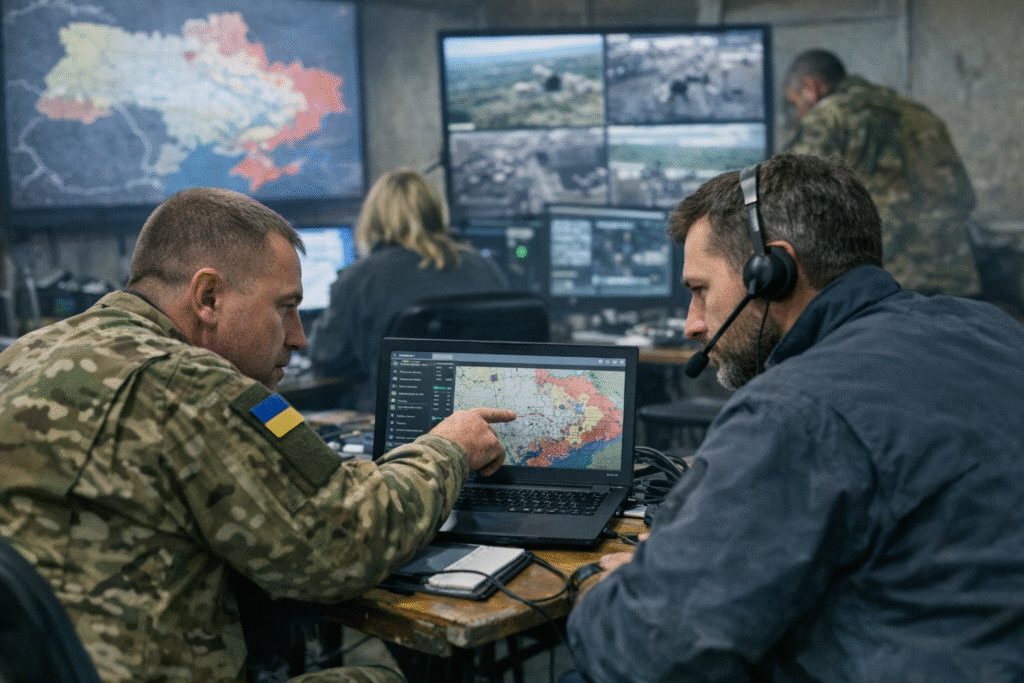
The initiative reflects how the war has transformed Ukraine into one of the most data-rich modern combat environments, with massive volumes of information collected daily from drones, sensors, satellite feeds, electronic warfare systems, and frontline units. Ukrainian officials say that sharing carefully curated portions of this information with trusted partners could dramatically improve the training and testing of AI models designed for military use.
Since Russia’s full-scale invasion began in 2022, Ukraine has rapidly digitized its battlefield operations. From targeting systems to logistics tracking and drone operations, Ukrainian forces generate continuous streams of operational data. Analysts say this real-time information captures the dynamics of modern high-intensity warfare, including drone swarming, electronic interference, artillery duels, and fast-changing frontline conditions.
According to the Defense News report, Ukrainian authorities are now making selected datasets available to allied governments and approved defense partners to help develop AI systems capable of interpreting chaotic battlefield environments. The data can be used to train algorithms that detect equipment, identify patterns in troop movement, improve autonomous navigation for drones or vehicles, and refine predictive models for combat planning.
Officials involved in the program emphasize that sensitive information is being filtered and protected before being shared. The goal is to leverage the strategic insights embedded in the data without exposing operational vulnerabilities or compromising Ukrainian security.
The move represents a shift in how wartime information is treated. Traditionally, battlefield intelligence is tightly guarded within national militaries. Ukraine’s decision suggests a more collaborative model in which allied countries collectively develop AI tools using real-world combat data rather than simulated or limited training sets.
Defense technologists have long argued that the effectiveness of military AI depends heavily on the quality and realism of the underlying data. Much of the data currently used to train algorithms for defense applications originates from exercises or controlled testing environments. In contrast, Ukraine’s experience offers vast quantities of real operational data reflecting the unpredictable conditions of modern warfare.
Experts say that such data could be particularly valuable for improving autonomous systems and decision-support tools. Algorithms trained on authentic battlefield information may be better able to distinguish between civilian and military vehicles, adapt to electronic jamming, or interpret aerial imagery under combat conditions.
The initiative may also help allied defense industries refine technologies already being used in Ukraine. Western companies supplying drones, sensors, and other systems have used feedback from Ukrainian forces to iterate designs rapidly. Access to broader datasets could further accelerate development cycles.
At the same time, the program raises questions about governance and control over military AI development. Sharing combat data among several countries introduces legal, ethical, and security considerations, especially as autonomous capabilities become more central to warfare.
Still, Ukrainian officials appear to view the initiative as both a practical wartime tool and a long-term strategic investment. By enabling partners to train AI systems on data generated in Ukraine’s defense, Kyiv hopes to strengthen allied technological capabilities while reinforcing its own role as a central hub of military innovation.
As highlighted in Defense News’ report, the move underscores how the war has reshaped not only military tactics but also the global defense technology landscape. In a conflict increasingly defined by drones, sensors, and software-driven decision-making, access to real combat data may prove to be one of the most valuable strategic resources of all.