Lebanon Tries to Avoid Internal Crisis Amid Strikes
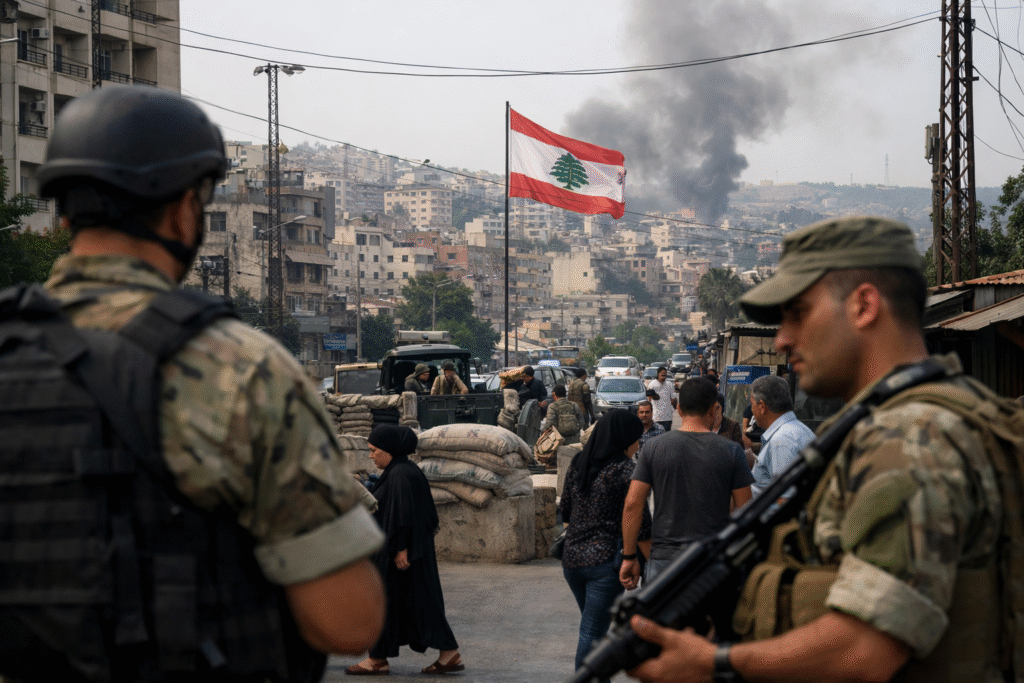
As Israeli bombardments continue to strike parts of Lebanon and tensions intensify along the country’s southern frontier, Lebanon’s fragmented political leadership is attempting to prevent the escalating violence from igniting a broader internal crisis. Officials in Beirut face the difficult task of responding to Israeli military actions while containing deep domestic divisions that have historically threatened the country’s fragile political balance.
According to a report titled “Lebanese government tries to avoid internal strife amid Israeli bombardment,” published by the website Defense News, Lebanon’s leadership is navigating a precarious situation in which external military pressure intersects with long-standing internal fault lines. Government officials fear that military escalation with Israel could quickly transform into political conflict at home, especially given the presence and influence of Hezbollah, the powerful Iran-backed militia and political movement that operates both inside and outside the Lebanese state structure.
Israeli airstrikes have intensified in recent weeks, targeting what Israeli officials describe as militant infrastructure connected to Hezbollah and other armed groups operating in southern Lebanon. The strikes, which Israeli authorities frame as preventative actions against cross-border threats, have heightened fears of a wider regional confrontation. Lebanese officials, meanwhile, accuse Israel of violating Lebanese sovereignty and placing civilians at risk.
Within Lebanon, the prospect of escalation presents a familiar dilemma. Hezbollah maintains a robust armed presence along Israel’s northern border and has repeatedly demonstrated its willingness to confront Israeli forces. However, its autonomy from the central government complicates efforts by Beirut to control the country’s military posture. Many Lebanese politicians worry that any large-scale confrontation involving Hezbollah could draw the entire country into war, regardless of the government’s position.
Defense News reported that Lebanese leaders are attempting to project a unified national stance while quietly working to prevent domestic tensions from spiraling. Government figures have emphasized the need to protect national stability and avoid internal political breakdown at a time when the country is already struggling with severe economic distress and weakened state institutions.
Lebanon’s economy remains deeply fractured following years of financial collapse, currency devaluation, and political paralysis. Basic services have deteriorated across the country, and public confidence in government institutions remains extremely low. Under these conditions, officials fear that renewed armed conflict could trigger further instability, particularly if political factions begin blaming one another for the crisis.
Complicating matters further is Lebanon’s complex sectarian political system, which divides power among competing groups and often makes unified decision-making difficult. In periods of external pressure, those divisions can quickly intensify. Leaders of several political factions have warned that maintaining internal cohesion is essential, arguing that domestic fragmentation would only make the country more vulnerable.
The situation also places Lebanon at the center of a broader regional dynamic involving Israel, Iran, and various allied groups. Hezbollah, widely viewed as Iran’s most capable regional partner, has longstanding ties to Tehran and maintains significant military resources. Israeli officials frequently cite Hezbollah’s presence along their northern border as a critical security threat, while Hezbollah frames its posture as necessary deterrence against Israeli military actions.
Despite the rhetoric on both sides, Lebanese officials appear keenly aware of the devastating consequences a full-scale conflict would bring. The last major war between Israel and Hezbollah in 2006 caused widespread destruction in Lebanon and significant displacement of civilians. The country’s current economic and political fragility makes the prospect of a similar conflict particularly alarming for policymakers in Beirut.
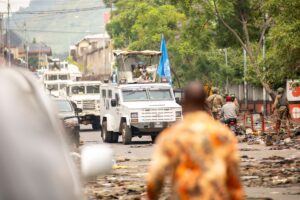
Diplomatic channels remain active as Lebanese authorities seek to limit the fallout from recent military exchanges. Officials have been in communication with international partners, including the United Nations and several regional governments, urging diplomatic pressure to prevent further escalation. The United Nations peacekeeping mission stationed in southern Lebanon also plays a continuing role in monitoring the border and attempting to de-escalate tensions.
At the same time, government leaders must balance external diplomacy with domestic messaging. Public frustration in Lebanon is high, and while many citizens condemn Israeli attacks, others worry that militant activity along the border could provoke a destructive war that the state is ill-equipped to manage.
The Defense News report emphasizes that Lebanese authorities are walking a narrow political tightrope: acknowledging public anger over Israeli strikes while resisting moves that might inflame internal rivalries or draw the state directly into a conflict controlled largely by nonstate actors. For a government already facing enormous economic and institutional challenges, the priority remains preventing external violence from triggering a deeper internal rupture.
As regional tensions remain volatile, Lebanon’s leadership must continue managing these overlapping pressures. The immediate challenge for Beirut is not only responding to military developments along the border but also ensuring that the country’s fragile political equilibrium survives the shock of renewed confrontation.