US Destroys Entire Class of Iranian Warships
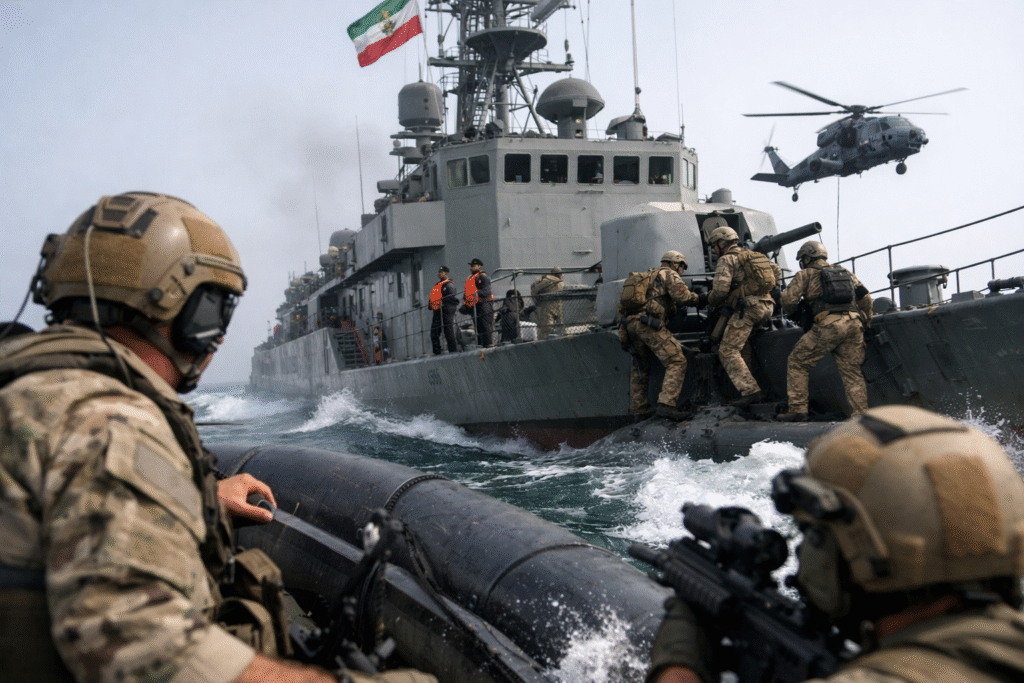
The United States has eliminated an entire category of Iranian-supplied warships operating in support of Houthi militants in the Red Sea region, according to the top U.S. commander responsible for military operations in the Middle East.
Gen. Michael “Erik” Kurilla, head of U.S. Central Command, told lawmakers this week that American naval and air strikes targeting Iranian-backed Houthi forces have succeeded in destroying every vessel of a particular Iranian warship class that had been deployed in the group’s maritime operations. The comment came during congressional testimony reviewing ongoing U.S. efforts to secure international shipping lanes and counter the Iran-backed movement’s attacks on commercial vessels.
The remarks were first reported in the Military Times article titled “US has destroyed entire class of Iranian warships, CENTCOM commander says.”
Kurilla said the campaign against the Houthis has involved sustained strikes aimed at degrading the group’s ability to conduct maritime attacks in the Red Sea and nearby waterways, which serve as critical arteries for global commerce. Since late 2023, Houthi forces aligned with Iran have repeatedly launched missiles, drones, and explosive-laden boats at commercial ships transiting the region, prompting a multinational military response led by the United States.
According to Kurilla, U.S. operations have targeted a wide array of capabilities tied to those attacks, including missile launchers, drone systems, radar installations, and naval assets used to threaten shipping. Among those targets were Iranian-made warships provided to or used by the Houthis to support their maritime operations.
By eliminating every known vessel belonging to that specific class, Kurilla indicated, U.S. forces significantly weakened one of the maritime tools the Houthis had relied on to stage or support attacks.
The Red Sea campaign has become one of the most sustained military confrontations involving U.S. forces in the region in recent years. American warships, along with allied vessels and aircraft, have intercepted missiles and drones aimed at both military and civilian targets while also conducting preemptive strikes against launch sites in Yemen.
U.S. officials say the attacks on shipping are part of a broader strategy by Iran and its regional partners to apply pressure on Western interests and disrupt maritime trade. The Houthis, who control large portions of northern Yemen, have framed their campaign as retaliation connected to the conflict in Gaza and Israel’s war against Hamas, another Iranian-backed group.
Kurilla told lawmakers that Iran continues to provide the Houthis with weapons, intelligence, and technical assistance, allowing the group to sustain a sophisticated attack capability despite ongoing U.S. strikes. Nevertheless, he argued that the U.S.-led campaign has imposed significant costs.
The destruction of the Iranian-made warships underscores the scale of the confrontation at sea. While much of the focus has been on drones and missiles, naval drones, small attack vessels, and other maritime platforms have also played a role in attempts to disrupt shipping through the Bab el-Mandeb Strait and broader Red Sea corridor.
The waterways bordering Yemen carry a significant share of global trade, including energy shipments traveling between Europe and Asia. Continued attacks have forced shipping companies to reroute vessels around the southern tip of Africa, increasing transit times and shipping costs.
American officials have said the objective of the military response is not to escalate the regional conflict but to deter attacks and restore safe passage through the strategic corridor. Whether the destruction of the Iranian-supplied warship class will alter Houthi tactics remains uncertain, as the group has repeatedly adapted by relying on other types of weapons and unmanned systems.
Kurilla emphasized to lawmakers that maintaining pressure on the Houthis and the networks supplying them remains critical to protecting international shipping and preventing further escalation in the region’s already volatile security environment.