Space Force Advances New Missile Warning Satellites
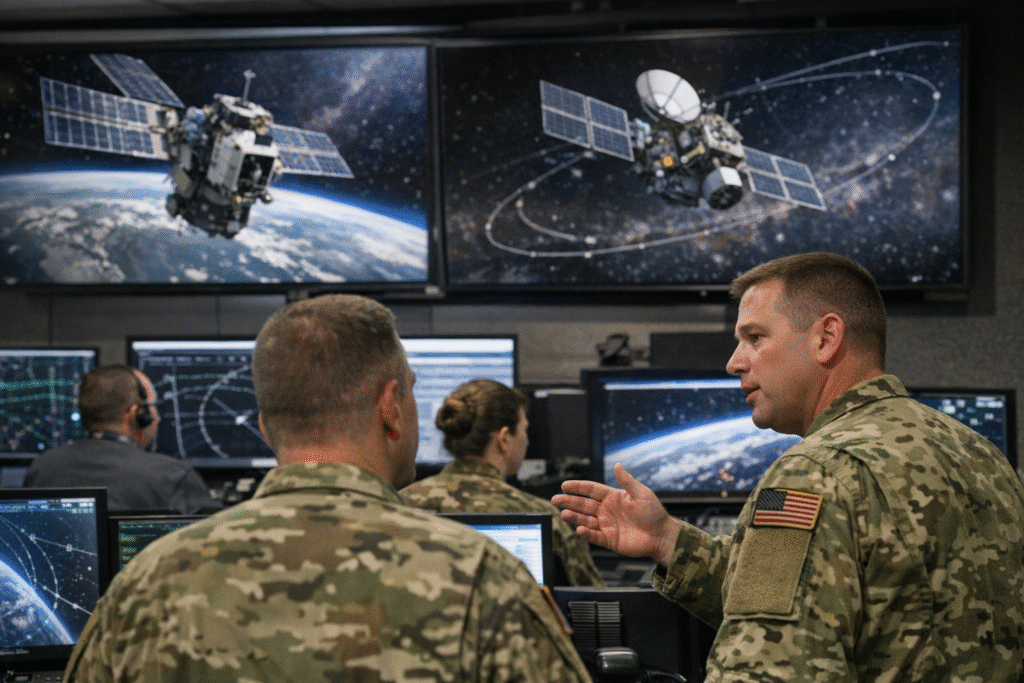
The U.S. Space Force has cleared a key development milestone for a new missile-warning satellite constellation, marking progress in its effort to build a more resilient space-based detection architecture capable of tracking increasingly sophisticated missile threats. The advancement was reported by the defense publication Defense News in an article titled “U.S. Space Force clears design milestone, advances missile warning constellation.”
According to the report, the milestone confirms that the program’s satellite design has matured sufficiently to move forward into the next phase of engineering and development. The constellation is intended to strengthen the United States’ global missile warning capability by supplementing existing systems and introducing new technologies designed to track both traditional ballistic missiles and emerging hypersonic threats.
The effort is part of a broader push by the Space Force and the Department of Defense to transition from a small number of large, highly specialized satellites toward more distributed constellations. Defense planners say this architecture improves resilience by reducing reliance on a limited set of assets that could be vulnerable to anti-satellite weapons or other disruptions in a potential conflict.
The constellation under development will operate as part of a layered missile warning and tracking network. Data from these satellites is expected to integrate with other space-based sensors and with ground and naval systems to provide faster and more precise warning of missile launches. Military officials believe that integrating multiple orbital layers will significantly enhance the ability to follow complex trajectories, including those of maneuverable hypersonic vehicles.
Program officials have emphasized that early design validation reduces technical risk as the system advances toward later development stages. Passing the design milestone typically signals that the spacecraft’s architecture, payload concepts, and mission requirements have been sufficiently refined to support detailed engineering work and, eventually, production planning.
The Space Force has placed growing emphasis on modernizing its missile warning enterprise as rivals such as China and Russia field advanced long-range and hypersonic weapons. By developing a distributed constellation with improved sensing and tracking capabilities, the service aims to ensure continuous strategic warning and strengthen the broader U.S. missile defense posture over the coming decade.