Canada, Denmark Boost Arctic Security with Drones
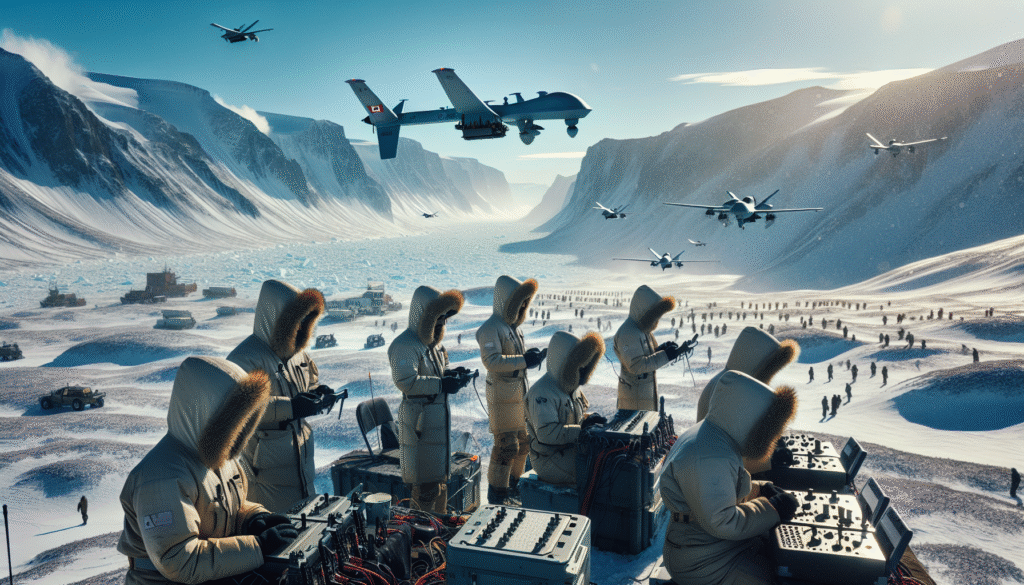
The strategic landscape of the Arctic is evolving rapidly, and recent developments suggest that Canada and Denmark are poised to enhance their collaborative efforts in monitoring this increasingly contested region. According to a report by Defense News titled “Could MQ-9B drones draw Canada and Denmark closer in Arctic surveillance?” the potential acquisition and shared utilization of MQ-9B drones may serve as a catalyst for stronger ties between the two nations, underscoring the growing importance of Arctic security and surveillance.
The Arctic region has attracted significant attention in recent years due to its vast untapped resources and the opening of new maritime routes as ice melts at unprecedented rates. This has prompted countries with interests in the region to bolster their security and surveillance capabilities to address challenges including territorial claims, environmental concerns, and the strategic movements of other nations. Both Canada and Denmark, with their geographical proximity and vested interests in the Arctic, have recognized the necessity of enhancing surveillance mechanisms as part of their national defense strategies.
The MQ-9B drone, a state-of-the-art remotely piloted aircraft, embodies a range of capabilities that are particularly suited to the demanding conditions of the Arctic. Equipped with advanced sensors and capable of prolonged flight times, the MQ-9B is designed to provide comprehensive aerial reconnaissance, which is essential for monitoring the expansive and often inhospitable Arctic region. Its potential acquisition by Canada and Denmark could serve as a pivotal development in their respective efforts to enhance situational awareness and respond effectively to emerging threats.
Canada’s interest in acquiring these drones aligns with its broader defense policies, which emphasize the importance of sovereignty and defense in the northern territories. For Denmark, whose responsibilities extend to Greenland, which constitutes part of the Kingdom of Denmark, the MQ-9B would significantly augment its capabilities in Arctic surveillance, providing an opportunity to monitor its vast and sparsely populated territories more efficiently.
The potential collaboration between Canada and Denmark on this front is emblematic of a broader trend towards multinational cooperation in addressing Arctic security challenges. Both countries stand to benefit from the shared use of advanced drone technology, which could facilitate more efficient data collection and surveillance operations. Such collaboration may also pave the way for joint training exercises and the sharing of best practices, thereby enhancing the operational effectiveness of their forces in the region.
This prospective partnership could also have implications for diplomatic relations between Canada and Denmark, reinforcing their commitment to collaborative defense efforts. In an era where geopolitical tensions are on the rise and the Arctic is becoming a focal point for international strategic interests, fostering closer ties between these two nations could contribute to regional stability and security.
As the world continues to grapple with the implications of climate change and the geopolitical shifts it precipitates, the importance of robust and vigilant Arctic surveillance cannot be overstated. The potential acquisition of MQ-9B drones by Canada and Denmark represents a significant step in this direction, one that highlights the evolving dynamics of international cooperation and the pressing need to address the multifaceted challenges of Arctic security.