Navy Launches Info Warfare Squadrons for Sea Superiority
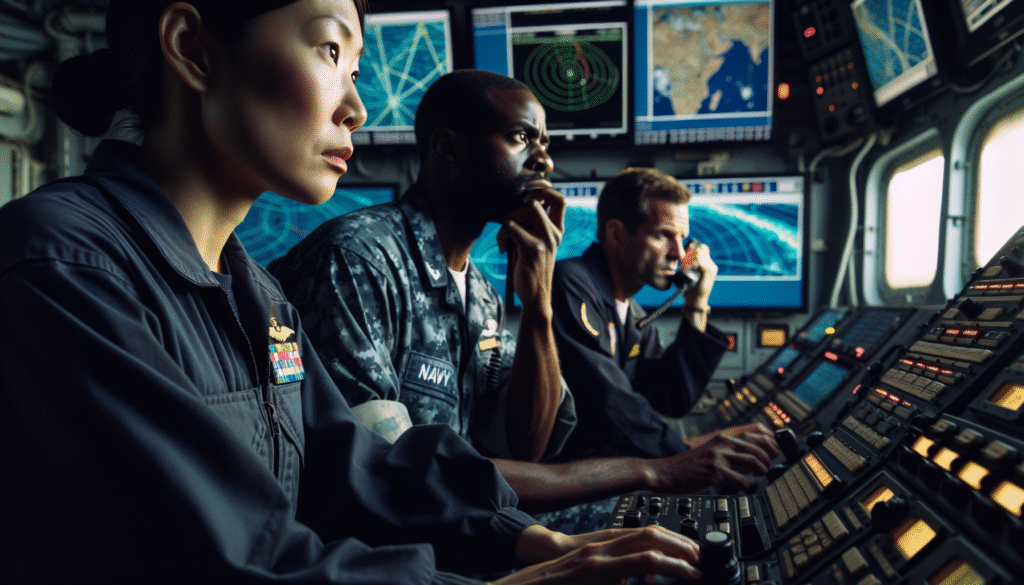
As the U.S. Navy continues to adapt to an increasingly contested information environment, it is reshaping its force structure with a focus on delivering information superiority at sea. According to a recent report titled “New Information Warfare Squadrons Will Increase Readiness And Lethality At Sea: Officer,” published by Breaking Defense, the Navy is preparing to launch a new kind of unit—Information Warfare (IW) Squadrons—designed to support carrier strike groups with advanced cyber, electromagnetic, and intelligence capabilities. This initiative is part of a broader shift intended to tightly integrate these capabilities with traditional kinetic operations.
Rear Adm. Susan BryerJoyner, who leads the Navy’s directorate for Information Warfare Integration (OPNAV N2N6F), told Breaking Defense that the first IW squadron is projected to stand up in fiscal year 2027. The Navy plans to establish three squadrons, with each one attached permanently to a carrier air wing. These squadrons are expected to include approximately 170 to 200 personnel and will draw from fields such as cryptologic warfare, intelligence, meteorology, and cyber operations.
The initiative reflects ongoing efforts within the Department of the Navy to meet the demands of an operational environment where information dominance is becoming as decisive as firepower. BryerJoyner noted that IW squadrons are intended not merely to support kinetic warfare but to help shape, influence, and compete in the information domain before the onset of conflict. “It’s about blending our capabilities into the operations of a carrier strike group while maintaining our unique strengths in the information environment,” she said.
Historically, information warfare personnel have been scattered across different commands and often deployed on a temporary basis to augment strike group operations. This fragmented approach has posed challenges to training, readiness, and the seamless integration of capabilities. The establishment of dedicated IW squadrons seeks to rectify that, cementing a more permanent role for these specialists in fleet operations.
While the Navy has yet to detail the full organizational structure and command relationships of the new squadrons, the decision to embed them within the carrier air wing system highlights a shift toward operationalizing information warfare rather than treating it as a support function. The squadrons will operate across the fleet spectrum, including at-sea experimentation and live deployments, ensuring that operators are proficient under real-world conditions.
This transformation is occurring as U.S. strategic competitors—particularly China and Russia—make significant investments in cyber and electronic warfare capabilities. In this context, the Navy’s push to develop IW squadrons underscores a broader recognition that future maritime dominance will depend not only on ships and aircraft, but also on an agile and deeply embedded information warfare architecture.
The creation of these squadrons is still in its initial stages, and Navy planners are working closely with various communities to define roles, develop training pipelines, and establish deployment cycles. However, the strategic intent remains clear: information warfare is no longer a supplement to naval power—it is a core component of maritime readiness and lethality.