USS Gerald R Ford Deployed Amid Middle East Tensions
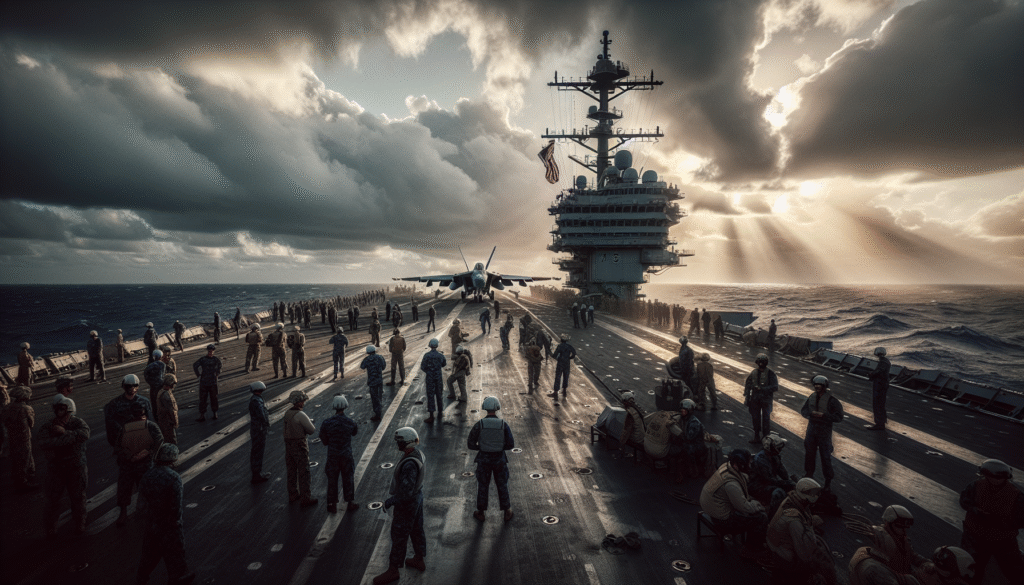
In a significant display of military presence amid ongoing tensions in the Middle East, the U.S. Navy has deployed the USS Gerald R. Ford to the region, marking the second aircraft carrier group to operate there in recent months. The development was first reported in the article titled “USS Gerald Ford the second aircraft carrier sent to Middle East: report” published by Military Times.
The USS Gerald R. Ford, the Navy’s newest and most advanced aircraft carrier, joins the USS Dwight D. Eisenhower strike group, which has been stationed in the area since late 2023. According to U.S. defense officials, the deployment is part of a broader effort to deter regional threats and provide sustained support to coalition forces operating within the U.S. Central Command theater.
While Pentagon leaders have not disclosed specific mission parameters for the Ford’s deployment, analysts suggest the carrier’s presence is intended to reinforce U.S. commitments to regional allies and act as a stabilizing force amid heightened volatility—that includes ongoing threats from Iranian-backed militias, the war in Gaza, and increasing unrest in the Red Sea caused by Houthi rebel activity.
The USS Gerald R. Ford, boasting next-generation electromagnetic launch systems and an expanded airwing capacity, is the flagship of a new class of supercarriers designed to enhance rapid-response capabilities. Its dispatch underscores the Navy’s shift toward forward-deployed platforms capable of sustained operations in contested environments.
This latest development reflects an increasingly assertive U.S. posture following a series of attacks on American and allied interests across the region. Earlier this year, drone and missile strikes targeted U.S. bases and commercial shipping lanes, prompting calls from lawmakers and defense officials for a sharper deterrent response.
Naval officials confirmed that the Ford Carrier Strike Group will operate in coordination with existing U.S. and coalition assets already positioned in or near the Persian Gulf and Arabian Sea. The overlapping presence of two carrier groups is notable, last occurring in this region during periods of heightened conflict in the past two decades.
While the Pentagon has characterized the deployment as defensive in nature, regional observers are closely watching for any signs of escalation. Several Gulf nations have already called for diplomatic restraint and engagement, though the U.S. maintains that its military posture is necessary to safeguard personnel and ensure freedom of navigation in critical maritime corridors.
The protracted nature of the current crisis, compounded by a complex web of regional alliances and grievances, has made it difficult to predict the duration or scope of the U.S. military’s elevated presence. For now, the deployment of the USS Gerald R. Ford signals Washington’s continued reliance on naval power to project influence and secure U.S. interests in an increasingly volatile region.