Why Air Power Rarely Topples Governments
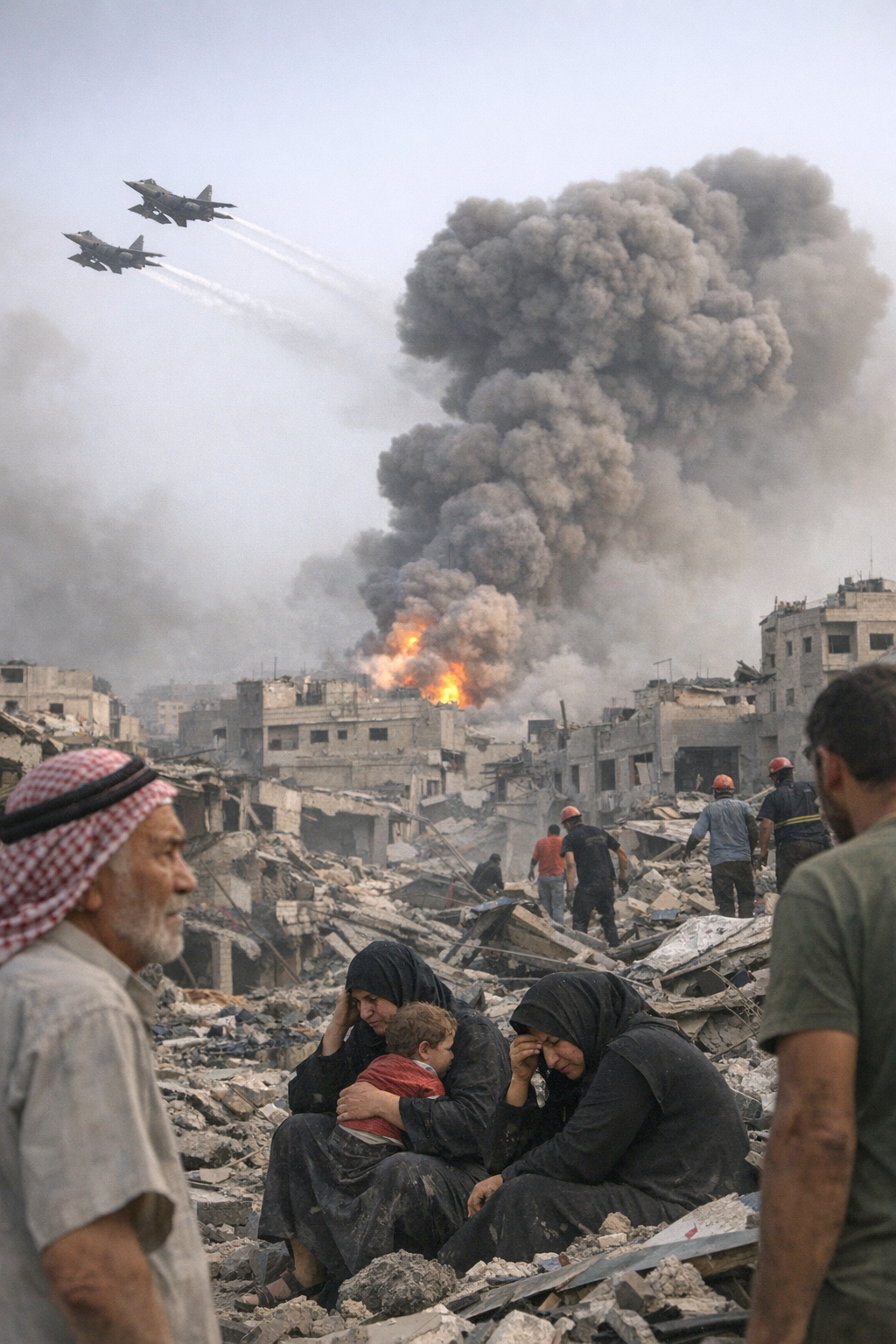
Military leaders and policymakers have long debated the effectiveness of air power as a tool for forcing political change. A recent analysis titled “Why Air Strikes Don’t Deliver Regime Change,” published on the Substack platform by Andrew Fox, revisits this question by examining historical evidence and strategic assumptions behind aerial campaigns aimed at toppling governments. The article argues that while air strikes can degrade military capabilities and impose significant costs on regimes, they rarely succeed in achieving the political objective of regime change on their own.
Fox contends that the belief in decisive air power has repeatedly resurfaced in modern warfare, often driven by the appeal of a strategy that promises major results without prolonged ground conflict. Air campaigns appear, at least superficially, to offer a way for external powers to coerce or destabilize adversarial governments while minimizing their own casualties. Yet the historical record suggests that the relationship between bombing and political collapse is far weaker than proponents of such strategies often assume.
Central to Fox’s argument is the distinction between military damage and political outcomes. Air strikes can destroy infrastructure, suppress enemy defenses, and weaken military formations. However, regime change is fundamentally a political process. Governments fall not merely because their assets are destroyed but because their internal support structures—militaries, security forces, elites, and segments of the population—withdraw loyalty. According to the analysis, aerial bombardment alone rarely creates the conditions necessary for that kind of internal fracture.
Fox points to several historical cases frequently cited in discussions of air power. NATO’s 1999 intervention in Serbia, for example, is sometimes portrayed as evidence that sustained bombing can force a political leadership to capitulate. Yet he argues that the situation was considerably more complex. Diplomatic pressures, the threat of a ground invasion, and Russia’s evolving stance all played critical roles in pushing Serbian leader Slobodan Milošević toward a settlement. The air campaign itself was only one part of a broader strategic environment that made continued resistance increasingly untenable.
Similarly, the 2011 intervention in Libya is often cited as a successful case in which air strikes contributed to the fall of Muammar Gaddafi’s regime. Fox argues that this outcome depended heavily on the existence of organized rebel forces that were able to exploit NATO’s air support on the ground. Without a capable local movement advancing against regime forces, air power alone would likely have been insufficient to dismantle the government’s authority across the country.
The pattern, he suggests, illustrates a broader principle: air strikes tend to be effective when they support ground operations, whether conducted by foreign troops or by local allies. When used in isolation, however, they struggle to translate tactical destruction into political transformation. Political systems are resilient, and ruling elites often prioritize regime survival above all else, even under sustained military pressure.
Another factor highlighted in the Substack article is the tendency of external bombing campaigns to strengthen internal cohesion rather than weaken it. Nationalist sentiment can intensify when a population perceives itself to be under external attack. Authoritarian regimes in particular may exploit air strikes as propaganda, portraying themselves as defenders of national sovereignty and using the crisis to justify repression of dissent.
Fox also emphasizes the institutional resilience of many modern authoritarian systems. Leaders typically surround themselves with loyal security forces whose survival is tied to that of the regime. Unless those core institutions begin to fracture—which often requires sustained ground pressure, internal rebellion, or both—bombing campaigns may inflict damage without fundamentally altering the regime’s grip on power.
The analysis arrives at a cautious conclusion about the limits of air power as a tool of political coercion. Air strikes remain an important component of modern military strategy, capable of shaping battlefields and constraining adversaries. However, expecting them to induce regime collapse without complementary political and military measures risks misunderstanding the dynamics that determine whether governments endure or fall.
Fox’s argument, outlined in “Why Air Strikes Don’t Deliver Regime Change” on Substack, reflects a broader debate within strategic studies about the persistent allure of technologically driven solutions in warfare. Precision air power, advanced surveillance capabilities, and stand-off weapons have transformed combat over the past several decades. Yet the article suggests that these capabilities have not fundamentally altered the political realities of regime stability.
For policymakers, the implication is that air campaigns must be assessed not only in terms of their military efficiency but also in relation to the political structures they seek to influence. Destroying assets from the air can weaken an opponent’s fighting capacity, but the collapse of a government usually depends on a far more complex set of factors, including internal dissent, credible alternatives to existing leadership, and sustained pressure that affects the regime’s core supporters.
By revisiting historical examples and separating military effects from political outcomes, Fox’s analysis contributes to an ongoing reassessment of how air power should be understood in contemporary conflicts. His argument ultimately suggests that the expectation of quick, decisive regime change from the sky alone is less a proven strategy than a recurring strategic illusion.