USS Ford Heads to Port After Onboard Fire
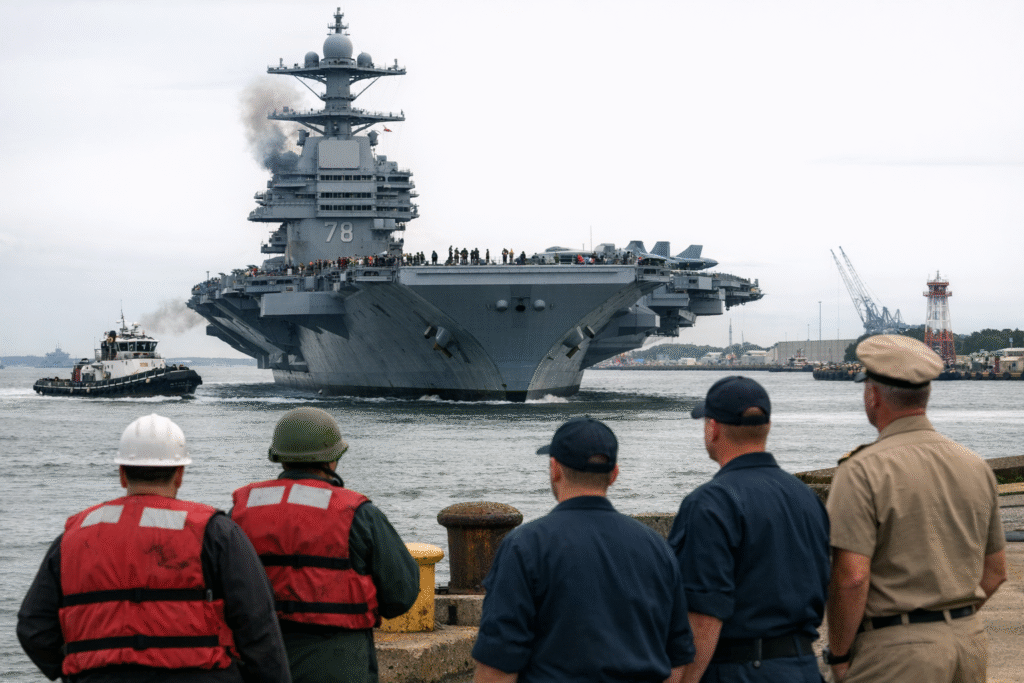
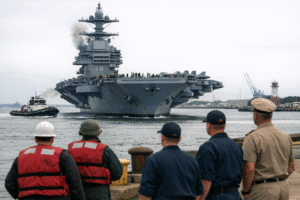
The U.S. Navy’s newest aircraft carrier, USS Gerald R. Ford, will make an unscheduled stop in port following a recent onboard fire, according to a report by Military Times titled “US carrier Ford to go to port temporarily after fire.” The incident has prompted Navy officials to prioritize safety inspections and repairs, even as the vessel remains a central component of U.S. naval readiness.
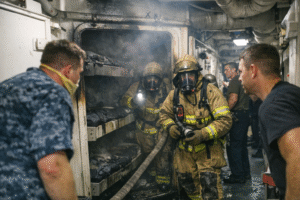
The fire, which was contained by the ship’s crew, did not result in reported casualties, but it raised concerns about the operational status of the Ford, the lead ship in a new class of technologically advanced carriers. Navy officials have indicated that sending the vessel to port is a precautionary measure aimed at ensuring all systems are fully assessed and, if necessary, repaired before the ship resumes normal operations.
Commissioned in 2017, the Gerald R. Ford represents a significant leap in carrier design, incorporating new electromagnetic launch systems, advanced radar capabilities, and reduced manpower requirements. However, the ship has also faced a series of developmental and maintenance challenges since entering service, including issues with its launch and recovery systems.
The decision to divert the carrier underscores the Navy’s emphasis on risk management, particularly for high-value assets operating in complex environments. While fires aboard naval vessels are not uncommon, they carry heightened urgency given the confined spaces and critical systems involved. The crew’s ability to quickly suppress the blaze reflects both training and existing fire-control protocols, which Navy leadership has repeatedly emphasized in recent years.
Officials have not disclosed the full extent of any damage or how long the carrier will remain in port. The Navy is expected to conduct a comprehensive review to determine the cause of the fire and whether further corrective actions are required. Such investigations typically examine equipment performance, procedural adherence, and environmental factors.
The Gerald R. Ford has been a focal point of U.S. naval modernization efforts, and any interruption to its deployment cycle is closely watched by defense analysts and policymakers. As Military Times reported, the temporary port call is not expected to have long-term strategic implications, but it highlights the ongoing balancing act between maintaining cutting-edge capabilities and ensuring operational reliability.
The Navy has not indicated whether the incident will affect broader fleet operations in the near term. For now, attention remains on restoring the Ford to full readiness and confirming that the circumstances surrounding the fire do not signal deeper systemic issues.