US Syria Raid May Have Killed Key Intelligence Asset

A recent U.S. military raid in Syria may have mistakenly killed a key undercover intelligence asset rather than the intended Islamic State target, raising serious questions about the accuracy of intelligence used in counterterrorism operations. According to a report published by Military Times titled “US raid allegedly killed undercover agent instead of IS official,” sources familiar with the incident allege that the man fatally targeted in the December 2023 operation was working as a confidential informant for Western intelligence services, not a high-ranking ISIS operative as previously claimed.
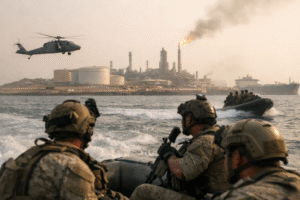
The nighttime raid, conducted by U.S. special operations forces in the Idlib province of northwest Syria, was initially hailed a success. Pentagon officials stated at the time that the mission had neutralized a senior Islamic State leader involved in planning external attacks. However, subsequent reports and an internal investigation suggest that the intelligence may have been flawed and that the victim—a Syrian national—had in fact been supplying critical information to international counterterrorism agencies.
Two officials with knowledge of the ongoing investigation told Military Times that the slain individual had been cooperating with both U.S. and European intelligence entities for over a year. Operating undercover within ISIS’s fragmented regional network, he had allegedly provided details that contributed to earlier operations targeting confirmed militants. His mission and identity were reportedly known to multiple agencies, but a breakdown in communication and vetting may have led to the deadly error.
“This individual had earned the trust of our allies on the ground,” said one Western intelligence officer speaking on condition of anonymity. “His elimination doesn’t just represent a loss—it’s a severe blow to ongoing infiltration efforts.”
The incident has prompted interagency reviews and diplomatic engagement with European counterparts, several of whom were reportedly unaware of the strike until after it occurred. Military and intelligence officials are currently debating whether incorrect or misinterpreted intelligence led to the misidentification, or whether coordination across agencies failed to flag the individual as an asset.
A spokesperson for U.S. Central Command confirmed that an after-action assessment is underway and that civilian casualty claims are being taken “very seriously.” The Defense Department has not yet publicly acknowledged any wrongdoing or shared details of operational intelligence due to the classified nature of the mission.
Observers note that the incident highlights the inherent complexity of operating in conflict zones like Syria, where militant groups often disguise themselves among civilians and where informants risk their lives to provide actionable intelligence from within insurgent groups. Furthermore, it raises broader concerns about oversight, target verification, and the safeguards in place to prevent friendly-fire incidents during covert operations.
The fallout from the operation could have enduring consequences, potentially straining collaboration between allied intelligence services and undermining local participation in intelligence-gathering efforts. Former intelligence community officials warn that trust, once broken, can be difficult to rebuild.
For now, the Defense Department remains tight-lipped, while families and governments await answers. If confirmed, the misidentification would mark one of the more serious intelligence failures in recent memory, compounding scrutiny of derivative intelligence sources and drone strike protocols in post-ISIS military engagements. As new facts emerge, pressure is building on both the military and intelligence leadership to account for the incident and take corrective steps to prevent future mistakes.