US Shifts Focus Away from Caribbean Drug Patrols
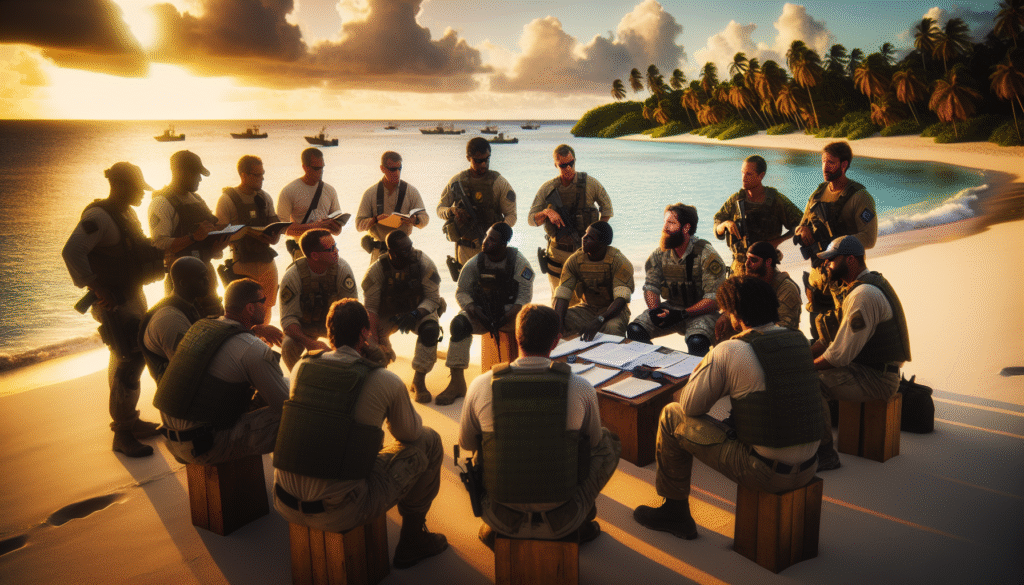
As U.S. military operations increasingly pivot toward countering global threats and preparing for potential conflicts with major powers, the longstanding mission of drug interdiction in the Caribbean has undergone a quiet but significant transformation. In an article titled “How did US patrol Caribbean for drug smuggling before strikes?” published by Military Times on December 23, 2025, reporter Davis Winkie details how the Department of Defense once heavily contributed to joint efforts to curb narcotics trafficking in the region—before those resources were redirected in recent years to other priorities.
The Military Times piece explores how, prior to a spate of missile strikes worldwide that reshaped defense postures, the U.S. Southern Command relied significantly on resources from the Navy and Air Force to conduct aerial surveillance and interdict illicit narcotics flows. These patrols played a crucial role in identifying and tracking suspected smuggling vessels, supplying intelligence to Coast Guard units and allied naval forces positioned in the region.
However, as global tensions escalated in 2024 and 2025—particularly with the emergence of flashpoints in the Indo-Pacific and Eastern Europe—many of the aircraft and naval assets that once contributed to these Caribbean operations were reassigned. Among the reallocated resources were P-8A Poseidon maritime surveillance planes and Navy destroyers, both of which had been instrumental in gathering real-time intelligence on suspected drug trafficking routes.
Sources cited in the Military Times report, including current and former military officials, described a growing tension between the strategic imperative to maintain vigilance in the Western Hemisphere and the mounting need to deter and respond to actions by near-peer adversaries elsewhere. One anonymous official characterized the shift as “losing a low-intensity war by necessity,” acknowledging that, despite the enduring scale of drug smuggling challenges, the U.S. military can no longer prioritize them as it once did.
The reduction in military support has placed greater strain on the Coast Guard and regional partners, which now shoulder a larger share of the interdiction effort without the robust aerial and surveillance infrastructure previously provided by the Pentagon. While joint drug enforcement operations continue, their success increasingly depends on diplomatic coordination and intelligence-sharing, not the raw force projection that once undergirded them.
The article also notes that the U.S. Southern Command has expressed concern about the operational gap left in the wake of reduced military assistance. General Laura Richardson, the commander of SOUTHCOM, previously warned lawmakers and officials that declining presence in the area allows transnational criminal organizations to exploit maritime zones with relative impunity.
Though counter-narcotics remains a stated goal of national security strategy in the Western Hemisphere, its prioritization has shifted considerably amid the demands of global deterrence operations, cyber readiness, and contested airspace surveillance. As described in the Military Times investigation, this evolution reflects a broader recalibration of U.S. military posture—one that acknowledges finite resources and a reshuffled list of strategic imperatives in an increasingly multipolar world.
Ultimately, the lingering question posed by the article—how the U.S. once patrolled the Caribbean for drug smuggling before the reallocation of military resources—serves as a lens through which to examine the cost of strategic trade-offs. In opting to prepare more vigorously for potential high-end warfare, the United States has curtailed a mission that once served to counter a different but persistent form of transnational threat.