US Reaper Drones Escalate Risk in Iran Standoff
A recent report by The Wall Street Journal, titled “U.S. Reaper Drones Take the Fight to Iran—but at a Cost,” underscores a growing reliance on unmanned aerial systems in Washington’s evolving confrontation with Tehran, highlighting both their tactical advantages and mounting strategic risks.
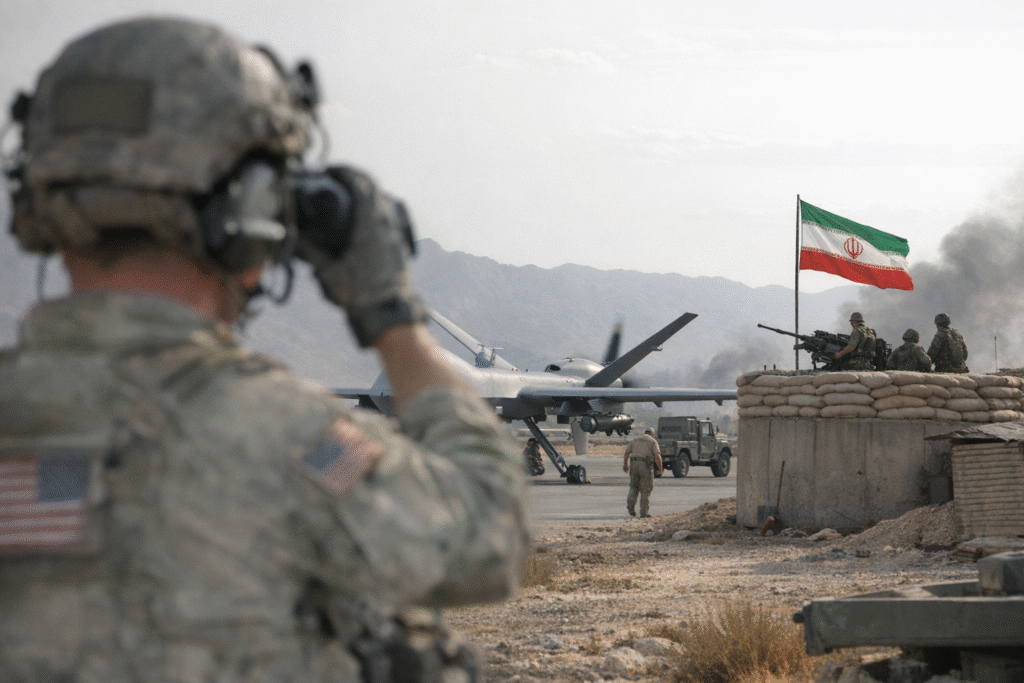
The expansion of U.S. drone operations reflects a broader shift in military doctrine toward remote warfare, where precision strikes and persistent surveillance can be conducted without placing American personnel directly in harm’s way. MQ-9 Reaper drones, in particular, have become central to this approach, capable of loitering over contested regions for extended periods while gathering intelligence and executing targeted strikes.
According to the Journal’s reporting, these drones are increasingly being used to monitor and counter Iranian-backed militias and assets across the Middle East. Their presence has allowed the United States to respond more quickly to perceived threats and to project power in regions where deploying manned aircraft or ground forces would be politically or logistically complicated. At the same time, their use reflects a delicate balancing act: deterring Iran and its allies without escalating into open conflict.
Yet the article also emphasizes the costs—both financial and strategic—associated with this reliance. Reaper drones are not invulnerable. Advances in air defense systems, including those supplied or influenced by Iran, have made these aircraft more susceptible to being shot down. Each loss represents not only a significant financial setback but also a potential intelligence risk, as adversaries may recover sensitive technology.
Beyond the material cost, there are broader implications for U.S. policy. The expanded use of drones can lower the threshold for military engagement, enabling frequent, limited strikes that may not provoke immediate large-scale retaliation but can contribute to a sustained cycle of tension. Analysts cited in the Journal’s report suggest that such operations risk entrenching a pattern of shadow conflict, where neither side seeks full-scale war but both engage in continuous, low-level confrontation.
The reliance on drones also raises questions about long-term effectiveness. While they offer a powerful tool for disrupting militant networks and responding to immediate threats, they do not address underlying political dynamics driving instability in the region. In some cases, repeated strikes may even fuel anti-American sentiment, complicating diplomatic efforts and potentially strengthening the very groups they are meant to deter.
As the United States continues to refine its approach to Iran and its network of proxies, the role of Reaper drones is likely to remain central. The Wall Street Journal’s account highlights a critical tension in modern military strategy: the appeal of technology that promises precision and reduced risk for operators, set against the enduring reality that even remote warfare carries significant consequences.