US Picks Dutch Design for New Island-Hopping Vessel
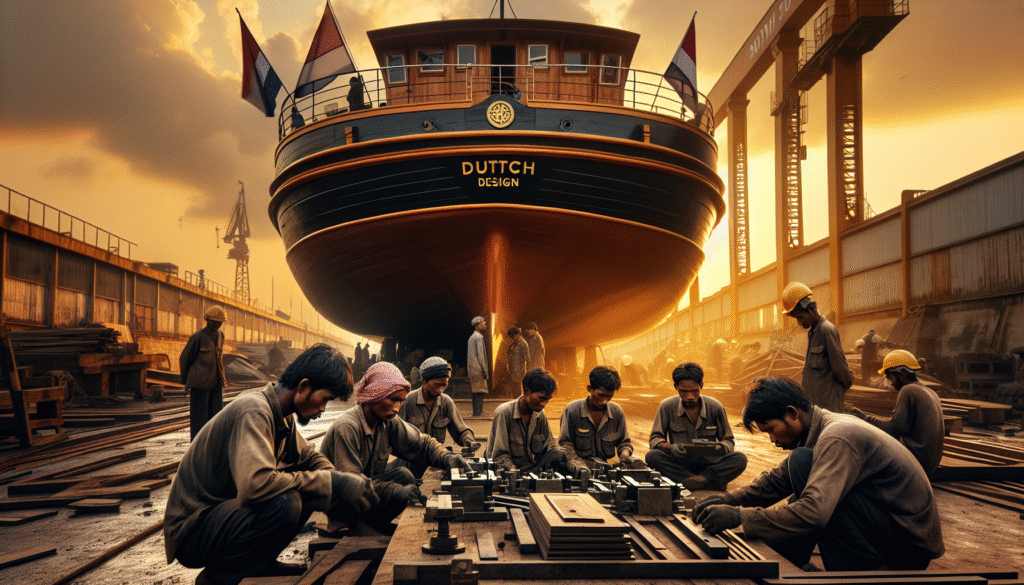
In a significant move set to shape the future of amphibious warfare, the U.S. Navy and Marine Corps have announced their selection of a Dutch-designed vessel as the foundation for a new class of ships tailored for island-hopping operations in the Pacific. According to an article titled “Navy, Marine Corps Pick Dutch Company’s Design For New Island-Hopping Vessel” published by Breaking Defense, the services have opted to adopt the concept developed by Damen Shipyards Group, a Netherlands-based firm with a longstanding reputation for commercial and military maritime designs.
The decision is a key milestone in broader Pentagon efforts to reorient U.S. maritime strategy toward distributed operations across the Indo-Pacific. With China’s growing naval presence and increasingly assertive posture in the region, U.S. military planners have emphasized the need for agile, cost-effective platforms capable of supporting Marines dispersed across vast island chains. The new ships are intended to bolster the emerging “Expeditionary Advanced Base Operations” (EABO) doctrine, enabling small Marine contingents to rapidly move, resupply, and sustain operations from austere locales.
The vessel design, referred to as the Landing Ship Medium (LSM), emphasizes modularity, shallow draft, and logistical capacity over traditional combat features. The ships will be operated by the Navy but serve to directly support the Marine Corps’ expeditionary tactics, essentially acting as floating connectors that fill the capability gap between large amphibious ships and small landing craft. A central aspect of the development process has been affordability, with program leaders aiming to constrain unit cost and production time to ensure the platform can be fielded at a meaningful scale.
Officials reportedly selected Damen’s design after a competitive evaluation of multiple proposals. Key to the Dutch offering was its proven performance in international markets, as well as its ability to accommodate a range of mission profiles through containerized payloads. Damen’s existing experience in constructing flexible auxiliary vessels is seen as a valuable asset in terms of risk reduction and production scalability.
The program’s backers within the Navy and Marine Corps have expressed optimism that the choice of a commercial derivative will enable more rapid delivery of ships, helping to keep pace with evolving operational demands. While an American shipyard will handle construction under license, maintaining industrial base priorities, the adoption of a foreign blueprint signals a pragmatic approach to acquisition as great power competition looms larger in defense planning.
The U.S. military’s shift toward dispersed maritime operations has confronted longstanding institutional and budgetary constraints, including debates over amphibious ship requirements and fleet composition. Nonetheless, the selection of this platform is expected to enhance the services’ ability to conduct distributed lethality and persistent presence missions in contested environments without committing large capital ships to every engagement area.
As the Navy proceeds with prototyping and production, the integration of European maritime innovation into U.S. naval architecture highlights both the urgency and complexity of preparing for an Indo-Pacific theater increasingly defined by maneuver warfare, logistics resilience, and rapid responsiveness.