US Navy Plans New Class of Agile Combat Ships
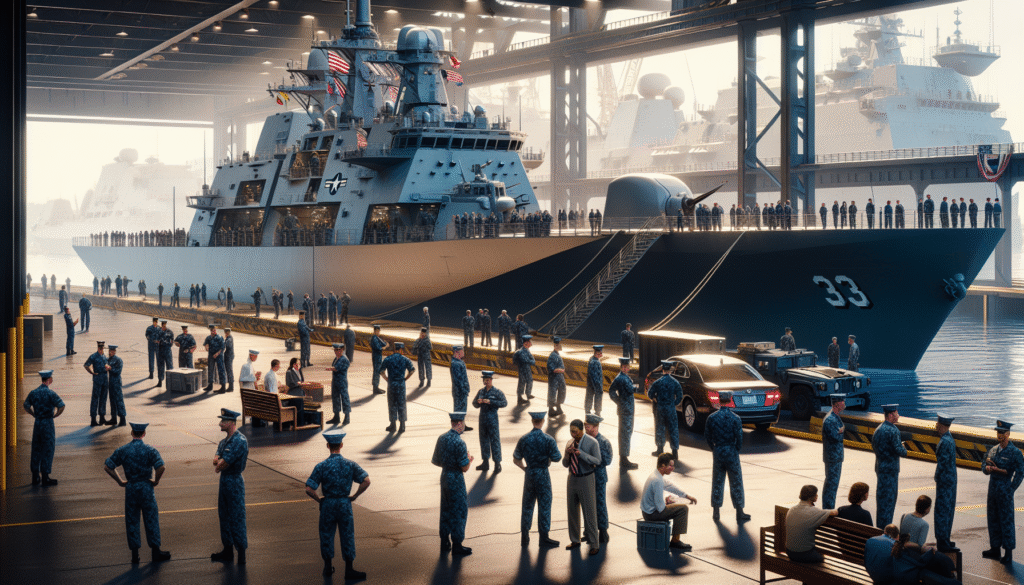
In a strategic shift aimed at increasing fleet flexibility and responsiveness, the U.S. Navy has announced plans to develop a new class of smaller, more agile combatant ships, according to a December 19 article titled “US Navy to develop new class of smaller, more agile combatant ships” published by Military Times. The initiative marks a deliberate move away from the Navy’s recent history of investing in large, heavily armed platforms and reflects broader efforts to adapt to evolving maritime threats posed by near-peer adversaries such as China and Russia.
Rear Adm. Fred Pyle, director of the Surface Warfare Division, described the envisioned ships as “attritable” platforms — vessels that are less costly, easier to produce at scale, and designed to operate alongside, but not replace, existing surface combatants such as destroyers and frigates. These new ships are intended to complement larger vessels by assuming roles that do not require high-end warfighting capabilities, thus allowing the Navy to allocate its more advanced assets to missions of greater strategic importance.
The initiative emerges amid a growing recognition within the Pentagon that the U.S. Navy must recalibrate its force structure to contend with an increasingly contested global maritime environment. Military planners argue that smaller, more numerous ships will complicate an adversary’s targeting calculus and provide the Navy with greater operational flexibility — particularly in the Indo-Pacific, where vast distances and contested waterways present significant challenges to fleet presence and logistics.
Although specific design details and timelines have yet to be finalized, the concept outlines a vision for a less complex vessel that leverages commercial off-the-shelf technologies to reduce costs and accelerate production. Defense officials suggest that these new combatants could serve as escorts, provide surveillance and reconnaissance, or support distributed maritime operations — a key element of the Navy’s evolving approach to deterrence and warfighting.
The decision to pursue a new class of smaller ships reflects lessons learned from the troubled Littoral Combat Ship (LCS) program, which aimed to deliver modular, agile vessels but was plagued by performance issues and cost overruns. Senior Navy leaders assert that the new design will emphasize simplicity, reliability, and mission-specific adaptability rather than trying to meet all operational requirements within a single platform.
As noted in the Military Times report, the Navy has not formally designated this new ship class or issued a request for proposals, but it is currently in exploratory stages with input from industry, lawmakers, and military stakeholders. Advocates of the initiative argue that early engagement across these communities is essential to avoid pitfalls experienced in previous acquisition programs and foster a shared vision for the Navy’s future surface fleet.
The announcement coincides with parallel efforts by the U.S. Department of Defense to recalibrate its overall force posture in response to intensifying great power competition. At a time when tensions in the Taiwan Strait, South China Sea, and Arctic are rising, the U.S. Navy’s shift toward a more distributed, resilient fleet architecture underscores its commitment to maintaining maritime superiority while adapting to the fiscal and operational realities of 21st-century warfare.
While questions remain about funding, industrial base capacity, and program execution, the Navy’s move to introduce a new class of agile combatants signals a noteworthy departure from past paradigms — one that could reshape the character of American sea power in the decades to come.