US Launches High-Speed Combat Drone Production
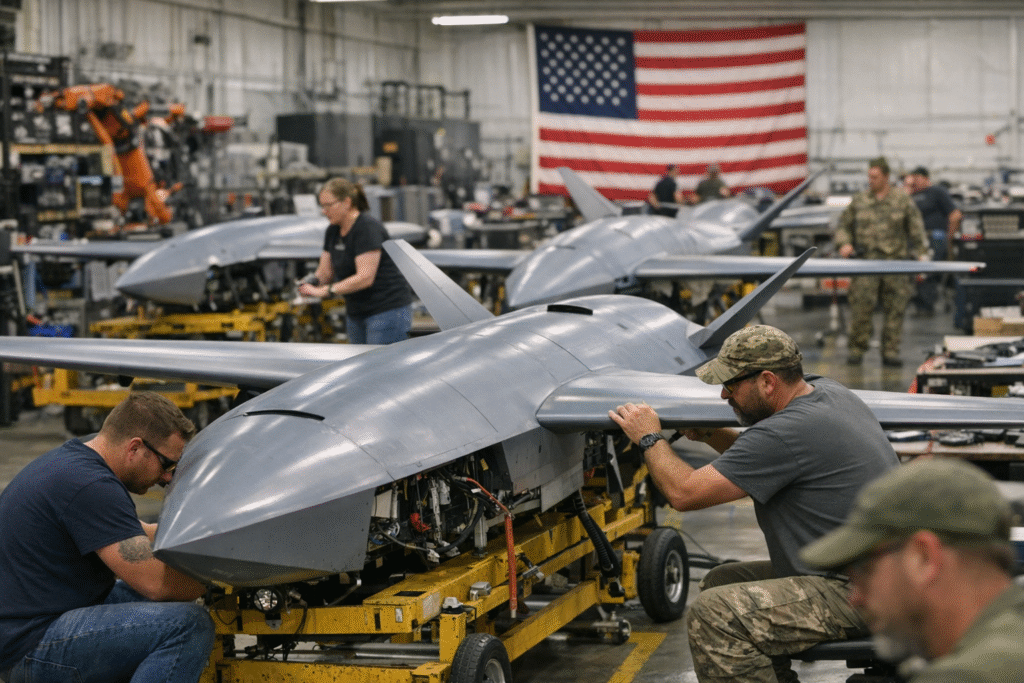
Production of a new generation of high-speed combat drones is set to begin within days at a U.S. manufacturing facility operated by defense technology company Anduril, marking a significant step in efforts to rapidly scale autonomous weapon systems.
According to the Defense News report titled “High-speed combat drone production starts at new US Anduril plant in days,” the company’s newly established plant has been designed for high-volume output, reflecting growing Pentagon demand for affordable, attritable drones that can be produced and deployed quickly in large numbers. The initiative aligns with broader U.S. defense priorities emphasizing distributed capabilities and resilience in contested environments.
Anduril’s approach centers on streamlined manufacturing and modular design, enabling faster assembly compared with traditional defense procurement timelines. Company officials indicate that the facility is intended not only to meet current demand but also to serve as a model for scaling autonomous systems production in the future. The emphasis is on speed, cost-efficiency, and adaptability, with drones that can be upgraded or modified without lengthy redesign cycles.
The Defense Department has increasingly signaled that autonomous systems will play a central role in future conflicts, particularly in scenarios requiring rapid deployment and the ability to overwhelm adversary defenses. High-speed drones are seen as especially valuable for missions such as reconnaissance, strike, and electronic warfare, where responsiveness and survivability are critical.
The Anduril plant represents a shift toward Silicon Valley-style manufacturing approaches within the defense sector, where software-driven development and iterative production cycles are prioritized over traditional, slower acquisition models. This aligns with recent Pentagon initiatives aimed at integrating commercial technology firms more deeply into the defense industrial base.
However, the ramp-up in drone production also raises questions about supply chain resilience, regulatory oversight, and the long-term sustainability of rapid manufacturing models in a sector historically constrained by complex contracting processes. Analysts note that while the urgency of current geopolitical competition is driving innovation, maintaining quality assurance and interoperability will remain key challenges.
As production begins, the program will serve as an early test of whether the U.S. defense ecosystem can successfully transition to faster, scalable manufacturing of autonomous systems without compromising reliability or accountability.