US Expands Military Footprint with Force in Philippines
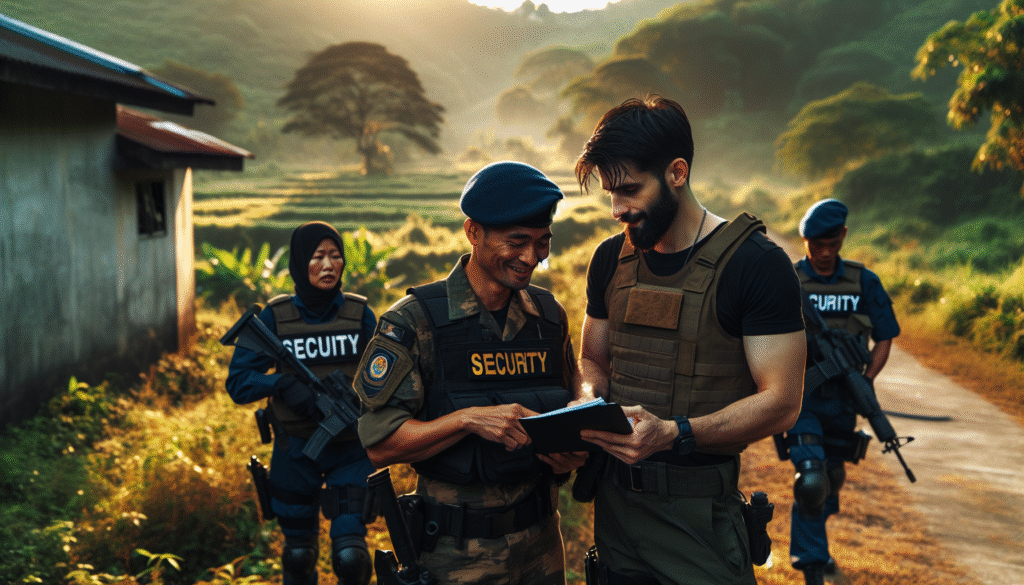
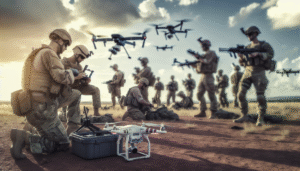
In a sign of the United States’ expanding strategic footprint in Southeast Asia, the U.S. Army has quietly initiated a new rotational force deployment to the Philippines, signaling deepening military cooperation with the regional ally in the face of growing tensions in the Indo-Pacific. According to the article “U.S. Army Quietly Stands Up Rotational Force in the Philippines,” published by USNI News, the 1st Multi-Domain Task Force (MDTF)—a specialized unit that integrates cyber, space, electronic warfare, and traditional capabilities—has begun establishing a presence in the Philippines after years of preparation and bilateral security engagement.
The deployment, carried out with minimal public announcement, underscores the evolving U.S. posture in the region, particularly in light of persistent maritime pressure exerted by China in the South China Sea. While U.S. armed forces have maintained longstanding ties with the Armed Forces of the Philippines (AFP), the arrival of a cohesive, technologically advanced ground unit represents a deeper level of operational integration. This development builds on recent basing agreements under the Enhanced Defense Cooperation Agreement (EDCA), which grants rotational access to key Philippine military installations.
The establishment of the rotational force comes amid complex regional dynamics, where Beijing has sought to assert broad territorial claims within the Philippines’ exclusive economic zone using both maritime militia and naval forces. The Philippine government has responded with vocal opposition and expanded military engagements with partners, including the United States, Japan, and Australia.
While Washington and Manila both publicly affirm that no permanent U.S. bases are reestablished under EDCA—in keeping with Philippine constitutional requirements—the rotational presence of units such as the MDTF provides a platform for sustained joint training, intelligence sharing, and contingency coordination. These deployments, often timed with bilateral exercises like Balikatan, also serve as visible demonstrations of alliance commitments.
Major General Bernard Harrington, commander of the 1st MDTF, emphasized the unit’s role in deterring potential adversaries by coordinating operations across multiple domains and aligning closely with the needs of the AFP. The task force participated in the 2023 iteration of Balikatan, signaling its readiness to operate under the challenging geographic and political conditions of the Indo-Pacific theater.
The U.S. Indo-Pacific Command and senior Army leadership view the MDTF model as critical to countering coercive behavior in strategically vital areas such as the Philippine archipelago. In this context, proximity to flashpoints in the South China Sea grants U.S. forces operational agility and deterrent value, while enabling the Philippine military to modernize its capabilities through sustained partnership.
Although neither side has officially declared the new deployment as a permanent fixture, the level of activity and investment surrounding MDTF operations in the Philippines suggests that Washington sees the archipelago as vital terrain in its broader Indo-Pacific strategy. With rising regional uncertainty and the increased frequency of provocative actions at sea, the U.S.-Philippine military relationship appears to be entering a new phase—quietly, but with growing strategic consequence.